The Jury of Twelve
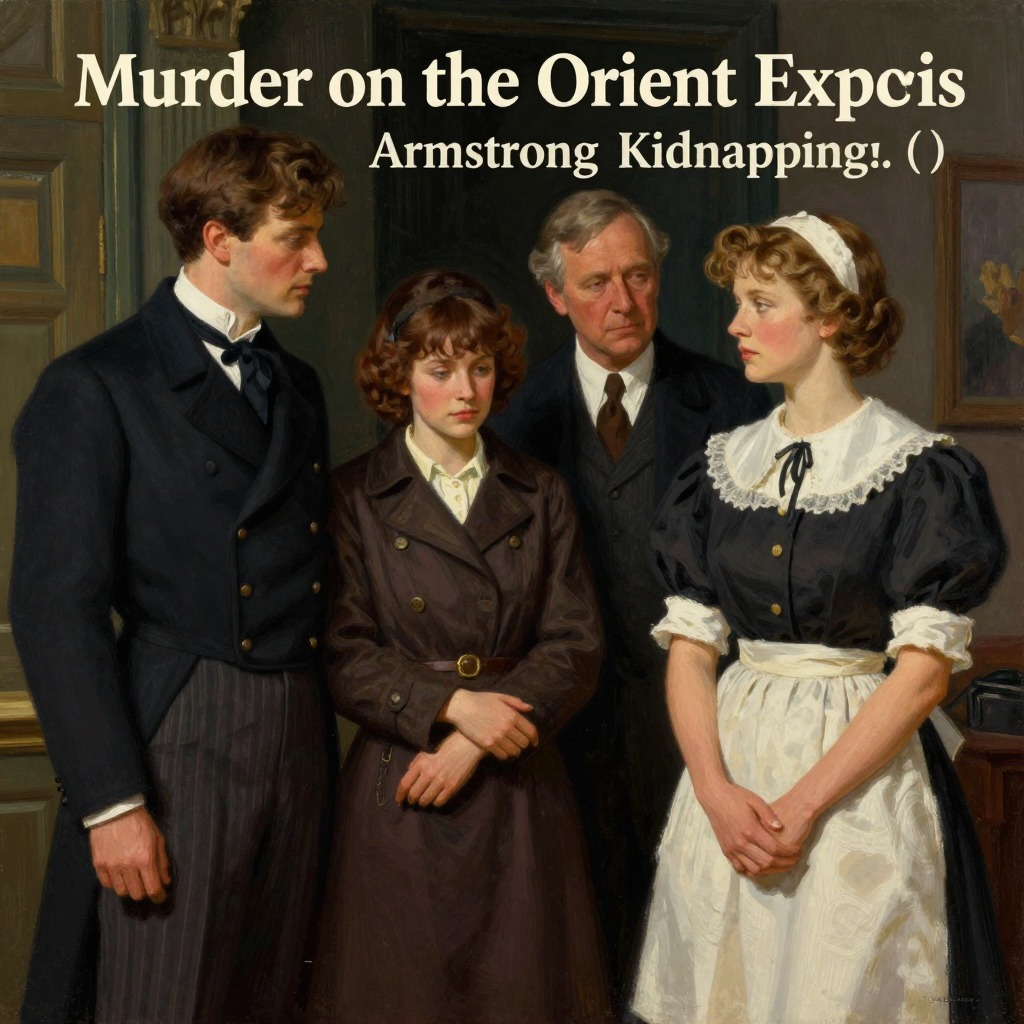
The Jury of Twelve is the secret conspiracy at the heart of the murder of Samuel Edward Ratchett on the Orient Express. Composed of passengers who were all connected to the Armstrong family tragedy, the twelve individuals act as a self-appointed jury, judge, and executioner, each delivering a single stab wound to the man who escaped legal punishment for the kidnapping and murder of three-year-old Daisy Armstrong. The concept transforms the crime from an act of private vengeance into a ritualized, collective execution that mirrors the formal legal process Ratchett had evaded.
Origin and Composition
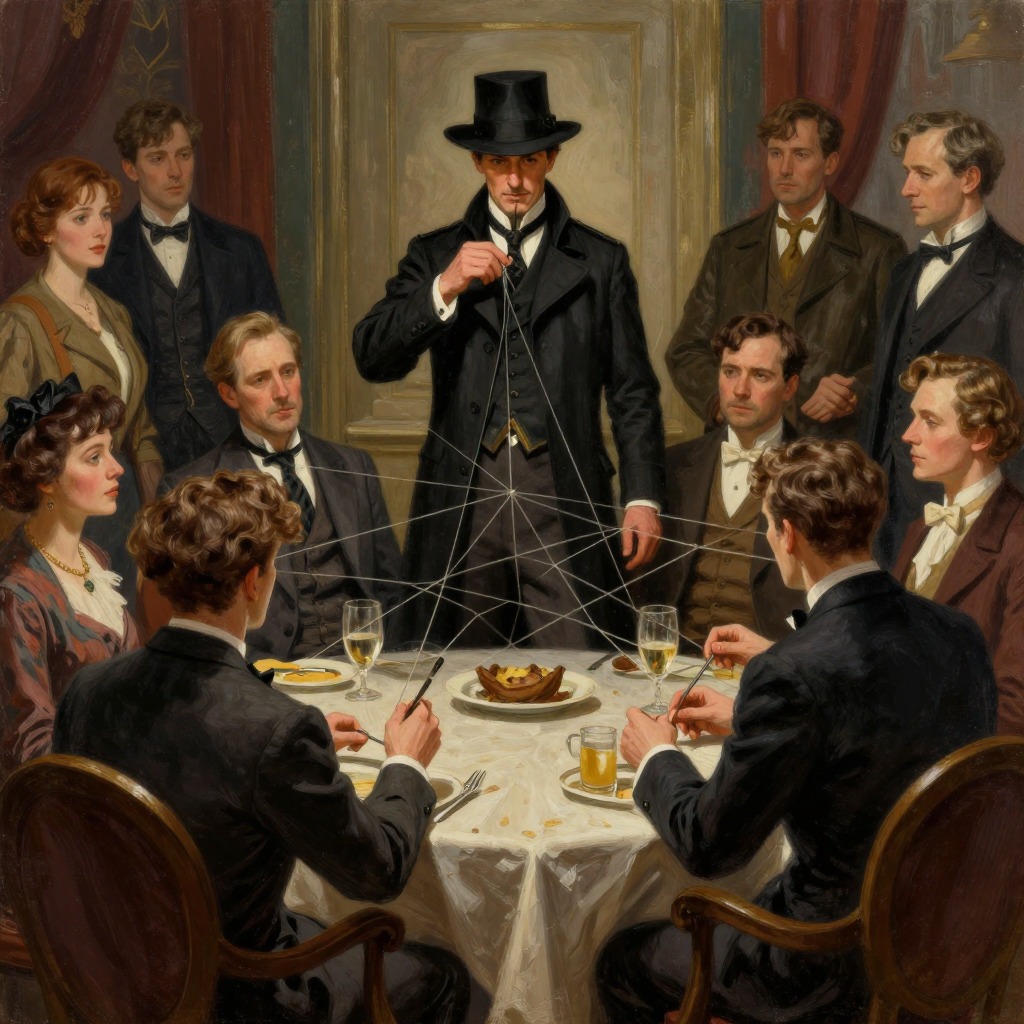
The idea of a jury of twelve originated among the Armstrong family's inner circle in the immediate aftermath of the tragedy. As Linda Arden, the actress mother of the victim's mother, later explained, "We decided then and there (perhaps we were mad—I don't know) that the sentence of death that Cassetti had escaped had got to be carried out. There were twelve of us—or rather eleven; Susanne's father was over in France, of course." The group included Colonel Arbuthnot, John Armstrong's best friend from the war; Hector MacQueen, whose father had been the district attorney on the case and who had adored Sonia Armstrong; Mary Debenham, the governess; Greta Ohlsson, the nurse; Antonio Foscarelli, the chauffeur; Edward Masterman, the valet who had been Armstrong's batman; Princess Dragomiroff, the godmother; Countess Andrenyi, the younger sister; Hildegarde Schmidt, the cook; Cyrus Hardman, who had loved the French nursemaid Susanne; Pierre Michel, Susanne's father; and Linda Arden herself, disguised as Mrs. Hubbard. Colonel Arbuthnot was "very keen on having twelve of us. He seemed to think it made it more in order." The number twelve deliberately echoed the composition of a trial jury, lending the private execution a semblance of legal formality.
Planning and Execution
The plan was meticulously crafted over time. It was the chauffeur, Antonio Foscarelli, who first suggested the method of multiple stab wounds, and Mary Debenham who "worked out all the details later with Hector MacQueen." The group tracked Ratchett down through Hardman's detective work, then placed MacQueen and Masterman into his employment. They coordinated with Pierre Michel, who worked on the Orient Express, to ensure the crime would take place on his train. The Stamboul-Calais coach was reserved so that no outsider would be present, though the unexpected arrival of Hercule Poirot disrupted this plan. Each passenger was assigned a role, and the evidence was carefully staged: threatening letters were fabricated, a false description of a "small dark man with a womanish voice" was planted, and alibis were arranged so that each person's testimony would be corroborated by another conspirator. As Poirot later realized, "the whole thing was a very cleverly planned jigsaw puzzle, so arranged that every fresh piece of knowledge that came to light made the solution of the whole more difficult."
The Execution
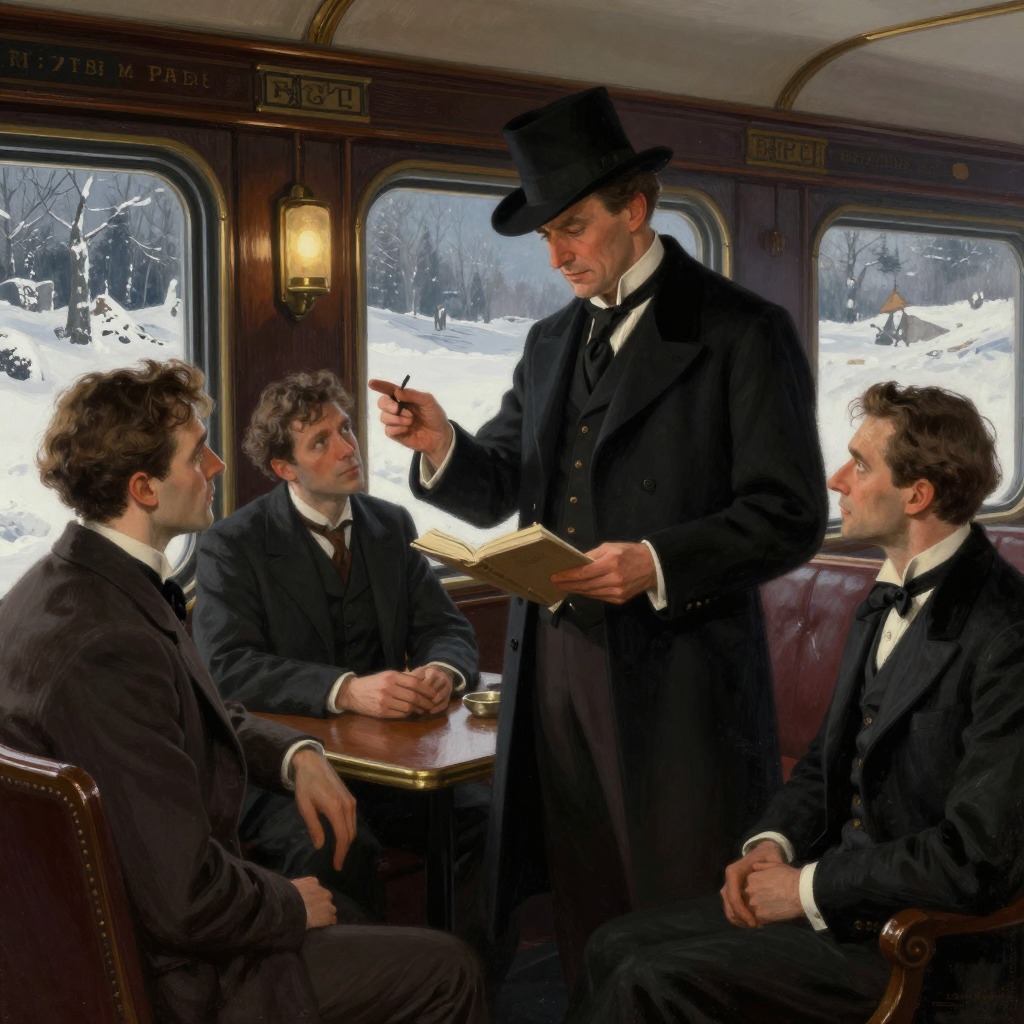
On the night of the murder, each of the twelve entered Ratchett's darkened compartment through the communicating door from Mrs. Hubbard's compartment and struck a single blow with a dagger. The victim had been drugged into unconsciousness by MacQueen or Masterman, ensuring he could not resist or cry out. The wounds varied in force and direction—some feeble, some powerful, some left-handed, some right-handed—because each was delivered by a different person with different physical strength. As Poirot reconstructed, "each person in turn entered Ratchett's darkened compartment through that of Mrs. Hubbard—and struck! They themselves would never know which blow actually killed him." The twelve stab wounds corresponded to the twelve members of the jury, a symbolic number that Arbuthnot had insisted upon.
Aftermath and Resolution
When the train became snowbound, the conspirators were forced to improvise. They dropped false clues—a pipe-cleaner to implicate Colonel Arbuthnot and a handkerchief to implicate Princess Dragomiroff—and staged the appearance of a woman in a scarlet kimono to confuse the investigation. Poirot eventually deduced the truth by recognizing that the extraordinary coincidence of so many Armstrong-connected passengers on one train could only be deliberate. He presented two solutions to the assembled passengers: the official one, which blamed an outside assassin who escaped at Brod, and the true one, which revealed the jury of twelve. M. Bouc, the director of the company, chose the first solution, saying, "In my opinion, M. Poirot, the first theory you put forward was the correct one—decidedly so. I suggest that that is the solution we offer to the Jugo-Slavian police when they arrive." Dr. Constantine agreed, and Poirot retired from the case, allowing the jury's verdict to stand.