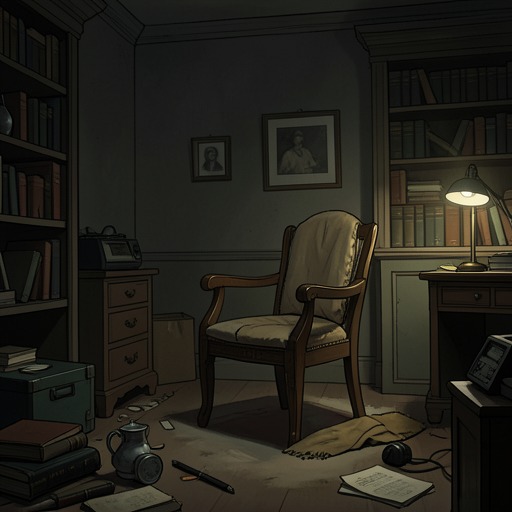
Third Northern Hall
PiranesiThe Third Northern Hall is Piranesi’s sleeping place, a practical refuge within the House and a recurring center of his daily life. He returns there from journeys and encounters, gathers food and fuel for its routines, and faces the House’s weather within its walls. Its changing atmosphere—snow blown inside, clouds settling among the statues, or stars illuminating the hall—makes the room a measure of both physical hardship and the fragile steadiness Piranesi creates for himself.
Setting and Daily Life
The hall is where Piranesi sleeps, and its role is defined by ordinary acts of shelter and self-maintenance. During a prolonged southerly wind, snow was driven into the Halls and howled through the Vestibules; the wind also reached Piranesi in bed in the Third Northern Hall. The episode places the room within the House’s exposure to weather: even a sleeping place offers no complete separation from the cold and snow.
That exposure shapes the hall’s daily routine. Piranesi gathers seaweed for fuel, prepares warming soup, and attends to his work in the Catalogue of Statues. On a morning when a cloud had penetrated the room, he woke cold and shivering, then rose quickly, collected seaweed in the Ninth Vestibule, made breakfast, and set off for the Third South-Western Hall to continue cataloguing. The sequence gives the Third Northern Hall a practical function: it is the point from which his recurring labor begins, not a place removed from the demands of survival.
The room is also part of a carefully organized private world. Piranesi keeps his notebooks and watch in a hollow behind the Statue of an Angel caught on a Rose Bush, located in the North-Eastern Corner of the Second Northern Hall, rather than in his sleeping hall. The contrast matters: the Third Northern Hall houses his nightly rest, while his writing and timekeeping are stored elsewhere in a concealed niche. His life in the House depends on such distinct spaces, each tied to a particular practice and set of objects.
Weather and the Hall’s Changing Atmosphere
The Third Northern Hall registers larger changes in the House’s weather. After the ceilings of the Twentieth and Twenty-First North-Eastern Halls collapsed, clouds began drifting through the broken ceilings and into the Middle Halls, making the region chill and grey. The cloud that reached Piranesi’s sleeping place brought that altered climate directly into his private routine. He saw the statues as delicate white forms against white mist, an image that makes the room’s familiar contents seem at once visible and almost absorbed by the weather.
The hall’s atmosphere is not only oppressive. On another occasion, stars blazed in all the windows, faintly lighting the Thousand Statues of the Third Northern Hall. Their apparent gaze gave the room a peaceful, benedictory quality as Piranesi woke with the sense that something was happening elsewhere. The scene contrasts the clouded morning with a night of clear starlight: the hall can be a place of physical discomfort, but it can also hold a composed, almost ceremonial stillness.
Earlier, a southerly wind made the House’s statues produce unexpected sounds by passing through their voids and crevices. Piranesi found this surprising and delightful; the statues seemed to gain voices. That response is significant to the room’s broader atmosphere even though the wind moved through the Halls: weather is not simply an antagonist, but a force that changes how the House is heard and perceived. The Third Northern Hall belongs to a world where environmental change can make familiar architecture seem newly alive.
Refuge, Return, and Vulnerability
Piranesi repeatedly returns to the Third Northern Hall after leaving it. After secretly approaching the place where he hears 16, he withdraws without speaking further and makes his way back to his bed in the hall. The encounter leaves his mind too full for sleep. The hall therefore offers a physical return without guaranteeing emotional calm: it is a shelter to which he can retreat, but not a space that erases what has happened elsewhere.
The pattern recurs after a different kind of crisis. Lost in fantasies of revenge, Piranesi neglects rest, food, and water; the imaginings leave him physically ravaged, aching and exhausted. When night comes, he returns to the Third Northern Hall, collapses on his bed, and sleeps. In this instance, the room receives him at the point when thought and bodily strain have become unsustainable. Its value lies not in resolving the conflict but in making rest possible after it.
The hall’s shelter is also part of Piranesi’s preparations for the flood. He moves his journals and index from their usual hiding place into a brown leather messenger bag, wraps it in heavy-gauge plastic, and carries it to the Upper Halls, placing it beside the Biscuit-Box Man. He also stores fishing gear, sleeping bags, pots, pans, bowls, spoons, and other possessions in high places. These actions clarify the Third Northern Hall’s limits: it is home in the sense of daily use and return, but it is not safe from the House’s changing conditions. When the water threatens, preserving the records and belongings that sustain his life requires leaving them behind or moving them upward.
Narrative Significance
The Third Northern Hall anchors Piranesi’s life through repetition. Sleeping, waking, preparing food, setting out to work, and coming back after disturbing encounters all pass through the room. That recurrence makes it a point of continuity in a world whose weather and geography can change dramatically. The hall is not described as a permanent sanctuary; snow and cloud penetrate it, and Piranesi must eventually protect his possessions from floodwater. Its refuge is real but conditional.
The room also holds two aspects of Piranesi’s existence in tension. It is a setting for intimate, bodily needs—cold, hunger, sleep, and fatigue—and a vantage point from which the House’s statues and skies can acquire a larger significance. A thousand statues under the stars may appear to bless the hall; the same statues under cloud become pale images in mist. Through these contrasting appearances, the Third Northern Hall turns the House’s vast environment into something encountered at human scale: a place where endurance depends on practical care, yet ordinary surroundings continue to invite wonder.