Manchester Town Hall
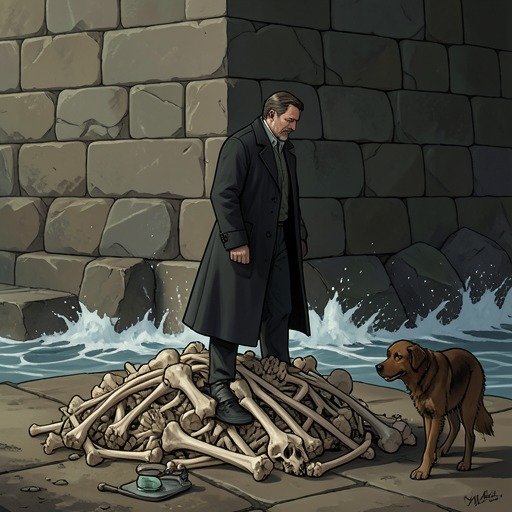
PiranesiManchester Town Hall is the place where James Ritter found work as a caretaker after the events he attributed to Laurence Arne-Sayles, and its monumental interior helped calm him. Its resemblance to the house Ritter said he had inhabited—vast rooms, statues, staircases, and a sea rising through the basement—makes the public building an unlikely refuge shaped by the memory of an unresolved ordeal.
Ritter’s Account and the 2010 Interview
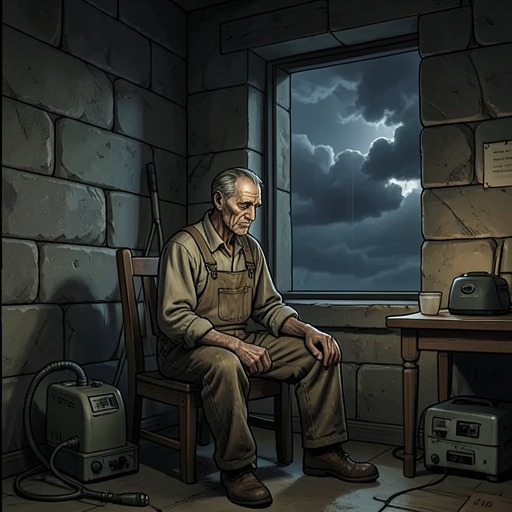
In 2010, Guardian journalist Lysander Weeks tracked Ritter down for a retrospective article on the Arne-Sayles scandal. Ritter was then working as a caretaker at Manchester Town Hall. Weeks described him as calm and self-possessed, almost Zen-like; Ritter said he had been drug-free for a decade. Yet his account of the house remained the same as the one he had given the police: for about eighteen months between 1995 and 1997, he had inhabited a large house where the sea flooded the basement and sometimes rose to the ground floor.
Ritter described sleeping in a white, translucent cave beneath the marble sweep of a great staircase. His account joined the domestic detail of a place to an impossible-seeming inundation, and he continued to insist on it despite others’ disbelief. Angharad Scott, who was writing a biography of Arne-Sayles, had previously tried to interview Ritter, but he took offence that no one believed his story of the house with an ocean imprisoned inside it and refused to speak to her.
A Place of Work and Reassurance
Ritter credited working at Manchester Town Hall with saving him. The building, like the house in his account, had great rooms, statues, and staircases; that architectural resemblance calmed him. The Town Hall thus functioned in his reported life not merely as a workplace but as a familiar spatial counterpart to the place associated with his alleged captivity.
The resemblance carries an uneasy double meaning. The features that might make a monumental building intimidating—its scale and imposing interior—were precisely what made the Town Hall reassuring to Ritter. The account does not explain whether this comfort came from familiarity, from the order of a comparable building, or from another cause; it establishes only that the similarity calmed him and that he regarded the work as salvific.
The Town Hall and the Unresolved Story
Ritter’s employment at Manchester Town Hall gives his account a concrete later setting, but it does not resolve the competing explanations of what happened to him. At Arne-Sayles’s October 1997 trial, the prosecution argued that the kidnapping had more to do with Arne-Sayles’s sexual tastes than with his theories about other worlds. Another proposed explanation was that Arne-Sayles had brainwashed Ritter to lend credibility to claims that other worlds existed, although the account itself questions why he would choose a witness with a history of delusional illness. Ritter’s continuing story of the sea-filled house remains beside these theories rather than settling the dispute.
Manchester Town Hall’s significance is therefore grounded in Ritter’s own retrospective account: it was where he worked, and its resemblance to the house he described brought him calm. The contrast between the public civic building and the privately remembered, ocean-filled house preserves the story’s central uncertainty while showing how a familiar architectural form could become a source of reassurance.