Sixth North-Western Hall
PiranesiThe Sixth North-Western Hall is a western landmark in the House and the central meeting point in Piranesi’s written exchange with 16. Routes converge there: 16’s chalk directions lead back to it, and Piranesi repeatedly returns to its pavement to read or leave messages. What begins as a navigational trace becomes a precarious connection, then evidence that The Other is interfering with their communication.
Position and Access
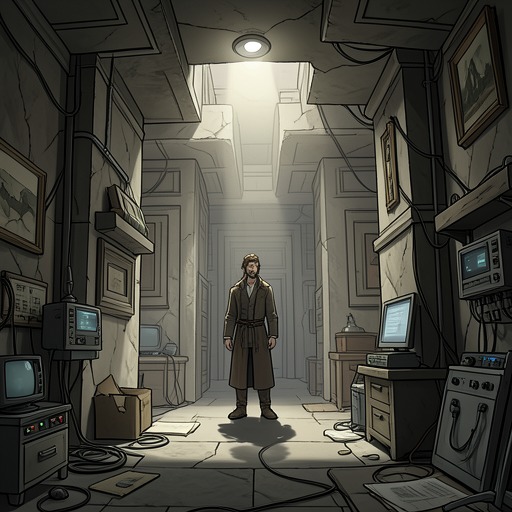
Piranesi’s exploration reaches far across the House: he has travelled to the Nine-Hundred-and-Sixtieth Hall to the West, the Eight-Hundred-and-Ninetieth Hall to the North, and the Seven-Hundred-and-Sixty-Eighth Hall to the South. The Sixth North-Western Hall belongs to this immense, apparently continuous world of halls and passageways, whose onward extent gives no sign of an ending. Its importance is not simply its position on that vast map, but the routes and messages that make it a point of contact.
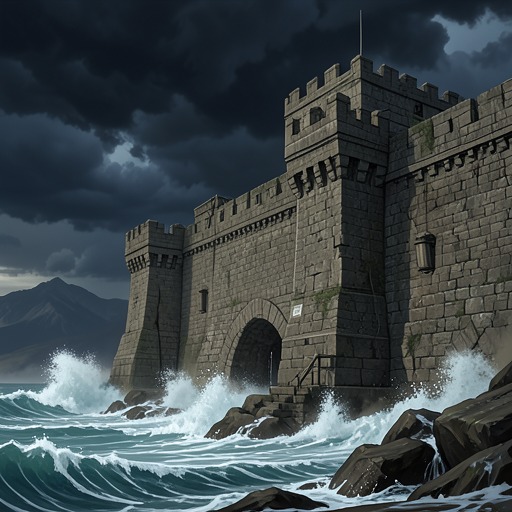
The approach can carry physical risks. The route between the Seventy-Eighth Vestibule and the One-Hundred-and-Ninety-Second Western Hall passes through a region subject to frequent flooding. When the water has receded, tides leave jagged debris scattered through surrounding halls; crossing the broken marble is laborious and can cut unprotected feet. Piranesi explains to The Other that he once made such journeys in shoes but now has none, making a familiar route newly dangerous. The episode grounds the House’s large-scale geography in the vulnerable body that must cross it.
Chalk Routes and First Contact
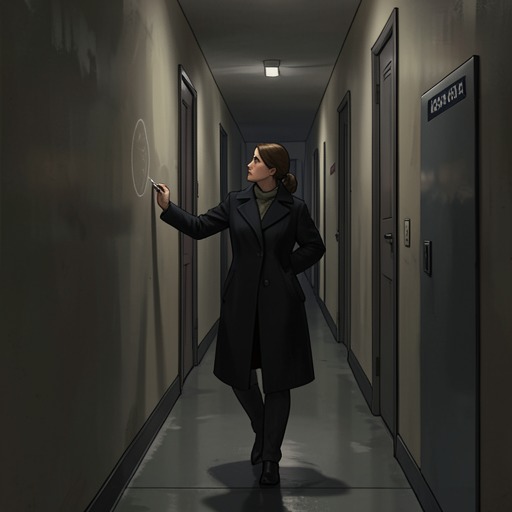
Piranesi reconstructs 16’s path from the Sixth North-Western Hall to the First Vestibule by following directions written in clear, square lettering. 16 has marked each doorway with yellow chalk and repeated the directions beneath each doorframe, so that surviving copies remain if a tide or mishap destroys another. The marks sit below Piranesi’s eye level; from their height he estimates that 16 is twelve to fifteen centimetres shorter than he is. The careful duplication makes the route both a practical record and evidence of its maker’s methodical care.
After tracing the path, Piranesi obtains blue chalk and returns to the Sixth North-Western Hall, which appears to be the furthest point 16 has reached. He writes beneath 16’s directions, beginning a correspondence in a place already shaped by another person’s marks. The exchange is unusually consequential for Piranesi: no one has written to him before, and the fact that he cannot read 16’s reply under the warning that reading it may drive him mad makes the message’s presence both welcome and dangerous.
Messages, Erasure, and Threat
When Piranesi watches 16 return, she first studies the statues with a torch. Its silvery light throws immense, shifting feather-like shadows across the walls, while 16 herself remains obscured behind the dazzle. In the Sixth North-Western Hall she finds Piranesi’s message, stands motionless, and then kneels to write rapidly. Piranesi is pleased that she writes at length, even as he reminds himself that he must not read what she has written. The scene makes the hall a place of contact without direct conversation: the two communicate through writing, distance, and deliberate restraint.
On a later visit, Piranesi finds that 16’s message covers a patch of pavement about sixty by eighty centimetres. The physical scale of the writing gives the exchange a material presence, but not access to its contents: he looks down and still confronts the danger of reading. The hall’s role therefore depends on a strict, unstable boundary between receiving a message and understanding it.
The correspondence also turns into a warning system. After finding no new message, Piranesi kneels at the pavement and writes that a great flood will rise in six days, with water deeper than either his height or 16’s. When he returns, the flood warning alone has vanished, while their other messages remain. He wonders whether his memory has begun to invent events, but the separate destruction of the pebble message in the Twenty-Fourth Vestibule—whose words had asked whether he was Matthew Rose Sorensen—convinces him that The Other has erased the warning and destroyed the other communication as well. The hall’s blank pavement becomes evidence of deliberate suppression, not merely a lost note.
Search and Narrative Significance
With the flood approaching, Piranesi makes finding 16 and ensuring her safety his most important task. He suspects The Other has set a trap by promising to meet her and explain how to find Matthew Rose Sorensen. Although approaching The Other is dangerous, Piranesi reasons that looking for him may be the most reliable way to locate 16 before she reaches him. The chalk correspondence that began at the Sixth North-Western Hall thus feeds directly into a search shaped by distrust, urgency, and the threat of the rising water.
The hall’s significance rests on the contrast between its dependable marks and their vulnerability. Repeated directions are designed to survive tides and mishaps; personal messages can still be erased, and a warning’s disappearance can make Piranesi question his own memory. As a location, the Sixth North-Western Hall converts the House’s distances into a lived problem of access: its routes enable contact, while its exposure to flooding and interference makes that contact fragile.