Harry Truman and Bess Wallace's Wedding
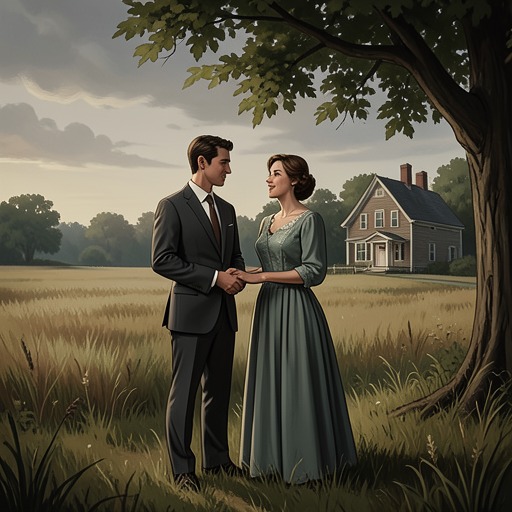
TrumanHarry Truman and Bess Wallace's Wedding, held on June 28, 1919, marked the beginning of a marriage that had been delayed by war and would remain closely joined to family responsibility and public life. The ceremony was small and domestic in scale, but its circumstances carried the weight of Harry’s return from military service, the couple’s long attachment, and the choices that shaped their first years together.
From wartime separation to marriage
Harry’s return from the war preceded the wedding by less than two months. On May 6, three days after the 129th Infantry Regiment’s parade through Kansas City, Missouri, the men received their final discharges at Camp Funston. Seven weeks and four days later, Harry and Bess married. Their reunion followed a separation made consequential by the possibility that Harry might not return safely.
Before he left for war, Bess had proposed that they marry at once. Harry refused because he did not want her bound to a man who might return crippled or not return at all; they would wait until he came home whole. The wedding therefore fulfilled a promise deferred rather than beginning a new courtship. It came nine years after the night Harry had returned a pie plate, and by then he was thirty-five and Bess was thirty-four.
The interval between discharge and marriage was not entirely serene. On May 8, Harry’s birthday and his second day home, they had their first—and apparently last—heated argument. The exact subject remained uncertain: it may have concerned the wedding plans or Bess’s mother’s insistence that the couple live with her. Harry remembered the misery of that day for the rest of his life, referring to it in a letter to Bess thirty years later as their “final” argument. The episode gives the wedding’s arrival a private complication: the couple’s commitment was firm, but their plans were being negotiated within the claims of family.
The ceremony in Independence
The wedding took place at four o’clock on Saturday afternoon in the small Trinity Episcopal Church on North Liberty Street in Independence. The church was filled with relatives and friends, and the summer heat became so oppressive that the flowers began to wilt. The scene was intimate rather than grand: the ceremony’s physical details—crowded pews, fading flowers, and the guests gathered close—kept the occasion rooted in the local family and community around the couple.
Bess wore a simple white georgette-crepe dress, a white picture hat, and carried roses. Her attendants, her cousins Helen Wallace and Louise Wells, wore organdy and also carried roses. Frank Wallace, Bess’s tall, prematurely balding brother, escorted her to the altar. The Reverend J. P. Plunkett performed the service. Harry wore a fine-checked gray three-piece business suit made for the occasion on credit by his best man, Ted Marks, who had returned to his work as a gentleman’s tailor. Harry also wore his Army pince-nez spectacles. His appearance was carefully prepared, yet the account of him at the front of the church suggested someone fresh from the barbershop.
Ethel Noland recalled Harry watching Bess come down the aisle with “You’ve just never seen such a radiant, happy look on a man’s face.” The remembered expression counterpoints the heat and the practical arrangements surrounding the day: at the center of the crowded family gathering was the happiness of a couple whose wedding had waited for the end of the war.
Reception, honeymoon, and the new household
After the service, the reception took place on the lawn at the Gates house. The guests included members of the Wallace family, Mrs. Gates, Harry’s mother and sister, Mary Jane Truman, the Nolands, and several of Harry’s former fellow soldiers. One absent comrade sent a wish that Harry would have the same success in his “new war” as in the old, carrying the language of military service into the couple’s next undertaking. Punch and ice cream were served, and the wedding party posed for photographs: Harry looked extremely serious, while Bess appeared somewhat bemused. Frank Wallace drove the newlyweds to the train in Kansas City, Missouri, with other cars following.
Their honeymoon took them to Chicago, Detroit, and Port Huron, Michigan. In Chicago they stayed at the Blackstone Hotel; at Port Huron they spent time on the beaches of Lake Huron. The days there became a lasting measure of happiness for Harry: thereafter, the words “Port Huron” meant to him the height of contentment. But the trip ended sooner than planned because Bess worried about her mother’s health. Madge Wallace suffered from sciatica, among other complaints, and Bess felt they should return to Independence.
At Madge’s request, Harry and Bess moved into 219 North Delaware Street, taking Bess’s room at the top of the stairs on the south side. Their immediate household included Madge, Fred Wallace, a college student and his mother’s favorite, and the elderly Mrs. Gates, who occupied a first-floor room off the front parlor. Frank and George Wallace and their wives lived nearby in two small bungalows behind the house, so the extended family remained together in what the account describes as a shared complex under Madge’s watchful presence. Bess considered the arrangement temporary, hoping they would stay only until her mother became accustomed to her marriage. Harry arrived with his clothes, a few books, and a trunk of Army belongings—nearly everything he owned.
A private partnership within public life
The marriage’s private character persisted as Harry’s political responsibilities grew. Bess stayed out of his 1922 campaign after a miscarriage, a loss kept within the family. Later, when Harry was away on Army Reserve duty at Fort Leavenworth in the summer of 1923, their letters revealed their affection across their first long separation since the wedding. The political campaign and military service occupied Harry’s time; the correspondence made visible the attachment that continued alongside those public duties.
During the years in Washington, Bess guarded her privacy, but that reserve did not mean she lacked influence. She advised Harry on decisions, and J. B. West recalled that he listened to her. Their partnership could also contain distance: Bess felt shut out when Harry did not discuss his decision on the atomic bomb with her, and the exclusion contributed to anger and periods away from Washington. Yet their daughter Margaret also described Harry as continually discussing matters with Bess, attentive to her opinions and in need of her approval. The wedding began a life together that was neither simply a public political alliance nor merely a private domestic arrangement: its later history repeatedly joined affection, family obligation, disagreement, and counsel.