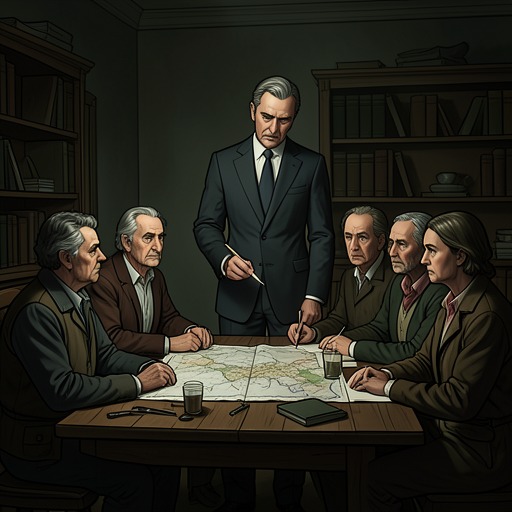
Truman signs the military desegregation executive order
TrumanHarry S. Truman’s announcement of executive orders against discrimination in the armed forces and federal civil service brought civil-rights action into the confrontation between his administration and a resistant Congress. Made without warning during the 1948 special session, the move paired an immediate executive step with a renewed appeal for legislative action; the congressional response exposed how little agreement existed over the wider program.
Background and Timing
The special session opened on Capitol Hill amid a familiar pattern: when Congress balked at his requests, Truman asked for more rather than changing tactics. Later that same day, without warning, he announced executive orders intended to end discrimination in the armed forces and guarantee fair employment in the civil service. The surprise announcement put civil rights alongside the session’s broader struggle over the domestic agenda.
The Executive Orders and the Congressional Address
The armed-forces order was announced together with an order concerning fair employment in the civil service. The available account identifies their purposes but does not describe their provisions or implementation. Their announcement nevertheless marked a direct executive intervention on discrimination, not merely a request that Congress consider the issue.
The next day, Truman appeared before Congress to press an eight-point program. It included civil rights, consumer-credit controls, an excess-profits tax, stronger rent and price controls, housing action, farm support, aid to education, a higher minimum wage, and changes to the Displaced Persons Act, which he said discriminated against Catholics and Jews. He was asking again for measures that had previously been denied, placing the executive orders within a larger effort to advance a domestic program through both executive action and legislation.
Reception and Immediate Outcome
Truman’s reception before Congress was noticeably cool. Some members did not rise when he entered. Republican Governor Thomas E. Dewey made no public statement on the program, though his campaign manager, Herbert Brownell, encouraged Republican congressional leaders to consider it carefully. Senator Robert Taft refused to support Truman’s requests, and, in the account of the session, regarded the affair as a cheap political ploy.
The two-week session accomplished little. Truman had anticipated that outcome; its immediate political effect, as he saw it, was to highlight the Republican Congress as an obstacle to social progress and to contrast Republican promises with its performance. The record establishes the orders’ announcement and the cold reception of his subsequent appeal, but does not detail how the armed-forces order was carried out. The episode therefore shows both the reach and the limits of his approach: he could act by executive order, while the broader program still depended on a Congress that remained unwilling to grant much of what he sought.