Truman’s 1952 seizure of the steel mills
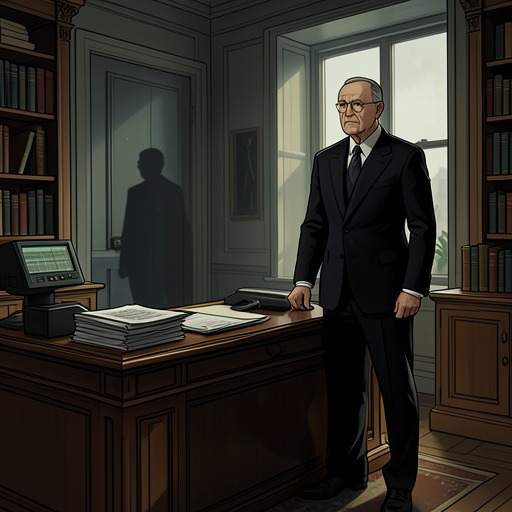
TrumanTruman’s 1952 seizure of the steel mills was an attempt to prevent a national strike from interrupting the flow of steel and munitions during the Korean War. Announced on the night of April 8 and implemented at midnight, the takeover kept the mills operating but immediately raised a constitutional question: whether the President could assume control of a major industry without specific authorization from Congress. The action joined an urgent labor dispute to a larger contest over executive power, wartime necessity, and the limits of presidential authority.
Causes and Background
The confrontation grew out of a contract dispute between steel companies and the United Steelworkers of America. The mills were producing record amounts of steel under the demands of the war, and their profits were rising. Steelworkers, however, had received no pay increase since 1950. In November 1951, the union sought an increase of 35 cents an hour. The companies refused to negotiate, and the union gave notice that it would strike when its contract expired on December 31.
Harry S. Truman referred the dispute to the Wage Stabilization Board on December 22. The board recommended a 26-cent hourly increase, which the union accepted. The companies rejected it unless they could also raise the price of steel by $12 a ton. Further negotiations ended in deadlock as the April strike deadline approached. Truman regarded the board’s proposed pay increase as fair and reasonable; he feared a shutdown would impair the supply of munitions to forces in Korea and impede the buildup of NATO forces in Europe.
The dispute also touched Truman’s suspicion of concentrated corporate power. He considered the companies’ proposed price increase a threat to his anti-inflation policy and an added cost to the government, which was the defense program’s largest customer for steel and steel products. He was prepared to tolerate a more modest increase of $4.50, but rejected the industry’s demands. Charles E. Wilson, the director of defense mobilization, saw merit in the companies’ position and resigned after Truman overruled him. Truman later regretted Wilson’s departure, which added to criticism of his handling of the dispute.
The Decision and Takeover
Truman treated seizure as a temporary last resort. On April 8, only hours before the mills were scheduled to be struck, he signed Executive Order 10340. That evening, instead of giving a scheduled speech at the Shoreham, he addressed the country in a nationwide radio and television broadcast from the White House. The Korean War was central to his explanation: he stressed the need to supply soldiers with weapons and ammunition, and he did not want the labor crisis to derail the administration’s program in an election year.
Truman’s understanding of his authority drew on his reading of presidential history and advice from his legal advisers. He pointed to Abraham Lincoln’s suspension of habeas corpus during a national emergency, and to advice Tom C. Clark had given him when Clark was attorney general: a President confronting a calamitous strike had inherent power to prevent paralysis of the national economy. Truman also believed Chief Justice Fred Vinson had privately told him that the seizure was legally permissible. Vinson’s advice was especially problematic because the action was likely to be challenged in court, where Vinson might have to consider the case. John Snyder, by contrast, opposed seizure. Truman nevertheless told the cautious Snyder that the path was clear and assured his staff that the President had power to keep the country from going to hell.
At 10:30 that night, Truman told the nation that the steel companies were recklessly forcing a shutdown. He said it was his duty to prevent that outcome and announced that the government would take over the plants at midnight. The broadcast made the decision public just before it took effect. On his way to his room afterward, Truman looked so exhausted that Joe Short thought he might collapse. The episode recalled his earlier response to the 1946 railroad impasse, when he had tried to draft striking workers into the Army; in both crises, a threatened interruption of essential production brought him to the edge of extraordinary executive action.
Operation and Immediate Reaction
On the morning of April 9, the visible operation of the mills appeared largely unchanged. At approximately 88 steel mills around the country, the morning shifts arrived, production continued, and the same workers and managers remained at work. The conspicuous sign of the takeover was the American flags flying over the mills. In Washington, Commerce Secretary Charles Sawyer assumed legal command of the industry. The continuity of work was the immediate practical result of the order; the transfer of authority, however, made the constitutional stakes unmistakable.
Truman reported his action to Congress in a special message delivered the same day. He emphasized that he had acted reluctantly, wanted government operation to end as soon as possible, and acknowledged that Congress could supersede his policy by passing legislation authorizing emergency operation of the mills. He said such legislation might be desirable. Congress chose not to grant him the requested authority. Instead, members called for investigations and for his impeachment.
The public criticism was swift and severe. Clarence Randall, head of Inland Steel, called the seizure an unprecedented evil deed. Major publications condemned the action, and The Washington Post argued that Truman had usurped congressional power and that the Constitution did not give the commander in chief every power he might consider necessary to build defenses or conduct a war. The attack made clear that preventing a strike did not settle the question of whether the President had lawful authority to prevent it by taking over private industry.
The Constitutional Challenge
At a press conference, Truman was asked whether the same claim of inherent power would allow him to seize newspapers and radio stations. He answered that under similar circumstances a President had to act in whatever way was best for the country. The response was imprudent: it prompted speculation that he might also take control of the press, an idea the account makes clear had not occurred to him and that he could not imagine happening. The exchange intensified the concern that an emergency claim, if left undefined, might extend far beyond the steel industry.
The steel industry sued to regain its property. A federal district judge, David A. Pine, quickly ruled the seizure illegal, and the Supreme Court agreed to hear the case. The account presents the takeover as both an effort to avert an immediate disruption of wartime production and a constitutional crisis created by acting without congressional authorization. Truman’s appeal to emergency necessity did not resolve the issue: the courts would have to consider whether the practical urgency of a threatened strike could justify the executive authority he claimed. In the material covered here, that legal confrontation remains pending.