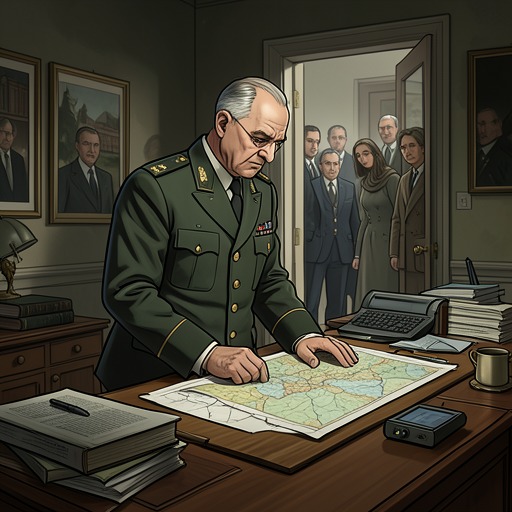
U.S. decision to commit ground troops to Korea
TrumanThe U.S. decision to commit ground troops to Korea was a rapid response to a battlefield crisis and one of the most difficult decisions Harry S. Truman later said he had made as president. Before dawn on June 30, 1950, a report from General Douglas MacArthur persuaded Truman that air and naval power alone could not stop the North Korean advance. Truman approved the introduction of American combat forces, even as he worried that intervention might draw the United States into a wider war.
The report from Korea
At 3:00 a.m. Washington time, the Pentagon received MacArthur’s assessment after his first personal inspection of the situation. He judged that U.S. combat forces were the only assurance of holding the existing line and recovering lost ground. Further attempts to halt the advance with air and sea power alone, he warned, would waste time; even a full American effort might fail. He called for a clear decision without delay.
At 4:47 a.m., Frank Pace telephoned Truman at Blair House. Truman was already awake and shaved, and took the call beside his bed. Pace relayed the report and MacArthur’s request for two divisions of ground troops. The bleak assessment left little time for deliberation: Truman had been preparing himself for such a decision for days and approved the commitment without hesitation.
A decision under the risk of wider war
The speed of Truman’s decision did not mean that he regarded the stakes as narrow. He later described committing American troops to combat in Korea as the most difficult decision of his presidency, more difficult even than deciding to use the atomic bomb. During the critical week, he had privately expressed concern about starting another world war. In his diary on June 30, he recorded the need to avoid a general Asiatic war and wondered what Mao Tse-tung and the Soviet Union might do next.
The decision therefore joined an immediate military judgment to uncertainty about escalation. MacArthur’s report stressed that delay could leave the existing line impossible to hold; Truman’s concern was how intervention might alter the wider conflict. Years later, Dean Acheson summarized the presidential burden simply: the president had to decide, and Truman did.
Presidential authority and the aftermath
Truman also considered how to obtain congressional support. Averell Harriman urged him to seek a war resolution while public backing remained strong. Acheson opposed the appeal, arguing that it was unnecessary and that the effort to secure approval could do harm. Truman sided with Acheson, reasoning that turning to Congress in the emergency could make it harder for future presidents to respond to crises. Harriman later recalled that the choice reflected Truman’s persistent attention to the effects of his actions on presidential authority.
The decision placed the commitment of ground forces within the president’s constitutional authority as Commander in Chief, without first seeking a congressional war resolution. Its significance thus extended beyond the urgent request from Korea: Truman had to act on military advice while retaining civilian responsibility for the purpose and risks of the intervention. The speed of his choice and his attention to future presidential power became defining features of the episode.