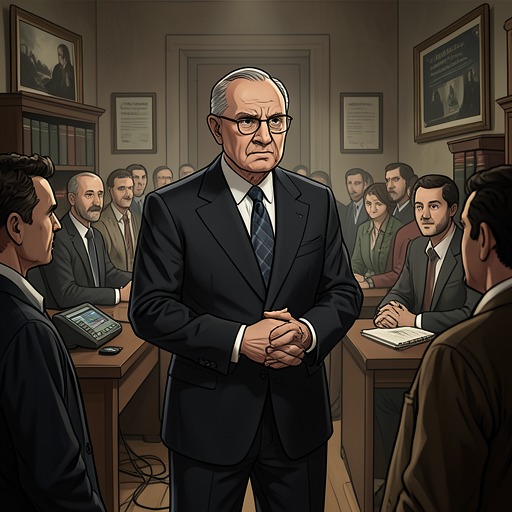
Kansas City 1936 election fraud
TrumanKansas City 1936 election fraud was a major vote-rigging scandal uncovered after the 1936 elections, when investigators found approximately 60,000 “ghost” votes in Kansas City. The prosecution of hundreds of defendants exposed the scale of electoral manipulation associated with Thomas J. Pendergast’s organization; a parallel inquiry into Pendergast’s income then widened the assault beyond election fraud and toward the organization’s financial dealings.
Investigation and Political Opposition
The first federal investigation focused on vote fraud in the 1936 elections. Its central prosecutor was Maurice Milligan, a newly appointed federal district attorney whose appointment had been arranged by Bennett Clark. After the election, Milligan’s leading ally was Governor Lloyd C. Stark, whose own rise to office had depended heavily on Thomas J. Pendergast and the Kansas City organization. Stark now turned against the political machine, convinced that his loyalty belonged to the people rather than to an organization or its boss.
The investigation drew on documentation assembled by Milligan and a large group of Federal Bureau of Investigation agents. Its findings made the fraud measurable: approximately 60,000 ghost votes had been cast in Kansas City in 1936, and some precincts reported more registered voters than the known population. The evidence pointed not merely to isolated irregularities but to manipulation on a scale that challenged the credibility of the election process.
Trials and Convictions
Hundreds of defendants were brought to court. Many were not the obvious caricatures of professional election thieves; as reporter William Reddig observed, people familiar with the city’s long history of election stealing were surprised by how many defendants looked like ordinary citizens. That detail gave the scandal a wider civic significance: the prosecutions implicated participants who could appear unremarkable in everyday life, rather than a small, visibly separate criminal class.
The trials continued for nearly two years and resulted in 279 convictions. Milligan, described as a country lawyer, became a local hero. The verdicts gave concrete legal consequences to what had long been discussed as a familiar feature of Kansas City politics, and established the fraud as more than rumor or partisan accusation.
A Broader Inquiry into Pendergast
The election cases were not the only line of investigation. The decisive financial inquiry began after Governor Stark and Milligan went to Washington. Bennett Clark had alerted Franklin D. Roosevelt that Pendergast had failed to report large sums of income on his tax returns. Roosevelt passed the information to the Treasury Department, whose investigators began examining an insurance-bribery story that had previously been reported in the press. Stark and Milligan ultimately had five federal agencies working on special assignments.
This inquiry broadened the political crisis beyond the fraudulent vote count. The investigation of income and alleged bribery connected the fight against the Pendergast organization to its financial affairs, helping turn a case about manipulated elections into a wider challenge to the machine’s power and practices. The book distinguishes these investigations: the ghost votes were the initial focus, while scrutiny of Pendergast’s income opened a further and crucial avenue of inquiry.
Political Consequences and Limits
The scandal intensified the effort to dismantle Pendergast’s organization, but it did not immediately erase its electoral strength. In the 1940 Democratic Senate primary, Harry S. Truman won a close contest against Stark, carrying Jackson County by 20,000 votes. The account emphasizes that this was only a fifth of Truman’s Jackson County margin in 1934, yet it remained a substantial victory in the county where association with the Pendergasts was widely thought to have become politically fatal. Truman’s local standing, the work of Jim Pendergast, and what remained of the organization outweighed the scandal, his opponents’ accusations, and the persistent opposition of The Kansas City Star.
Stark privately attributed his defeat to the machine vote, Bennett Clark’s support, federal appointees, and a rural vote weakened by drought. The result underscores the scandal’s complicated legacy: the prosecution documented extensive fraud and produced hundreds of convictions, while the political network it exposed retained enough local support to affect later contests. The investigation marked a serious assault on machine politics, not an instant end to its influence.