North Korean invasion of South Korea
TrumanThe North Korean invasion of South Korea turned a worsening military emergency into a test of American policy and presidential authority. As the South Korean government fled Seoul and its forces seemed unable to stop the advance, Harry S. Truman committed American air and naval support, while initially limiting the scope of the response and seeking United Nations action.
Causes and Background
Communications from the American commander in Korea described the South Korean position as approaching complete collapse. Truman’s first public statement, issued as reports worsened, offered few specifics; the prevailing impression was that the United States would take little or no action. The contrast between that cautious public posture and the urgency of the military reports set the stage for an abrupt decision.
The Invasion and Immediate Response
After supper alone, Truman called a second emergency meeting at Blair House. He decided to provide American air and naval support to South Korean forces and to seek immediate support from the United Nations. He also set an initial limit: American forces were not to act north of the 38th parallel.
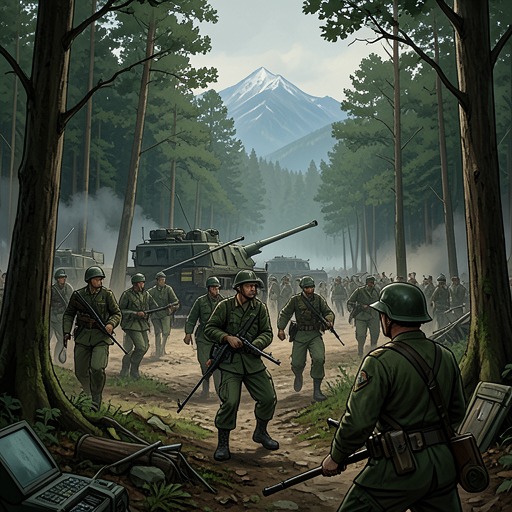
The next day, June 27, headlines reported North Korean tanks entering Seoul. The South Korean government had fled the capital, and its president described American assistance as too little and too late. In a broadcast from Pyongyang, North Korea’s premier vowed to crush South Korea swiftly. The reports made the scale and speed of the invasion unmistakable, even as Washington moved to define the limits of its intervention.
American and United Nations Decisions
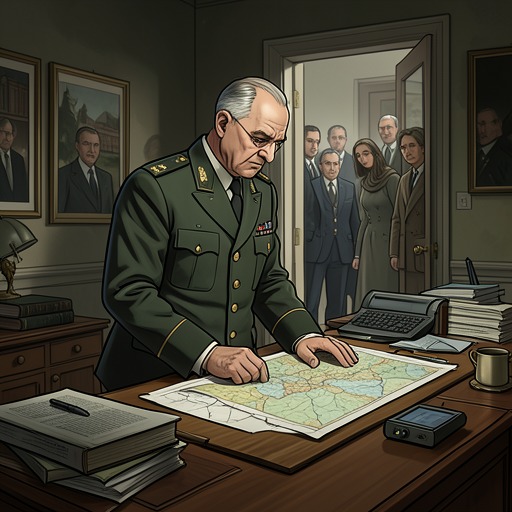
At the White House, congressional leaders, the secretary of state, the secretary of defense, and the Joint Chiefs of Staff assembled for a meeting that included more than forty people. The congressional leaders gave Truman their support, and he was advised to proceed under presidential authority rather than seek a congressional war resolution. Charlie Ross then announced that Truman had ordered American air and naval forces to support South Korea.
Truman publicly presented the invasion as evidence that communism had moved beyond subversion to the armed invasion of independent nations. The House voted 315 to 4 to extend the draft law for one year, while a Republican senator urged Americans of all parties to support the president. That night, the United Nations adopted a resolution backing the decision. The book presents this as the first time a world organization had voted to use armed force to stop armed force.
Significance and Limits
The response was consequential but not unlimited. Truman’s instruction against action north of the 38th parallel marked an early effort to contain the military commitment even as the invasion prompted direct American support and international authorization. His choice to rely on presidential authority rather than request a war resolution also reflected his concern that appealing to Congress during the emergency could constrain future presidents dealing with crises.