Sid Liftoff
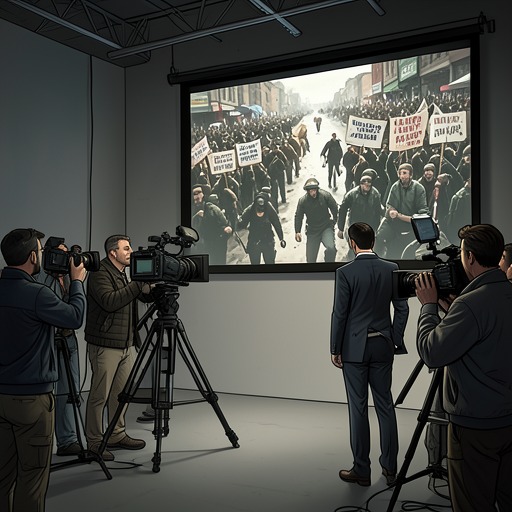
VinelandSid Liftoff is a Hollywood figure whose talent and influence bring him into an anti-drug film project after his arrest for cocaine possession. The project promises a way back into respectable company, but it also exposes Sid’s dependence on Hector Zuñiga, whose control of the negotiations turns the film into a vehicle for personal advantage and political display. Sid’s story moves from a claim of being framed to an increasingly desperate performance of respectability, as he and Ernie Triggerman try to outrun the political danger they believe is coming.
Identity and Introduction
Sid is introduced through a battered, repeatedly handled copy of the agreement for a proposed film, signed by him, Ernie Triggerman, and their associates. The papers are creased and marked with coffee and hamburger grease, an unglamorous material counterpart to the deal’s unstable promise. Sid’s standing rests on his considerable talent and influence, but the narrative also presents him as a man whose public image and working life have been shaped by chemical substances.
His route into the project begins with a traffic stop on Sunset Boulevard near Doheny. Police find a crocodile-skin case filled with cocaine beneath the passenger seat of his vintage Thunderbird. Sid insists that someone planted it without his knowledge, perhaps one of his former wives; the account preserves his denial rather than resolving whether it is true. His lawyers arrange a community-service settlement: he will put his talent and influence toward making an anti-drug feature intended for theatrical release.
The Film Deal and Hector Zuñiga
At the time, Hector Zuñiga is assigned to liaison work from the Drug Enforcement Administration’s regional intelligence unit. Because the assignment is treated as a punishment for agents with poor records, the Hollywood posting is a favor that Hector is expected to appreciate and eventually repay. Sid and Ernie’s film therefore begins under an imbalance of power: the filmmakers need Hector’s participation, while Hector can treat the assignment as both official work and a personal opportunity.
Hector’s behavior soon makes that uncertainty difficult to ignore. He appears less and less willing to show when he is acting for the agency and when he is acting for himself. Sid privately compares Hector’s ambition to that of an eighties Popeye Doyle, imagining not only a film but a sequel and a television series. The remark registers Sid’s recognition that Hector wants a starring place in the enterprise, even as Sid and Ernie remain reluctant to ask directly what his role is.
When Hector finally grants them a meeting at Holmby Hills, the atmosphere has changed. The pool is empty and covered with dead leaves; the earlier luxury and abundance have given way to a subdued gathering where Bud Light is the only drug on offer. Sid and Ernie are tense, sweating, and eager to ingratiate themselves with the newly fashionable anti-drug cause. Sid, whose charm and lively public image had relied heavily on chemical assistance, is now depicted as lonely, melancholy, and misanthropic without it. Ernie sits glassy-eyed and repeatedly touches his nose. Their physical unease makes the project’s respectable pose look less like a clean conversion than a nervous attempt to adapt.
Negotiation and Publicity
Sid opens the meeting as a professional negotiator. After Hector arrives, Sid waits a beat and a half, then springs up, overturns a garden chair, rushes over, and drops to his knees to press for half the net profits. His theatrical urgency collides with the financial qualification that profits cannot be counted until production costs have been recouped. Hector, who has long imagined this moment and is acutely confident in his immaculate moustache, answers with terms of his own: a one-million-dollar advance and half the gross once it exceeds 2.71828 times production costs. Sid is startled by the unusual multiplier; Ernie, mechanically worrying at his nose, calls it natural. They argue through the rest of the day before settling on a contract that all can live with, though Hector comes away more comfortably placed than the others. The precise final financial terms are not specified.
Hector also secures his choice of title: Drug Free America / Le droghe liberano l’America. The announcement receives conspicuous press coverage just as fear of a grand jury reaches its height, and the project earns a brief mention on Entertainment Tonight. Skywriters put red, white, and blue messages praising Sid and Ernie over Sherman Oaks. Guerrilla intervention turns the promotional slogan inside out: rockets add an S beside the word DRUG, changing the message into “DRUGS FREE AMERICA.” The altered lettering makes the film’s publicity vulnerable to a counter-reading even before the feature has taken shape.
Political Uses and Narrative Significance
The film’s publicity soon exceeds the filmmakers’ control. Reagan’s men invoke Sid and Ernie in campaign speeches, presenting them as examples of the kind of Hollywood figures whose presence, in the past, might have meant fewer communists in the unions. Left-wing union veterans answer with letters calling the pair strikebreakers, Nazi collaborators, and useful idiots of neo-McCarthyism. The narrative treats that charge as true, while emphasizing that it does not dissuade Sid and Ernie: they keep moving ahead, hoping the film will protect them from the approaching darkness they fear.
Their commitment is accompanied by preparations without a settled conception of the finished work. Crews are forming, hotel rooms are being booked, postdated checks are being issued, and weather reports are being consulted, yet no one knows what kind of film it will be. Sid and Ernie are now too frightened of Hector to ask for clarity, accepting only his vague assurance that Frenesi Gates will be the film’s central strength. Sid’s trajectory thus helps show how the project joins private insecurity to public ideology: a supposed community-service penalty becomes a commercial bargain, a publicity spectacle, and a prop in anti-communist campaigning, while the men who hope to secure themselves through it surrender increasing control over what they are making.