Ernie Triggerman
VinelandErnie Triggerman is a Hollywood filmmaker and Sid Liftoff’s business partner, drawn into an anti-drug film project that turns a legal obligation into a public campaign and an uneasy bargain with Hector Zuñiga. Ernie’s part in the venture is defined less by command than by negotiation: he signs the agreement, helps shape its terms, and continues despite uncertainty about the film and its political consequences.
Identity and Introduction
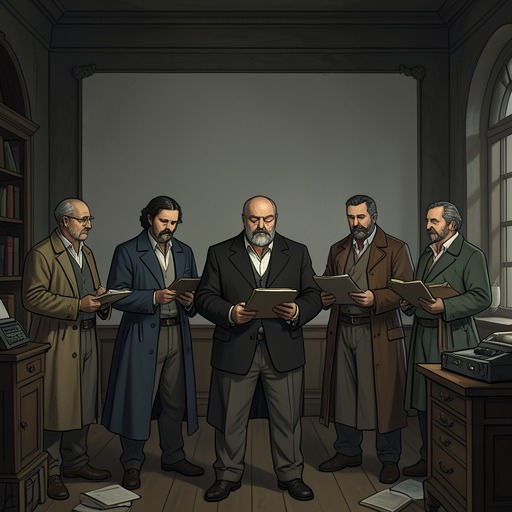
Ernie appears alongside Sid as a participant in a film agreement with Hector Zuñiga. The document is a copy of an accord signed by all three; Ernie prefers to call it a concordat, a choice that marks his involvement in the business of framing and formalizing the arrangement. The papers themselves have been handled until they are crumpled and stained with coffee and hamburger grease, a material contrast to the consequential contract Hector treats almost like a talisman.
The narrative presents Ernie and Sid as men with substantial film-industry talent and influence, but also as people navigating a world whose expectations Hector misunderstands. Hector’s misplaced references and other social signals make him seem, to the pair and their associates, like an outsider watching movies rather than someone who knows how Hollywood works. That disparity becomes important: Hector imagines himself as a movie hero, while Ernie and Sid are trying to assess what he wants and what their agreement may require of them.
The Anti-Drug Film and Hector’s Bargain
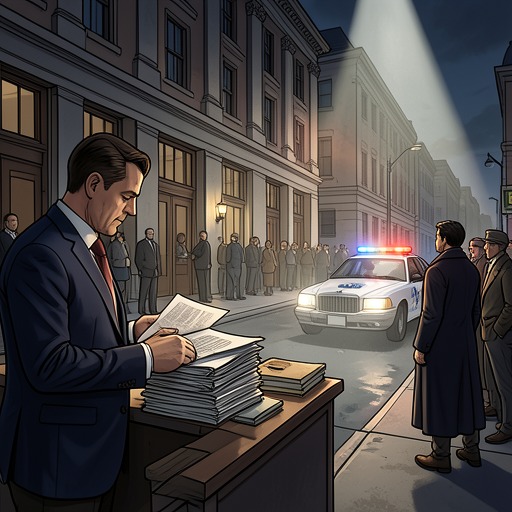
The project grows out of Sid Liftoff’s arrest. Stopped on Sunset Boulevard near Doheny, Sid is found with a crocodile case containing cocaine beneath the passenger seat. He insists that someone planted it without his knowledge. His lawyers arrange for him to repay the community through service: using his considerable talent and influence to make an anti-drug feature intended for theatrical release. Hector, then assigned to the Drug Enforcement Administration’s regional intelligence unit in Los Angeles, is designated to maintain contact with the filmmakers.
That assignment gives Hector a Hollywood connection, but it also reflects his precarious institutional position: the regional unit is regarded as a punishment posting for agents with poor records, and the Hollywood detail is a favor he is expected to repay. As Hector becomes convinced that he is part of a major scheme, the boundary between his official work and his personal ambitions grows harder for Ernie and Sid to read. Sid privately describes Hector as aspiring to become an action-film cop and to extend the idea beyond a single movie, but Ernie dismisses him as merely a kid in an arcade. The two men even wager over Hector’s degree of authenticity by the standards of their milieu; Ernie loses, and Sid orders duck-liver pâté at Ma Maison.
Hector eventually presents his proposed deal with confidence: a one-million-dollar advance and half the gross after the gross reaches 2.71828 times the production costs. Sid turns visibly pale, while Ernie rubs his nose and calls the figure natural. The filmmakers spend the rest of the day shouting and arguing until they produce a contract everyone can accept, though the terms leave Hector more comfortable than the others. Ernie’s willingness to continue the negotiation helps turn Hector’s fantasy of cinematic importance into a signed project.
Publicity, Fear, and Political Use
Hector also imposes the film’s title, which links drugs to the sacrament of the 1960s and the devil of the 1980s. Its announcement receives conspicuous newspaper and trade-press coverage just as fear of a federal grand jury investigation into drug use in the film business is reaching its height. Ernie and Sid are presented as the first Hollywood figures to enter the anti-drug campaign, and the publicity makes them appear to be restoring the city’s reputation. For days, skywriters spell out blessings for the two men and the slogan DRUG FREE AMERICA above Sherman Oaks. Guerrilla rockets add an S beside the word DRUG, reversing the message into LE DROGHE LIBERANO L’AMERICA. The stunt amplifies the project’s public visibility while making its political meaning unstable.
The film also brings Ernie and Sid back into circles such as the Polo Lounge, where Sid had been socially excluded after his arrest. Their new respectability does not remain merely a matter of Hollywood publicity. Once Reagan’s associates take notice, the two filmmakers’ names begin appearing in campaign speeches, and Reagan invokes the possibility that more men like them in Hollywood might have meant fewer communists in the unions during his own earlier career there. The response from the film industry’s left-wing union hardliners is sharply hostile: letters denounce Ernie and Sid as strikebreakers, Nazi collaborators, and useful idiots of neo-McCarthyism. The narrative presents those accusations as substantially accurate, but they do not alter the pair’s course.
Uncertainty and Narrative Significance
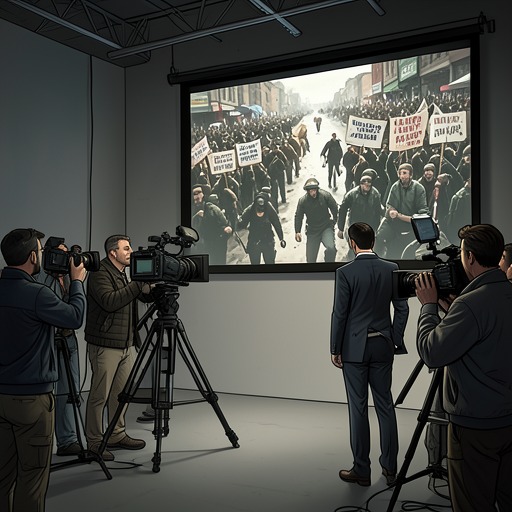
Ernie and Sid press ahead partly because they hope the film will protect them from the approaching period of political darkness they fear. Yet the production begins to take shape before anyone knows what kind of film it is supposed to be: crews are forming, hotel rooms are being booked, postdated checks are being written, and weather reports are being consulted. The men are too afraid of Hector to ask him directly for a clear account of the project, and they settle for his vague assurance that Frenesi Gates will be its central strength. Frenesi is working as a waitress in Las Vegas and knows nothing of the plans gathering around her until Hector arrives.
Ernie’s role thus links private bargaining to public spectacle. The agreement starts as Sid’s court-imposed service and becomes a heavily advertised anti-drug production, then a useful political symbol in a climate of renewed anti-communist rhetoric. The gap between that confident public image and the filmmakers’ uncertainty about the project gives their venture its irony: they are praised as pioneers before they know what they are making, and condemned by their industry even as they persist in the hope that the same film will secure their safety.