Hector Zuñiga
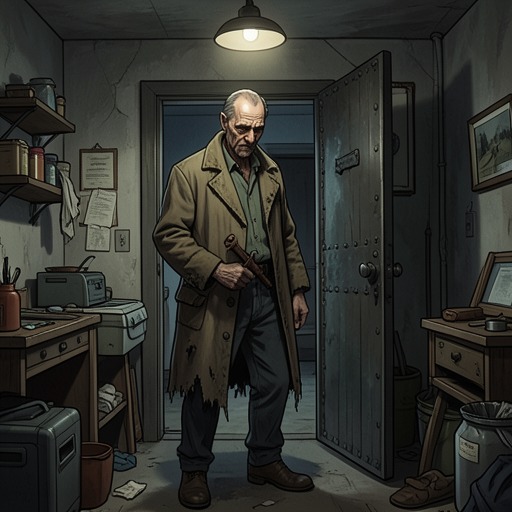
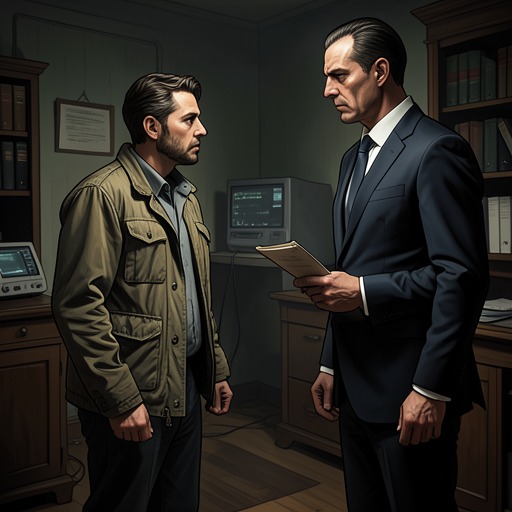
VinelandHector Zuñiga is a federal drug agent whose repeated encounters with Zoyd Wheeler turn a long-running pursuit into an unstable alliance. He can be an intimidating investigator, a source of information about Frenesi Gates, and a compromised intermediary in the campaign against Zoyd; later, his efforts to secure a film deal and his struggle with television addiction expose how badly his professional identity has been unsettled. His story makes institutional power look less like a single, coherent force than a shifting system in which agents themselves can be displaced, recruited, and used.
Identity and Introduction
Zuñiga first reappears in Zoyd’s life at the Cucumber Lounge, where Zoyd is preparing to stage his annual public window-smashing performance to preserve his mental-disability benefit. Zuñiga has been absent long enough for Zoyd to hope that the agent has moved on, but his return revives the familiar expectation that trouble will follow. The narration likens him to an erratic police comet in Zoyd’s private sky: a recurring presence whose appearances have regularly coincided with new misfortune.
At the lounge, Zuñiga waits near the bathrooms while Ralph Wayvone junior prepares to introduce him. The encounter is not an ordinary arrest scene. Zuñiga and Zoyd exchange only a brief greeting, and Zoyd cautiously tests Zuñiga’s stomach with a hand while teasing him about his weight. Zuñiga answers in kind and proposes lunch at Vineland Lanes. Their familiarity is old enough to contain jokes and routine, but it does not erase the imbalance between a federal agent and the man whose life he has repeatedly disrupted.
The window performance sharpens that mixture of menace and farce. Zoyd charges through what appears to be a plate-glass window, only to discover that it has been replaced with breakaway sugar glass. Zuñiga recognizes the trick and demonstrates that the fragments are edible. The reveal turns the apparent danger into a staged deception, while showing Zuñiga’s pleasure in exposing a performance that has been arranged around him. Even their antagonism takes place amid manufactured appearances: cameras are present, the glass is false, and the public spectacle is both a personal routine and an administrative necessity for Zoyd.
Pursuit, Information, and an Uneasy Alliance
Zuñiga’s work puts him within a heavily funded federal anti-drug operation covering coastal communities and nearby towns. The operation is frustrated by the area’s confusing layout: houses and streets blur together, officers can mistake one address for another, and suspects can disappear through a maze of lanes, stairs, and changing levels. The difficulty of enforcement is not merely a matter of individual competence; the built environment makes surveillance and pursuit uncertain. Zuñiga’s work in the district is presented as one more episode in a career marked by uncertainty.
The relationship with Zoyd also intersects with Zuñiga’s use of informants. He pays for information, though Zoyd refuses to take cash for tips even when he later consumes food or marijuana bought with the money. Zoyd sometimes considers reporting a dishonest dealer, but finds reasons to hold back: the person might be under pressure, be a distant relative, or be dangerous. Zuñiga resents this reluctance, arguing that the people Zoyd protects will take advantage of him again. The exchange gives their relationship a practical structure: Zuñiga wants a dependable source, while Zoyd’s loyalties and wariness keep him from becoming one on the agent’s terms.
At lunch, Zuñiga reveals that Frenesi, Zoyd’s former wife, had been under witness protection, speaking of the arrangement as something that has already ended. He explains that the program was administered by police officials, like arrangements for informants from organized crime. Rather than simply arresting or discrediting a politically connected former radical, the state has protected her under a system associated with criminal witnesses. The information changes the conversation between the men: Zuñiga is no longer only pursuing Zoyd’s local contacts but is also a channel through which the absent Frenesi re-enters Zoyd’s present.
Zuñiga proposes that Zoyd serve as an informal early-warning presence around Frenesi. Zoyd understands the danger in the arrangement: he could be made to absorb the consequences if the people watching her act first. Zuñiga denies that Zoyd would be actively monitored and presents the arrangement as simple availability, with no regular calls unless the authorities need him. The proposal dresses surveillance in the language of ordinary life. Zoyd notices that Zuñiga’s explanation feels unlike him and suspects that something is being withheld, even while the offer sounds convenient and includes payment.
Pressure, Compromise, and Changing Allegiances
The apparent informality of Zuñiga’s dealings with Zoyd becomes harder to trust as broader operations close in. At Vineland Lanes, a unit of armed personnel in matching camouflage and helmets enters while Zuñiga runs toward the kitchen. Their arrival reveals that Zuñiga is not simply the unquestioned force in the room: the operation can turn against him as well. Soon after, Zoyd sees him standing on a table at Bodhi Dharma Pizza, surrounded by chanting customers and staff. Zoyd phones Dr. Deeply to warn that Zuñiga may be dangerous and that the intervention should happen quickly, then returns to find the agent resisting the people trying to take him away.
Later, Zuñiga identifies the force that has taken over Zoyd’s home as a Justice Department strike force commanded by Brock Vond. He tells Zoyd that Vond was the man who took Frenesi from him, linking the new deployment to the old rupture in Zoyd’s marriage. Zuñiga also warns that Zoyd’s home is already being targeted for forfeiture after a small amount of marijuana is allegedly found there; the quantity, he says, will be inflated to make the case more severe. His warning gives Zoyd useful information, but it does not make Zuñiga a dependable ally. The agent remains implicated in the machinery that is threatening Zoyd even as he explains its movements.
A later arrest makes that contradiction explicit. Zuñiga appears with federal agents at Zoyd’s home, where a large quantity of marijuana has been presented as evidence and Zoyd’s daughter, Prairie, is at risk of being taken from him. Zoyd suspects that Zuñiga is helping Brock Vond use the arrest and forfeiture proceedings as a pretext to separate father and daughter. Zuñiga denies that seizing children is part of his work and says that this assignment falls outside his ordinary duties, describing it as a favor for a friend. His careful emphasis on friendship leaves the identity and obligation behind the favor deliberately ambiguous.
Zuñiga explains that the Nixon-era reorganization of his agency has put older colleagues out of work and made his own continued employment precarious. He presents the role as an unwanted, low-level assignment, almost like matrimonial counseling. When Zoyd asks for help contacting his mother-in-law to care for Prairie, Zuñiga treats the request as a favor that will have to be repaid. The conversation reduces a grave family emergency to an exchange of obligations. Zoyd is later arrested and beaten in custody; after breakfast, Zuñiga arrives smiling and offers help with the marijuana charge in return for information about a supposed criminal acquaintance. Zoyd refuses, saying that caring for his child means he must become an honest citizen and end his association with the dealers he used to know. Zuñiga mocks the claim by listing Zoyd’s continuing habits, but the scene also shows that Zoyd’s refusal is grounded in a changed responsibility, not in a sudden transformation of his past.
Television Addiction and the Film Project
Zuñiga’s later condition complicates the image of the capable federal agent. He has been treated for television addiction using a form of exposure therapy: small, carefully calculated doses of programs were meant to provoke the brain’s defenses against the medium’s harmful effects. The treatment was miscalculated because the clinicians failed to recognize how intensely susceptible he was. He began sneaking out at night to watch television, attending illicit gatherings, and renting contraband battery-powered sets from dishonest attendants. The habit consumed his savings. A change in the clinic’s leadership brought a different policy, and Zuñiga eventually escaped with a portable television that he watches on the road, claiming that the highway is lonely and requires company.
His addiction is not presented as a neat medical diagnosis that explains away his conduct. Zuñiga remains a forceful and sometimes dangerous man, while the clinical system proves fallible and the agents charged with treating him fail to understand the difference between his everyday manner and the behavior they take as a symptom. The result is a cycle of confinement, illicit watching, escape, and renewed dependence. The television is both his companion and the object around which his freedom has become organized.
At the same time, Zuñiga places hope in a film contract negotiated with Ernie Triggerman, Sid Liftoff, and their associates. He handles the worn, coffee-stained agreement like a precious object, but his lack of familiarity with the film business leaves him unable to recognize how badly positioned he is in the negotiations. He mistakes terminology, gets references wrong, and misses the signs that others see him as a naïve outsider. His ambition to enter the film world repeats his earlier reliance on institutions: he hopes that a new affiliation will secure him a place, while failing to see how readily more experienced people can use his enthusiasm.
Later Encounters and Narrative Significance
When Frenesi encounters Zuñiga again, she recognizes him despite the years that have passed. She sees a worn-down man marked by years of service, broken agreements, betrayal, and betrayal in return. Her response is not simple surprise or forgiveness; his decline also makes her conscious of her own diminished capacity for surprise and pain. She asks whether he has arrived in an official capacity, but the question unsettles him. His former command of himself has given way to visible difficulty, and the prospect of physical confrontation or official scrutiny weighs on him.
Zuñiga’s film venture nevertheless brings him into contact with Frenesi, Flash, and Justin during a militarized security operation at Vineland Airport. Rather than detaining them, he leads them past the queue and through the terminal using his badge and a newly acquired business smile. They stay at Vineland Palace as guests of Triglyph Productions Inc. Frenesi initially doubts that the film project is real and sees Zuñiga as another naïve participant who believes himself immune to the risks. When the production arrangements continue and dinner arrives at the hotel, she begins to accept that the film may actually be made. Zuñiga’s unlikely shift from drug agent to would-be film producer thus provides the means for this encounter, even as his professional and personal judgments remain uncertain.
The resulting character is neither a stable villain nor a secure ally. Zuñiga can expose a staged window stunt, disclose information about Frenesi, warn Zoyd about Brock Vond, participate in the pressure on Zoyd’s household, and later guide Frenesi’s family through an airport operation. These turns are not reconciled into a single dependable moral position. They show instead a man moving among agencies, favors, treatment systems, and commercial promises, each of which claims some part of his loyalty while offering him little lasting security. His recurring presence makes Zoyd’s world feel watched and improvised at once: the state keeps returning, but its agents are themselves vulnerable to budget cuts, institutional confusion, addiction, and exploitation. The evidence leaves Zuñiga’s ultimate fate unresolved; it ends with him still trying to make a place for himself in a film business he scarcely understands.