Darryl Louise Chastain
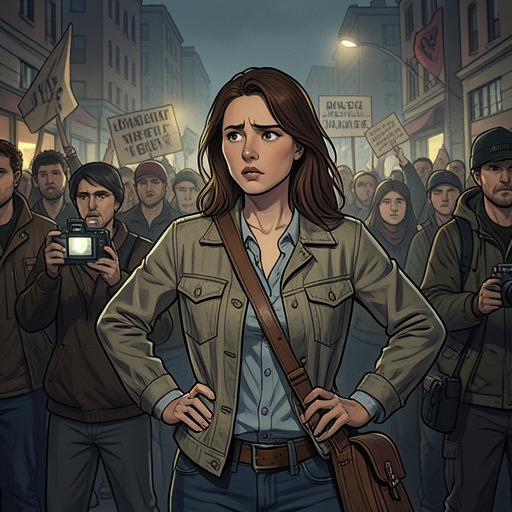
VinelandDarryl Louise Chastain, usually called DL, is a trained fighter, a former companion of Frenesi Gates, and a figure whose attempts to reckon with Brock Vond are bound up with the unsettled past. Her story moves between forceful capability and uncertainty: she has spent years imagining revenge, yet cannot be sure what she or her partner Takeshi Fumimota can accomplish. When Frenesi’s daughter Prairie Wheeler appears, DL becomes a living link to the history Prairie is trying to recover, but she also warns that the past cannot be reduced to a single reliable version.
Identity and Background
DL introduces herself to Prairie as Darryl Louise Chastain and identifies Takeshi as her business partner. Prairie recognizes her from old photographs shown to her by her grandmother, where DL appears alongside Prairie’s mother, Frenesi. DL, in turn, realizes that Prairie is Frenesi’s daughter; the recognition catches her off guard, and she acknowledges that she and Frenesi had been companions in earlier years. The exchange establishes DL not simply as a source of information, but as someone whose personal history is entangled with the family story Prairie is investigating.
An old photograph also preserves a period when DL and Frenesi had been friends for almost a year. The image records more than a meeting: its stored figures retain a history of mutual support, promises made and renegotiated, difficulties endured, and experiences that had drawn the two women together. The novel’s framing makes the photograph a fragmentary archive. It can keep the friendship available for later recognition, but it cannot settle what either woman remembers or what their shared past means.
Before that friendship, DL was moving restlessly along U.S. Route 101, looking for motorcycle gangs to confront and taking risks that brought her from one place to another. The account presents her as unsettled and without a clear destination; even retrospectively, she cannot say what she was seeking. That earlier wandering contrasts with the disciplined public identity later invoked by Ralph, who reminds her of her established record as a fighter.
Revenge and the Pursuit of Brock Vond
DL tells Prairie that Ralph brought her into contact with the world around Frenesi and Brock Vond. By then, she had spent years imagining Brock’s death. She believed that he had taken the lives of people she loved, and her desire to kill him had narrowed her judgment. DL describes herself as so far off course that her fixation obscured her ability to assess what she was doing. Her admission gives the pursuit a personal source without making it a simple or settled account of justice.
In Tokyo, Ralph appeals to DL’s reputation and ability, recalling that she had been written about in Black Belt, Soldier of Fortune, and Aggro World, and had competed in a danger-themed pageant. DL corrects one detail of his recollection, then asks why he is reciting her record. His appeal frames her skill as something she might abandon for routine clerical work; the exchange shows him trying to reactivate an identity she may be leaving behind. The evidence establishes her public distinction and his attempt to recruit her, but does not make her past accomplishments a guarantee that she can control what follows.
The unresolved conflict is also expressed through the language of karma. DL tells Prairie that she and Brock still have an imbalance between them, and suggests that Prairie now has one too. She places a Japanese amulet on the table and explains that Takeshi calls such objects giri chits, or karmic IOUs: he imagines a system of exchange built around them, but, as DL emphasizes, he honors a chit when one is presented. The token turns an abstract debt into something Prairie can hold. DL does not promise that it will find her mother; she asks whether Prairie intends to use it, leaving both its practical force and its limits unsettled.
Frenesi, Prairie, and the Limits of Memory
When Prairie tells DL that Frenesi may be returning and describes the threats surrounding her family, DL reacts seriously to Brock’s name. She recognizes the danger but does not claim to know where Frenesi is or what she will do. Because Brock is pursuing Frenesi, her movements may be unpredictable, and DL is unsure what Takeshi can accomplish. Her caution is not indifference: it reflects the difference between being connected to someone’s past and being able to locate or protect her in the present.
DL therefore resists offering Prairie a tidy explanation of the old political years. She recalls a period when people acted on beliefs that now seem implausible, lied, and informed on one another; time has passed, and different people remember different stories. This qualification matters to Prairie’s search. DL can confirm the former bond with Frenesi and speak to the conflicts that shaped it, but she cannot make memory uniform or turn her own version into an uncontested record. The former companions’ history is both intimate and politically fractured.
Retreat and Reckoning
After returning to California by air, DL goes back to the Kunoichi Attentives Sisterhood Mountain Retreat, a place she had repeatedly left and returned to since adolescence. Her relationship with the Attentives, especially Sister Rochelle, is described as a durable mixture of attachment and resistance. Sister Rochelle sees at once that DL is in a bad state and advises her to rest before they speak. The pause is intended to give DL time to consider what she has done, but she cannot settle herself; by morning she is exhausted and still struggles to name her condition.
The episode presents the retreat as more than a refuge from the pursuit of Brock. It is also a place where DL is expected to face the consequences of her actions rather than simply continue onward. Yet her return does not immediately produce clarity or reconciliation. The older mentor offers care without supplying an easy answer, and DL’s difficulty explaining herself leaves the reckoning unresolved in the moment.
Thanatoids and Collective Awakening
DL’s partnership with Takeshi also places her among the Thanatoids, whose condition she helps explain. She describes them as people with a Thanatoid personality, living in sparsely furnished settlements and giving much of their waking time to television. Their emotional lives are constrained: they limit expression to feelings that might help them move toward death, while resentment and the desire for revenge remain persistent obstacles. DL’s account connects their suspended existence to the unresolved wrongs that shape her own conflict with Brock, without equating her situation with theirs.
When music from synchronized personal devices awakens the Thanatoids after they have slept, DL and Takeshi hear the prolonged broadcast that follows on Radio Thanatoide. They recognize it as an appeal and decide that they must answer. DL then asks Prairie whether she will come with them. Her response makes the awakening a new point of decision: she does not merely interpret the event from a distance but joins Takeshi in treating it as a call that requires action.
At the gathering that follows Brock Vond’s passage across the river, DL and Takeshi are together in a crowded dance, while the Thanatoids continue to arrive and events unfold around them. Radio Thanatoide records the evening for other Thanatoid communities. The scene places DL within a temporary collective rather than alone with her private grievance. It does not erase the unresolved past, but it shifts her attention toward answering others and participating in a shared event.
Narrative Role and Significance
DL’s narrative role is shaped by the gap between skill and certainty. Her reputation marks her as someone capable of decisive action, while her own account exposes the danger of letting revenge take over judgment. The giri chit gives that conflict a concrete form, making the language of karmic balance part of her conversation with Prairie rather than a guarantee of a neat resolution.
As a witness to Frenesi’s earlier life, DL supplies Prairie with an indispensable personal connection, but also insists that history remains contested. The photograph preserves the former friendship; DL’s recollection names its political fractures; neither can restore a single definitive story. Her return to Sister Rochelle’s retreat and her response to the Thanatoids’ call extend this pattern: DL repeatedly confronts unfinished obligations, but the evidence leaves their final resolution open.