Roscoe
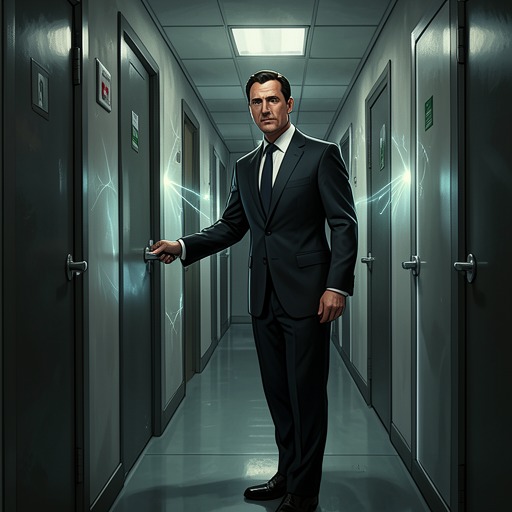
VinelandRoscoe occupies a double position beside Brock Vond: he is the subordinate who carries out orders and the experienced adviser who tries to warn Vond what those orders may bring. Their bond is secured by a debt incurred in a gun battle, but it is also sustained by a strange mismatch: Roscoe remembers what he has done for Vond, while Vond often seems not to register what others do for him. Roscoe’s practical loyalty thus unfolds alongside a wary, comic understanding of the man he serves.
Identity and Function
Roscoe accompanies Vond as an aide and bodyguard, but does not think of himself as merely a bag carrier. He imagines himself as a mentor who could offer useful lessons and counsel if Vond would listen. That self-conception is not wholly fanciful: Roscoe has been close enough to Vond in danger to protect him, and close enough to his operations to recognize when his plans are built on misjudgment.
The relationship is nevertheless unequal. Roscoe is not free to leave when he chooses. An armed early-morning visit from tax agents, wearing kevlar and plexiglass and carrying weapons, had made him dependent on Vond; his former freedom is figured in the last Los Angeles hamburger he was eating when they arrived. On a later confidential drive with Vond, Roscoe knows that the destination is not yet officially established: the legislation and funding needed to create it have not completed their passage through Congress. He also reads Vond’s furtive movements in the rear-view mirror, recognizing his nervousness even as both men proceed with the visit.
The Debt Between Roscoe and Vond
Roscoe’s enduring obligation began with Vond’s intervention on his behalf at a crucial moment. In return, Roscoe has paid in what he regards as unconditional loyalty, not just as a bodyguard but through repeated turns of service, with retirement still unresolved and lawyers on both sides involved. The debt runs in both directions in practical terms: Roscoe has literally saved Vond’s life and has more than once protected his position, even at a cost to his own career.
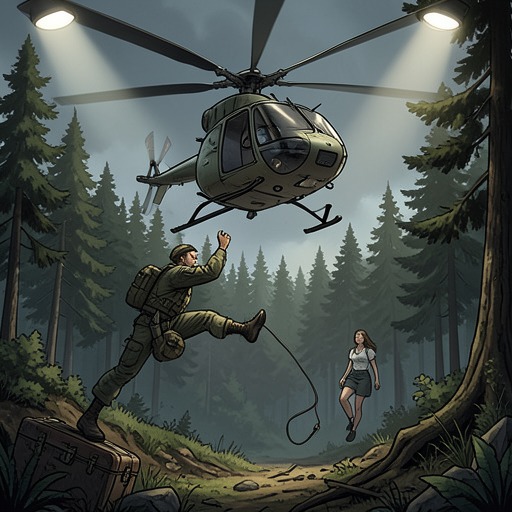
The defining incident took place during a gun battle in a marijuana field. Vond followed Roscoe through the dense resinous growth as bullets passed close enough for their heat to be felt, breaking stems and scattering seeds from the flowering tops. Roscoe led the way to a helicopter; Vond followed him like a frightened recruit behind a sergeant. Only after they were airborne did the shaken Vond manage to acknowledge how much he owed Roscoe. Roscoe, still catching his breath, was in no condition to ask him to put that promise in writing.
Counsel, Silence, and Vond’s Blindness
Roscoe tries to use his experience to caution Vond about the people held in the compound. He points out that some of the detainees are serious and hardened, and advises against trying to turn them. Vond dismisses the warning as a question of selecting the right targets: the hard cases, he says, can be transferred elsewhere, while he expects the remaining ninety percent to be amateurs and inconsistent consumers who joined the upheaval for pleasure, drugs, or personal reasons rather than political conviction. His fishing metaphor makes the plan sound like strategy; Roscoe’s warning makes its human uncertainty visible.
Arguing is of limited use because Vond can silence Roscoe by reminding him of his debt. Roscoe therefore relies on silence, believing that Vond is perceptive enough to understand what he leaves unsaid. The irony is that Vond values this quiet precisely as a subordinate’s obedience. He prefers an aide who resembles Tonto, only less changeable, while Roscoe can see himself in the same loyal-companion role. Their shared silence does not mean they share an understanding: it serves Vond’s idea of command, while allowing Roscoe to preserve his own judgments without openly challenging the man to whom he owes so much.
Roscoe initially reads Vond’s failure to acknowledge his help as brazen ingratitude and considers leaving government work for a distant career in financial consulting. Observation changes his diagnosis. Vond, Roscoe concludes, often does not know what others have done on his behalf; the problem is ignorance rather than deliberate ingratitude. Nor does Vond follow a consistent personal moral code, despite wanting to appear as if he does. Roscoe sees instead a kind of protective isolation: certain consequences do not touch Vond, and so he does not have to think about them. That insulation gives Vond an advantage, though Roscoe cannot reduce his uncanny luck to it alone.
The Visit and Roscoe’s Narrative Role
At the compound, loudspeakers mounted on stripped fir poles suddenly play the national anthem. Vond gets out of the government car but does not stand at attention; he leans an elbow on the roof and watches the detainees gather in the yard. They approach only far enough to see that he has brought no food, then retreat in small groups to the edges of the space, out of earshot. Roscoe’s awareness of the visit’s secrecy and Vond’s nervousness frames the scene as an exercise of power that is not yet fully secure: the place has no official existence, and its intended subjects keep their distance.
After Vond’s encounter with a disheveled young woman in a miniskirt, Roscoe starts the car and presses the accelerator to make its engine rise in a suggestive crescendo. Vond rebukes him for spoiling the effect of his work: the point, he says, is to destabilize the subject, not serenade her. Roscoe answers by driving away with a U-turn and, halfway between the yard and the gates, skidding across the wet pavement so that a series of large S shapes remains behind. The gesture is both a small act of comic display and a final indication that Roscoe is not simply an invisible instrument. He serves Vond, but he retains his own sense of performance, timing, and what a departure ought to leave on the ground.
Luck, Loyalty, and the Limits of Protection
The gun-battle memory gives Roscoe’s loyalty an almost supernatural aspect. During the escape, he believed he saw a pure white light surrounding Vond and came to imagine that staying close to him could make him invulnerable to bullets. Roscoe’s recollection ends by unsettling the apparent hierarchy of the rescue: although Vond followed Roscoe through the field, Roscoe wonders which man was really clinging to the other. Vond may have owed his life to Roscoe, yet Roscoe’s faith in Vond’s protective aura also helps explain why he remains attached to him.
Roscoe’s role is therefore neither that of an uncomplicated loyalist nor that of a clear-eyed opponent. He recognizes Vond’s tactical blindness, warns him when he believes a plan is mistaken, and keeps serving him because their history binds them through favors, danger, and dependence. His wary humor offers a counterpoint to Vond’s self-contained authority: in the car, the field, and the compound, Roscoe notices what Vond does not, even when his insight cannot undo the arrangement between them.