Arsincevo complex
AfterburnArsincevo complex is a strategically vital fuel site in the Black Sea campaign: capturing it is presented as the difference between an operational U.S. carrier group and aircraft grounded, ships helpless, and forces cut off from resupply. Its importance is made concrete when nearly three million gallons of aviation fuel are prepared for transfer to Jefferson.
Strategic Setting
The complex matters because Jefferson’s nuclear propulsion does not solve the carrier group’s central endurance problem. The ship does not need fuel for itself, but its aircraft consume aviation fuel rapidly. Under ordinary conditions, a carrier such as Jefferson needs replenishment of expendable supplies every two to three weeks; its aircraft fuel could last no more than ten days, and less under a heavy flight schedule or during a major strike. The group’s usual supply line depends on tankers following it at sea.
That dependence becomes more dangerous when the Black Sea’s exits are threatened. With the Bosporus Strait at risk of closing, Jefferson and its escorts could be trapped inside the sea. After sustained flight operations, the carrier group’s remaining operational margin might shrink to two to four days before it became an expensive force with little practical use. Against that backdrop, Arsincevo offers a land-based source of fuel when the normal maritime pipeline cannot be relied upon.
The Fight to Secure the Complex
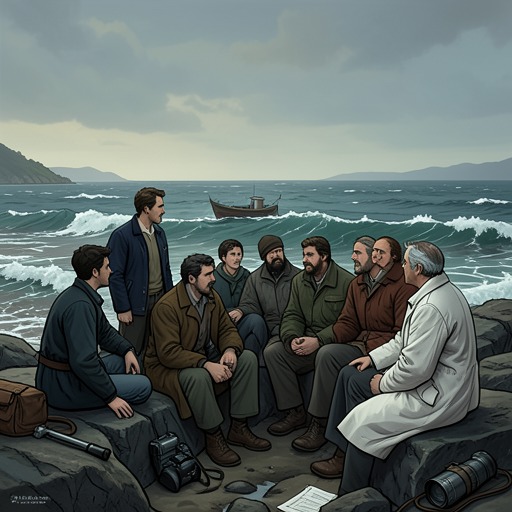
Arsincevo is described as an objective that must be secured for the wider operation to have any effect. In the assault planning, Tombstone warns that without the complex, American aircraft could be left grounded and the ships helpless. He also stresses that Boychenko’s troops will face a substantial Russian force, making the attempt a fight between Russians as well as a contest over a military installation.
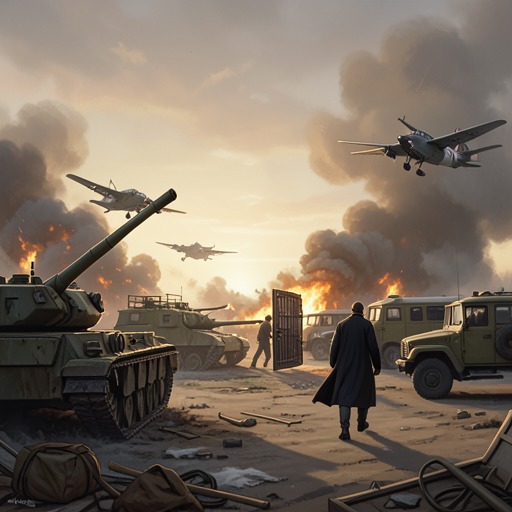
General Boychenko is consulted about the risk. He understands the danger and believes the complex can be taken. The operation’s immediate battlefield pressure is also clear: F/A-18 Hornets and A-6 Intruders deliver a large air-to-ground strike to help Boychenko’s troops break free from Dmitriev’s naval infantry. The site’s capture is thus bound to a larger struggle for the survival and freedom of those forces, not treated as an isolated raid.
Fuel as a Military Resource
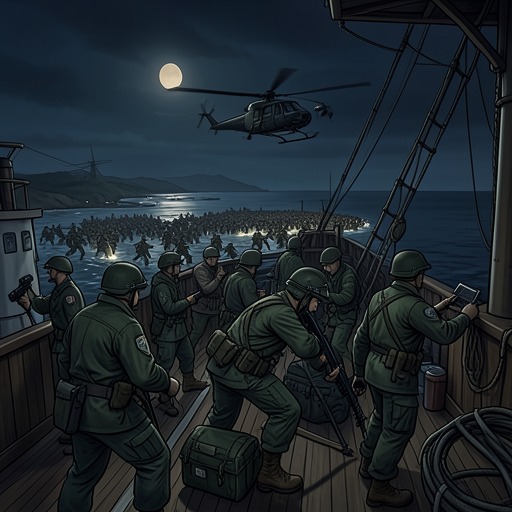
The later refueling sequence shows what securing Arsincevo makes possible. The aviation gasoline is tested and judged to meet Jefferson’s demanding standards. The remaining task is to pump nearly three million gallons—about nine thousand tons—aboard the carrier. Flight-deck operations are suspended during the transfer, underscoring both the scale of the undertaking and the care required when handling such a large quantity of highly flammable fuel.
The contrast between Jefferson’s nuclear power and its dependence on aviation gasoline sharpens the complex’s significance. The carrier can continue to move without conventional fuel for its own propulsion, but that does not keep its air wing in the fight. Arsincevo supplies the resource that connects the ship’s presence in the Black Sea to its ability to conduct sustained air operations.
Narrative Significance
Arsincevo gives the campaign a concrete logistical hinge. Naval strength, aircraft, and combat plans cannot by themselves overcome a closed route and dwindling supplies; the operation also depends on taking and using a fuel site. The enormous transfer to Jefferson shows how a local objective can alter the endurance of a much larger force.
The complex’s importance therefore lies in what it enables as much as in the fighting around it. First, its capture is framed as necessary to prevent the U.S. force from becoming operationally inert. Later, its fuel is measured, approved, and moved aboard in a transfer counted in millions of gallons and thousands of tons. The shift from contested ground to working supply point makes the campaign’s strategic dependence on logistics unmistakable.