Yalta
AfterburnYalta is the Crimean setting where a planned shore visit and a formal transfer of authority give way to armed crisis. The town brings together the ceremony placing the Crimean Military District under United Nations control, Matthew “Tombstone” Magruder’s private life, and the later danger that leaves United Nations personnel stranded there. Its changing role—from destination to ceremonial stage to threatened enclosure—makes Yalta a focal point for the novel’s collision of diplomacy and combat.
Arrival and setting
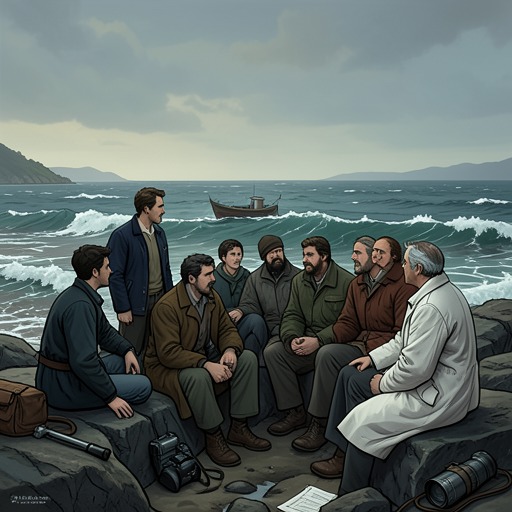
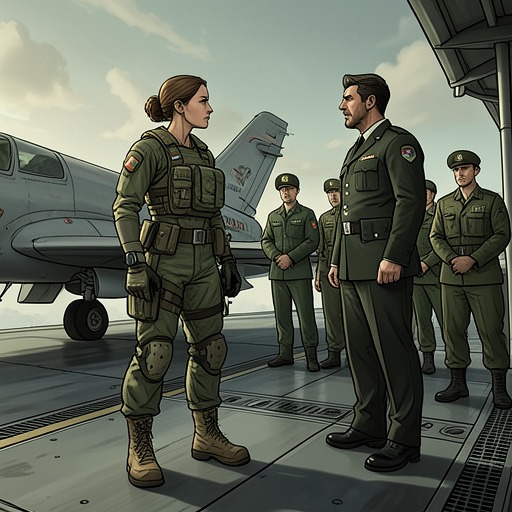
Yalta is identified in the narrative as part of the Crimean Military District. Before the visit, Admiral Tarrant asks whether Magruder wants to go ashore with him. The invitation establishes Yalta as a place reached from the offshore military setting, not simply a name on a map: the admiral’s proposed shore excursion brings Magruder into direct contact with the political and personal world unfolding on land.
A later arrival is by helicopter. At 1332 hours, the pilot tells the passengers that they are six minutes from landing and reports having received Russian clearance. The brief exchange makes access to Yalta dependent on permission amid an active military presence. The town is reachable, but not outside the competing authorities shaping events in Crimea.
The narrative also gives Yalta a domestic register. On Wednesday, 4 November, the weather is described as a mild seventy degrees, warmer than Magruder had expected for any part of the region. The detail sets an unexpectedly gentle scene against the military tension surrounding the city. At the Yalta Hotel, Magruder is still trying to understand what has passed between him and Pamela; he fears that saying the wrong thing could make either of them erupt. The hotel thus locates a personal crisis within the same city that is becoming the site of a public political reckoning.
Ceremony and political transition
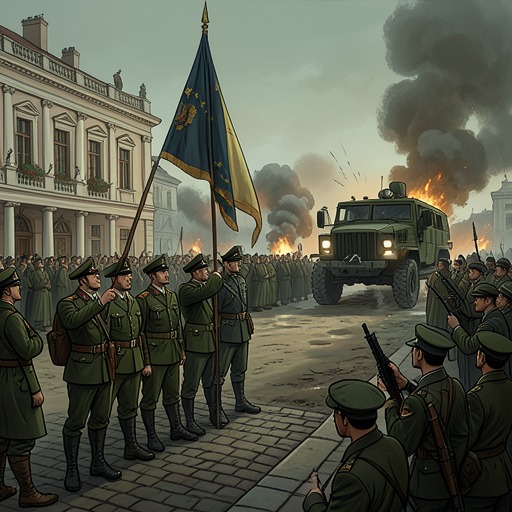
Yalta’s most conspicuous civic setting is the White Palace and the broad, level park in front of it. A stage, chairs for United Nations and Russian officials, and a large wooden podium crowded with microphones are arranged there for the transfer of the Crimean Military District to United Nations control. The setting is deliberately public and ceremonial: the change of authority is to be witnessed and announced, not merely enacted behind closed doors.
The gathering takes on its formal character when General Boychenko, Admiral Tarrant, and a special envoy appear at the front of the White Palace. A stir and a rising murmur in the crowd mark their arrival. The staging concentrates political authority in a visible place, with officials before the assembled audience and the podium prepared for speeches. Yalta is therefore not only a backdrop to the transfer; its public spaces provide the physical arrangement through which the transition is presented.
That ceremony gives the city a significance beyond the officials gathered there. The account places a change in Crimea’s governance at a recognizable urban site, then makes the same site vulnerable to the armed conflict that the formal proceedings cannot contain. The order of chairs, stage, and microphones belongs to a political process whose security will soon be tested by gunfire.
Hostilities and entrapment
The contrast becomes explicit when gunfire crackles in the distance at Yalta. The attack is identified as the expected assault by Dmitriev’s naval forces. Magruder is trapped at the palace with a group of people and feels helpless: the danger is audible, while his ability to act is limited by his confinement there. In this scene, the palace grounds change from the setting of public ceremony into an exposed position within a developing military crisis.
A later report describes the wider consequences for those in the city. About one hundred United Nations personnel, including a contingent from the United States Navy’s Jefferson battle group, are trapped in Yalta as hostilities escalate rapidly. The report notes that all flights are affected by the crisis, although the surviving passage does not specify the full restriction. The important change is clear: personnel who had been brought into the city for an international mission can no longer leave by air as conditions worsen.
Yalta consequently becomes an enclosure as much as a destination. Its significance lies in the reversal between the earlier plan of going ashore and the later reality of being stranded. The city concentrates people from the United Nations and the offshore naval force in a place where worsening fighting restricts their freedom of movement.
Routes out and narrative significance
The account’s attention to transport gives the crisis a geographic dimension. General Boychenko assembles a sizable convoy, mostly Zil trucks, alongside an assortment of other vehicles that includes ZSU-34-4s, BMP personnel carriers, and a T-80 tank. The engines are left idling while the group prepares for a long and dangerous passage, with the risk that Dmitriev’s forces may discover the plan.
The route is laid out along Crimea’s southeastern coast: the highway runs nearly 120 kilometers to its junction with highway M25 east of Feodosija, then continues east for another hundred kilometers. These distances turn movement away from the immediate crisis into a logistical undertaking rather than an easy escape. The convoy’s mixture of vehicles and the length of the coastal journey underline how exposed a departure can be when political control and military security are unsettled.
Across these episodes, Yalta’s role changes without losing its importance. The city is first approached as a shore destination, then shaped into a stage for a formal transfer, and finally experienced as a place of attack, restricted movement, and perilous departure. The White Palace and the hotel hold different kinds of confrontation—public authority and private uncertainty—while the later gunfire makes both part of a larger struggle over who can control and move through Crimea.