Event 1
Osage removal from Kansas to Indian Territory
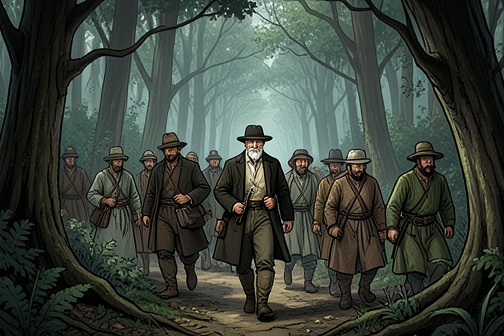
The [Osage removal from Kansas to Indian Territory](entity:event-recall-event-osage-removal-from-kans-9122bedb4d7e) was not a single departure so much as a new stage in a long dispossession. After earlier forced cessions had driven the Osage into a confined area of southeastern [Kansas](entity:location-recall-location-dc1f7fb4994c), they sold that land in 1870 and purchased a new homeland from the Cherokee. Their early-1870s migration brought them to a place they hoped would be harder for white settlers to covet, but it could not undo the losses already suffered or guarantee that their land and autonomy would remain secure.
## The Loss of Kansas
The migration followed decades of pressure to surrender Osage territory. Within four years of the United States’ Louisiana Purchase, the Osage had been compelled to relinquish land between the Arkansas and Missouri Rivers. Over the next two decades they ceded nearly a hundred million acres of ancestral territory, eventually taking refuge in a tract in southeastern Kansas measuring about fifty by 125 miles. That refuge, too, was soon under pressure.
In 1870 the Osage agreed to sell their Kansas lands to settlers for $1.25 an acre. The agreement followed expulsion from their lodges and the plundering of their graves; it did not put an end to violence. Impatient settlers had already massacred Osage people and mutilated and scalped their bodies. The contrast between a formal sale and the violence surrounding it makes clear how limited the Osage’s control over their departure had become: legal transactions unfolded alongside the seizure of homes and desecration of the dead.
## Choosing a New Homeland
In search of somewhere to live, the Osage considered buying nearly 1.5 million acres from the Cherokee in what was then [Indian Territory](entity:location-recall-location-2c7ac31cd1b6), south of Kansas. The region had itself become an endpoint on the Trail of Tears for tribes expelled from their homelands. White observers disparaged the area as rocky and unsuitable for cultivation. To the Osage, those same qualities offered a measure of hope. At a council meeting, [Wah-Ti-An-Kah](entity:character-recall-character-d3739d3b9f72) argued that the hills might deter white settlement and the intrusion of settlers who would eventually demand the Osage land.
The Osage bought the territory for seventy cents an acre and began their exodus in the early 1870s. The price and purchase marked an exercise of decision-making, but the journey also meant leaving behind the graves of their children and relatives. A witness remembered the cries of elders, especially women, as the people departed. The new homeland was chosen strategically; the departure was nevertheless a profound separation from the places where the community had lived and buried its dead.
## Settlement and Loss
After completing the journey, the Osage established several camps. [Pawhuska, capital of the Osage Nation](entity:location-recall-location-fc455cdf3ade), became the most significant settlement; an imposing sandstone field office for the [Office of Indian Affairs](entity:organization-recall-organization-office-of-indian-ca5d4f965b72) stood on a prominent hilltop there. [Gray Horse](entity:location-recall-location-gray-horse-73527f7e97ed), farther west, began as little more than a cluster of newly built lodges. [Lizzie](entity:character-recall-character-lizzie-e45debe8b469) and Ne-kah-e-se-y, who married in 1874, settled at Gray Horse, making the new territory the setting for the next generation of family life.
The move did not reverse the damage wrought by repeated forced migrations and diseases including smallpox. One estimate placed the Osage population at about three thousand, roughly a third of its size seventy years earlier. An agent of the Office of Indian Affairs described this diminished population as the remnant of a people who had once held the region. The removal thus carried two histories at once: the effort to establish a community in a new place, and the severe demographic loss that had made relocation necessary.
For a time, buffalo hunts preserved a connection to an earlier way of life. The Osage pursued the animals for food, but also for the memories and practices associated with the past. A white trader who accompanied them recalled older men gathering around campfires to recount stories of war and the hunt. These accounts do not erase the upheaval of removal; they show how communal memory continued in the new homeland, even as the conditions that sustained the old life had been disrupted.
## The Continuing Contest over Land
The move to Indian Territory did not end federal efforts to remake Osage life or open land to outsiders. In 1894, when Mollie was seven, her parents were ordered to enroll her at the [St. Louis School](entity:organization-recall-organization-st-louis-school-e0bd6f33e833) in [Pawhuska](entity:location-recall-location-pawhuska-37ec386b1006). They faced the threat that the government would withhold annuity payments if they refused. The separation of a child from her family was one expression of a broader assimilation campaign, which gathered force as officials pressed for allotment: dividing the reservation into individual parcels and opening the remainder to settlers.
The Osage negotiated a different outcome from the one imposed on many other tribes. In the 1906 agreement, the tribe secured allotments for its members rather than opening surplus land to a land run, increasing each individual allotment from 160 acres to 657. The agreement also reserved the oil, gas, coal, and other minerals to the Osage Tribe. That provision preserved a collective claim to resources beneath the surface even as the land above it was divided. The reservation of mineral rights was a consequential defense of Osage interests, not an end to outside control: subsequent federal policies placed many Osage under white financial guardians and restricted their access to their own trust funds.
The book’s later account returns to removal through the evidence and memories that survived it. Its reporter drew on archival records and interviews, including conversations with Osage descendants of those affected by the [Reign of Terror](entity:expression-recall-expression-reign-of-terror-c2ed6171dd61). At the [Osage Nation Museum](entity:location-recall-location-osage-nation-museum-1f58bb6e04c1), a panoramic photograph from 1924 had a panel removed because it showed [William K. Hale](entity:character-recall-character-william-k-hale-4e2a35719096); the missing image testified not to forgetting, but to the community’s continuing memory of violence. [Kathryn Red Corn](entity:character-recall-character-kathryn-red-corn-f4cb96f8e297) told the reporter that the pain endured because so many Osage had lost close relatives. The annual I’n-Lon-Schka dances in Pawhuska and Gray Horse, among other communities, preserve traditions and bring Osage together. In this account, the early-1870s migration is therefore both a defining rupture and part of a longer history of survival, memory, and continuing claims to land and community.
Event 2
Cherokee Outlet land run
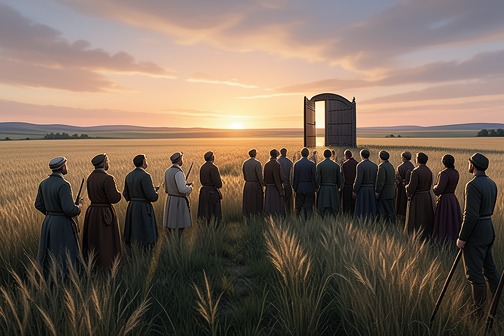
The [Cherokee Outlet land run](entity:event-recall-event-cherokee-outlet-land-ru-a7c088f3599b) was the September 1893 opening of a former Cherokee territory to settlers competing for land claims. More than a race, it was a public demonstration of how swiftly Indigenous land could be converted into private property—and a warning the [Osage Nation](entity:organization-recall-organization-osage-nation-e1f8bb010e26) watched closely as it faced pressure to accept allotment. The spectacle of a territory being carved up helped make the consequences of the policy tangible: settlers could arrive in overwhelming numbers, and a government land opening could turn claims into a contest of speed and force.
## The Land Before the Run
The [Cherokee Outlet](entity:location-recall-location-8b2129918c7d) was a vast prairie near the western boundary of the Osage reservation. After the United States purchased the land from the Cherokee, it announced that at noon on September 16, 1893, settlers could claim one of 42,000 parcels by reaching it first. For days beforehand, tens of thousands of people—including families who had traveled from as far away as California and New York—gathered along the boundary. The waiting crowd stretched across the horizon, an immense human presence poised to enter and claim the land.
For the Osage Nation, the opening belonged to a longer history of dispossession. The Osage had been forced from their earlier territory and, in 1870, agreed to sell their [Kansas](entity:location-recall-location-dc1f7fb4994c) lands to settlers for $1.25 an acre after being expelled from their lodges and seeing their graves plundered. The sale did not protect them from violence: impatient settlers massacred several Osage and mutilated and scalped their bodies. Against that history, the Cherokee Outlet was not a distant spectacle. It offered a recent example of what could follow when Indigenous land passed into the hands of settlers.
## The Race for Claims
The opening did not begin cleanly. Several settlers who tried to cross the line early were shot; only afterward did the starting gun sound. The rush then swept across the prairie. A contemporary reporter described people knocking one another down, women fainting and being trampled, and men fighting over claims they each insisted they had reached first. Knives and guns appeared in the struggle. By nightfall, the Cherokee Outlet had been divided into pieces.
The run’s defining mechanism was also its defining violence: a claim went to the person who reached it first. The crowd, the starting signal, the rush and the fights turned a government decision about land into an immediate contest among individuals. The land run made the transformation visible in a single day: a broad territory became thousands of competing private claims.
## What the Osage Nation Took from It
The Osage Nation had its own land at stake as the United States pressed for allotment. Under the proposed policy, the reservation would be split into 160-acre parcels for tribal members, while the remaining territory would be opened to settlers. The Osage had seen the Cherokee Outlet divided after the federal government acquired it, and the prospect of a similar opening made allotment more than an abstract administrative change. It carried the danger of a rush onto Osage land.
Because the Osage had purchased their territory, imposing allotment was harder than it had been on many other tribes. Led by [James Bigheart](entity:character-recall-character-2458905531b2), the Osage delayed the process for years. As pressure mounted, [Bigheart](entity:character-recall-character-540ddcdde84c) sent [John Palmer](entity:character-recall-character-23c0d8bb46ed) to Washington in 1904 to monitor the government’s plans. In negotiations, the Osage secured a different distribution: the land would be divided only among tribal members, increasing each individual allotment from 160 to 657 acres and avoiding a land run on their territory. White buyers might still try to purchase individual allotments, but the agreement prevented the government from opening the Osage land to a mass claim race of the kind seen in the Cherokee Outlet.
## The Mineral Reservation and the Run’s Legacy
The agreement also preserved something the land run did not: collective control over the minerals beneath the surface. Its terms reserved the oil, gas, coal and other minerals to the Osage Tribe. The Osage already knew of oil deposits, and several small wells were operating by the time of the negotiations. Their agreement protected a resource domain that could not be seen from the surface, even as the land itself was divided into individual allotments.
The run therefore stands in the book not simply as a dramatic episode in the settlement of the Cherokee Outlet, but as a precedent the Osage could study while negotiating the future of their own territory. Its crowded boundary and violent rush showed what a settler land opening could entail. The Osage response was not to reproduce that event, but to bargain for terms that withheld their land from a mass race and kept mineral rights with the tribe. That protection did not end the wider system of federal control over Osage lives and property, but the run helps explain why the mineral reservation and the terms of allotment mattered so much.
Event 3
Osage Allotment Act of 1906
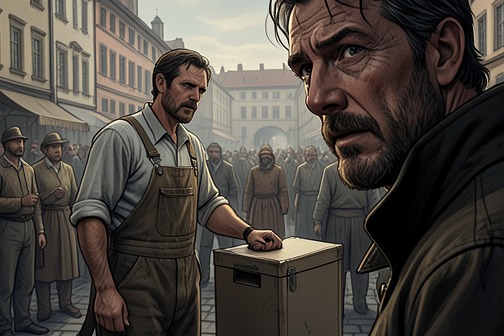
The [Osage Allotment Act of 1906](entity:event-recall-event-osage-allotment-act-of-6d3f7f5ed088) was a negotiated settlement that divided the [Osage Reservation](entity:location-recall-location-osage-reservation-6f9651a3e176) into individual surface holdings while reserving its minerals to the Osage Tribe. It was both a defense against another land rush and a consequential compromise: Osage leaders preserved collective control of the oil and other minerals, even as allotment advanced the federal project of replacing communal landholding with private property and opened the way for outsiders to acquire surface land. The agreement created the basis of the mineral headright system that would shape Osage wealth and its administration for generations.
## Land Loss and the Allotment Campaign
The agreement followed a long sequence of dispossession. Within four years of Thomas Jefferson’s 1804 meeting with Osage chiefs, the United States had compelled the Osage to relinquish territory between the Arkansas and Missouri Rivers. Over the following two decades, they ceded nearly a hundred million acres and ultimately sought refuge in a 50-by-125-mile tract in southeastern [Kansas](entity:location-recall-location-dc1f7fb4994c). In 1870, after being driven from their lodges and amid attacks on Osage people, they agreed to sell their Kansas lands to settlers for $1.25 an acre. The move to allotment therefore arrived not as an isolated administrative reform but after repeated losses of land and home.
The Osage later searched for a new homeland and debated purchasing nearly 1.5 million acres from the Cherokee in [Indian Territory](entity:location-recall-location-2c7ac31cd1b6). Their purchase of land made it harder for the federal government to impose allotment than it had been elsewhere, but it did not remove the pressure. By the late nineteenth century, federal policy aimed to parcel reservations into individual holdings, generally of 160 acres, and open the remainder to settlers. The policy was meant to end communal landholding and recast Native people as private-property owners, a transformation that could also facilitate the acquisition of their land. The Osage had seen the consequences of a land rush in the [Cherokee Outlet](entity:location-recall-location-8b2129918c7d), where land was divided among claimants in a violent race. Their leaders sought terms that would avoid a similar scramble on Osage territory.
## Negotiating the Agreement
[James Bigheart](entity:character-recall-character-2458905531b2) led the Osage effort to delay allotment. The Osage were the last tribe in Indian Territory to undergo the process, and the delay gave them leverage as federal officials sought to clear obstacles to the creation of [Oklahoma](entity:location-recall-location-oklahoma-4e6205abe2e5). In 1904, [Bigheart](entity:character-recall-character-540ddcdde84c) sent [John Palmer](entity:character-recall-character-23c0d8bb46ed), a young lawyer adopted into an Osage family, to Washington to follow developments and represent the tribe’s interests. Bigheart, Palmer, and other Osage negotiators then spent months bargaining with government officials over the terms.
The resulting agreement divided land solely among members of the tribe. Instead of the standard 160-acre parcel, each Osage allotment increased to 657 acres. By keeping the land from being opened immediately to a mass claim by settlers, the arrangement avoided a land run; it did not prevent white buyers from later seeking to purchase the allotted surface property. The distinction between surface land and minerals was central. The agreement reserved the oil, gas, coal, and other minerals beneath the land to the Osage Tribe, retaining a form of collective ownership that individual surface allotments did not erase.
The mineral reservation was not merely a speculative provision. More than a decade earlier, an Osage man had shown [John Florer](entity:character-recall-character-607379cdad31), the owner of a trading post in [Gray Horse](entity:location-recall-location-gray-horse-73527f7e97ed), an oily rainbow sheen on a creek. Florer recognized the substance as oil, and, with tribal approval, he and a banking partner obtained a drilling lease. By the time allotment was negotiated, several small wells were operating. The Osage thus preserved a resource they knew existed, even though the scale of the fortune beneath their land was not yet apparent. After the terms were agreed, Palmer told Congress that he had written the Osage agreement out by hand, underscoring the negotiators’ direct role in shaping its language.
## Headrights and the Underground Reservation
When the agreement was implemented in 1906, Mollie and her family, like other people on the Osage tribal roll, received headrights: shares in the tribe’s mineral trust. Oklahoma entered the Union the following year, after which Osage members could sell their surface land in what was now [Osage County](entity:location-recall-location-osage-county-7479182a5967). The mineral headrights followed a different rule. They could not be bought or sold; they could pass only by inheritance. Surface property might leave Osage hands, while the underlying mineral interest remained governed through the tribal trust and its hereditary shares. The book describes this arrangement as the first underground reservation: a reservation beneath land that could be transferred above it.
The provision gave the Osage a durable stake in mineral revenues, and the tribe subsequently leased more areas to white prospectors. Drilling transformed the landscape as workers sank wells; some prospectors instead struck dry holes and departed. The agreement’s importance lies in the legal boundary it established between transferable surface holdings and minerals retained for the tribe. It did not halt outside entry or restore the lands previously lost, but it preserved a source of collective wealth that could not simply be purchased along with an allotment.
## Protection and Its Limits
The mineral reservation did not place Osage members beyond federal control of their finances. The book also describes a guardianship system in which officials deemed many Osage unable to manage their own money, with decisions frequently tied to a person’s degree of Indigenous ancestry. [Lizzie](entity:character-recall-character-lizzie-e45debe8b469) and Anna, for example, were classified as incompetent and had a white guardian overseeing their spending. In 1921, Congress imposed further restrictions: Osage people under guardianship could withdraw only limited amounts from their trust funds, even when they needed money for education or medical care. These later controls should not be confused with the 1906 agreement’s mineral reservation, but they show the unequal conditions under which the preserved wealth was administered.
The agreement’s achievement was therefore specific, not absolute. Bigheart, Palmer, and the other negotiators secured a larger allotment for each member and kept mineral rights from becoming ordinary saleable property. That arrangement helped preserve tribal control of the subsurface even as allotment fragmented the surface and federal authorities continued to regulate Osage finances. The Act was a strategic response to land seizure, one that protected a collective resource within a policy designed to break up collective landholding.
Event 4
Discovery of oil on the Osage Reservation
The discovery of oil on the [Osage Reservation](entity:location-recall-location-osage-reservation-6f9651a3e176) turned an underground resource the Osage had deliberately retained into the foundation of a vast oil economy—and of a profound struggle over who would control its proceeds. The first signs appeared before the reservation’s mineral rights were secured; later gushers made the wealth spectacularly visible. But the oil’s value did not simply pass from the ground to the Osage: leases, headrights, guardianships, and the eventual decline of production shaped who benefited and who bore the costs.
## Land, Minerals, and the First Signs
The discovery unfolded against a history of dispossession. After being compelled to relinquish territory between the Arkansas and Missouri Rivers and cede nearly a hundred million acres, the Osage were eventually driven from [Kansas](entity:location-recall-location-dc1f7fb4994c). In 1870 they agreed to sell their Kansas lands for $1.25 an acre, after settlers had already seized land and killed members of the tribe. The Osage then sought a new homeland in a region of northeastern [Indian Territory](entity:location-recall-location-2c7ac31cd1b6) that white observers considered rocky and unsuitable for cultivation. Decades later, oil beneath this land would make it among the most valuable territory in the country.
The Osage recognized that minerals mattered when negotiating the terms of allotment. During discussions with government officials, they secured an agreement to divide the land among tribal members, increasing individual allotments from 160 to 657 acres, while reserving the oil, gas, coal, and other minerals to the Osage Tribe. This provision protected a resource that could not be seen from the surface, even as individual surface parcels could later be sold. Under the 1906 agreement, each person on the tribal roll received a headright, a share in the tribal mineral trust. Headrights could not be bought or sold; they could only be inherited. The arrangement preserved collective control over mineral income in a form distinct from ownership of the land above it.
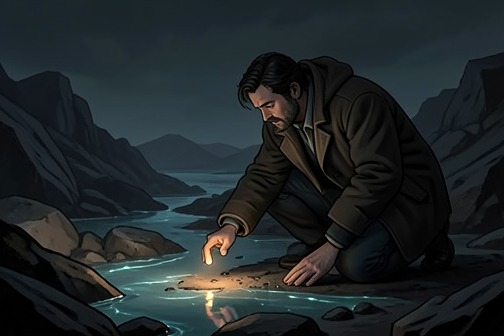
Evidence of oil had surfaced more than a decade before the allotment agreement. An Osage person showed [John Florer](entity:character-recall-character-607379cdad31), the owner of a trading post in [Gray Horse](entity:location-recall-location-gray-horse-73527f7e97ed), a rainbow sheen on a creek in the reservation’s eastern part. Florer dabbed a blanket into the liquid and squeezed it into a container. He recognized its smell as similar to axle grease sold at his store, then showed the sample to others, who confirmed that it was oil. With the Osage’s approval, Florer and a wealthy banking partner obtained a drilling lease. By the time the allotment terms were negotiated, several small wells were operating. The mineral reservation was therefore not merely a fortunate clause adopted in ignorance: it held on to a realm the Osage knew to exist, though they could not yet know the scale of the fortune beneath it.
## Drilling and the Gushers
As the Osage leased more areas to white prospectors, drilling altered the landscape and brought unfamiliar labor and machinery into the reservation. Workers lowered torpedoes filled with nitroglycerin into wells and detonated them. At times the explosions brought fragments of ancient Indigenous spearpoints or arrowheads to the surface, remnants of an older human presence among the new structures built to reach the oil. Many prospectors found only dry wells, known as dusters, and left disappointed. The search was uncertain and often frantic, but every successful well could change the value of the surrounding land and the scale of the income flowing to the tribe.
A dramatic strike came in the spring of 1917 on Lot 185, less than half a mile from Lot 50. [Frank Phillips](entity:character-recall-character-aa70cc652bc1), a wildcatter who had previously sold a baldness-prevention tonic, was on the drilling platform with his workers when the derrick began to tremble. A rumbling sound rose from the hole; the workers ran as the noise swelled. A driller pulled Phillips away from the platform just before the earth burst open and a black column of oil shot into the air. The scene condensed the risks and sudden reversals of drilling: a hole in the ground could yield nothing, or erupt into a forceful public display of wealth.
The strikes grew more remarkable. In 1920, [E. W. Marland](entity:character-recall-character-e-w-e111d97cb81f) discovered the [Burbank field](entity:location-recall-location-a0e6830dc2e3), where a new well produced 680 barrels in its first twenty-four hours. Osage people rushed to watch gushers, moving close for a view while taking care not to cause a spark. Oil could rise fifty, sixty, or even a hundred feet above the rigging, then spray the fields and flowers and coat the faces of workers and spectators. People hugged and tossed their hats in celebration. The dark, foul-smelling substance that had come from deep underground could look, in the moment of its arrival, like a marvel. The spectacle made the oil’s abundance visible, but it did not reveal how unequally the authority over its proceeds might be exercised.
## Royalties, Auctions, and Control of Wealth
As more oil was tapped, the financial transformation became measurable. Members of the tribe received quarterly payments that began at only a few dollars and grew over time into hundreds and then thousands. In 1923 alone, the tribe took in more than $30 million, an amount described as equivalent to more than $400 million in present-day money. The Osage were regarded as the wealthiest people per capita in the world. These figures registered both the success of preserving mineral rights and the exceptional scale of the oil deposits; they did not mean that every member had unrestricted access to their wealth.
Leasing created another arena in which the value of the underground reservation was negotiated. Auctions overseen by the Department of the Interior began in 1912 and were held about four times a year. Only a portion of the reservation had been opened to drilling, while bidding for an individual lease, typically covering 160 acres, rose sharply. The events drew oil barons to [Pawhuska, capital of the Osage Nation](entity:location-recall-location-fc455cdf3ade), including E. W. Marland, [Bill Skelly](entity:character-recall-character-bbc45b106844), [Harry Sinclair](entity:character-recall-character-9650157f4784), and Frank Phillips. In good weather, auctions took place beneath the [Million Dollar Elm](entity:expression-recall-expression-million-dollar-elm-53f0586492f3), with Osage spectators and local businesspeople watching. The leases brought money and commercial activity into the community, while concentrating the immediate contest over access to oil in the hands of bidders, officials, and those who managed the legal process.
The distinction between ownership of a headright and control over the money it generated became consequential. Many Osage were subject to restrictions on their finances and assigned white guardians to manage their affairs. Some guardians acted in their wards’ interests, but others exploited the system: they sold goods from their own businesses at inflated prices, directed clients to favored stores and banks in exchange for kickbacks, claimed to purchase property for wards while acquiring it for themselves, or stole outright. One government study estimated that guardians had taken at least $8 million directly from restricted Osage accounts before 1925. The oil discovery had made the mineral trust immensely valuable; guardianship then became a mechanism through which people entrusted to protect Osage wealth could divert it.
## Decline and Aftermath
The boom did not last at its peak. The oil fields were gradually depleted, and the [Great Depression](entity:time-recall-time-great-depression-1a196e2fd6b1) brought a severe fall in prices and income. Oil that had sold for more than $3 a barrel during boom years fell to 65 cents in 1931. An annual headright payment dropped below $800 the following year. The change was especially stark in Gray Horse, where, as one resident later recalled, the wells that had once pumped nearby eventually stopped. The decline did not erase the history of the boom, but it made plain how closely income had depended on volatile oil prices and continued production.
More than ten thousand wells remained scattered across the reservation in the later period described in the book, but most were stripper wells producing fewer than fifteen barrels a day. At a 2012 auction in Tulsa, three leases sold for less than $15,000 altogether. A later headright holder still received quarterly payments from the mineral trust, but the amount varied with oil prices and usually came to only a few thousand dollars; it helped without providing enough to live on. The progression from creekside sheen to towering gusher, from millions in collective revenue to depleted wells and smaller checks, gives the discovery its double significance. It brought the Osage extraordinary wealth because their agreement had preserved mineral rights, while the subsequent contests over leases and the administration of income showed that keeping a share in the resource did not by itself secure control over every benefit it produced.
Event 5
Murder of Anna Brown
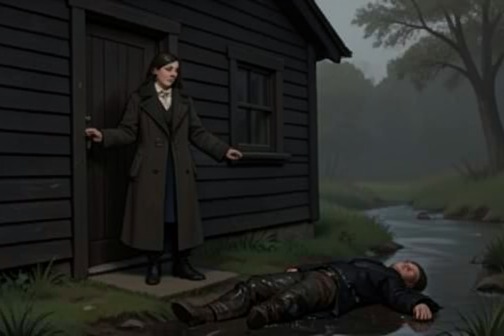
The [Murder of Anna Brown](entity:event-recall-event-murder-of-anna-brown-812e8ff7edee) began with an absence that became a family crisis and then a public revelation of murder. After Anna failed to return home, her sister Mollie’s search led from a locked, dark house to a body found near [Three Mile Creek](entity:location-recall-location-three-mile-creek-5c8ea577f067); the clothes Mollie had washed and the gold fillings in Anna’s teeth made the identification. The discovery exposed not only Anna’s killing but the vulnerability of a community already unsettled by another disappearance.
## Disappearance and Identification
Mollie had last seen Anna after caring for her: she washed her clothes, gave her food, and stayed with her until she seemed sober and once again bright and charming. The sisters shared a moment of calm before Anna left. [Bryan Burkhart](entity:character-recall-character-bryan-burkhart-ec4e4cf3a7fc) said he had taken Anna directly home, but after three nights Mollie pressed the family to act. Ernest went to Anna’s house, tried the locked front door, and saw dark, apparently deserted rooms. Anna’s head servant confirmed that she had found the door locked when she stopped by to close the windows before a rainstorm. Anna was gone.
Her disappearance circulated through the boomtowns, where concern was sharpened by news that [Charles Whitehorn](entity:character-recall-character-charles-whitehorn-423b1a7d04e1) had vanished a week earlier. A thirty-year-old man known as genial and witty, Whitehorn had left his home in the southwestern part of the reservation for [Pawhuska](entity:location-recall-location-pawhuska-37ec386b1006) on May 14 and never returned. His disappearance made Anna’s absence feel less like a private family mystery and more like part of a wider danger.
A week after Anna disappeared, an oil worker on a hill about a mile north of downtown Pawhuska noticed something in brush at the base of a derrick. The corpse was badly decomposed, with two bullet holes between the eyes. A letter in one of its pockets identified the victim as Charles Whitehorn. Around the same time, a boy squirrel hunting with his father and another man near Three Mile Creek found a decomposing woman’s body in a ravine. The men could find no lawman in [Fairfax](entity:location-recall-location-fairfax-3bf95f4bec15), so they went to the [Big Hill Trading Company](entity:organization-recall-organization-d3c46f3d65fc), where Scott Mathis arranged for an undertaker and other men to retrieve the body.
Mathis, who managed Anna’s financial affairs, contacted Mollie when those at the ravine could not identify the woman. Mollie arrived with Ernest, Bryan, her sister Rita, and Rita’s husband, [Bill Smith](entity:character-recall-character-bill-smith-99833f190659); others who had known Anna, as well as curious onlookers, followed. The face was almost impossible to recognize, but Mollie and Rita knew the Indian blanket and clothes Mollie had washed for her. Bill used a stick to open the dead woman’s mouth, revealing Anna’s gold fillings. Rita wept; Mollie confirmed the identification and left the creek with Ernest, composed in manner but facing the first sign of a darkness threatening her family and the Osage people.
## Inquest and Crime Scene
The discovery at Three Mile Creek initiated a hurried coroner’s inquest, an older form of citizen-led investigation that survived in places where formal policing remained thin. A justice of the peace selected jurors from among the white men gathered at the ravine, including Scott Mathis. They were to decide whether [Anna Brown](entity:character-recall-character-anna-brown-76ad5cff9420) had died by accident or human action and, if a felony had occurred, to identify its principals and accessories. [James Shoun](entity:character-recall-character-james-shoun-2bdb02f65d6e) and [David Shoun](entity:character-recall-character-david-shoun-7b0843ece91a), the brothers who cared for Mollie’s family, were summoned to examine the body while the jurors and others crowded around.
The doctors worked over a plank serving as a table, using a few basic instruments from a medical bag, including a saw. They inspected Anna’s bloomers and skirt for tears or stains, then tried to estimate when she had died. Decomposition made precise timing impossible, but they placed her death roughly five to seven days before the examination. The delay had obscured much of what the body might otherwise have disclosed.
When the Shouns shifted Anna’s head inside the wooden box, part of her scalp slipped away and exposed a round opening in the back of her skull. The hole was barely the width of a pencil. Mathis thought it might have been made by a .32-caliber bullet; its path, entering just below the crown and traveling downward, made the conclusion unmistakable to those present: Anna had been murdered. The evidence transformed the question before the inquest from whether a death had occurred into how little the investigators could recover about the person who had caused it.
Sheriff [Harve M. Freas](entity:character-recall-character-harve-m-freas-38dab5d2f50a) was already occupied with Charles Whitehorn’s killing, so he initially sent a deputy to collect evidence. A [Fairfax town](entity:location-recall-location-aa296c98972b) marshal joined him while the Shoun brothers attempted to find the bullet, apparently lodged in Anna’s skull. They sawed through the cranium and lifted her brain onto the plank, but David Shoun could not trace the bullet through its damaged tissue. The effort produced no weapon identification and no projectile for later comparison.
At the creek, the lawmen found smears of blood on a rock where Anna’s body had lain and a bottle partly filled with clear liquid that smelled of moonshine. They surmised that Anna had been drinking on the rock when someone approached from behind and shot her at close range. The marshal also spotted two sets of car tracks running from the road into the gulch; both appeared to have entered from the southeast and circled back. These observations suggested a sequence of events, but they did not establish who had been there or when.
The investigation stopped short of preserving even these traces. No cast was made of the tire marks, the bottle was not dusted for fingerprints, Anna’s body was not tested for gunpowder residue, and the scene was not photographed. By then, numerous onlookers had already disturbed the ravine. The inquest had found the decisive fact of murder, but the untrained investigators left behind no reliable forensic record capable of carrying that finding toward an identified killer.
## Family Loss and the Meaning of the Death
The identification reached [Lizzie](entity:character-recall-character-lizzie-e45debe8b469) by a separate, intimate route. Someone retrieved one of Anna Brown’s earrings from her body and brought it to [Mollie Burkhart](entity:character-recall-character-mollie-burkhart-8744148694d1)’s mother, who was too ill to go to the ravine. Lizzie recognized it immediately. The small object confirmed at home what the clothes and gold fillings had established at the creek: Anna, her oldest and most favored daughter, was dead.
For Lizzie, the loss carried a meaning deeper than the failure of the inquest to identify a killer. In Osage understanding, the birth of children was among the greatest blessings of [Wah’Kon-Tah](entity:concept-recall-concept-wah-kon-tah-69aa74e58776), the life force present in the sun, moon, earth, and stars. Lizzie had held to these traditional beliefs even as many Osage had relinquished them; government officials disparaged women who maintained such practices as resisting modern ideas and customs. The death of her daughter therefore entered a spiritual order that had long helped make sense of a world marked by chaos and uncertainty.
Now that order seemed threatened. Anna had been taken before her allotted time, and Lizzie’s worsening health followed the loss, as though grief itself had become an illness. The murder’s consequences thus reached beyond the ravine and the failed collection of evidence: a killing that the local inquiry could establish but not solve deepened a family’s bereavement and intensified the sense that the violence might unsettle the wider Osage community.
## The Limits of Local Law
The inquest belonged to an older tradition of citizen policing: a justice of the peace assembled jurors to decide whether Anna Brown’s death resulted from human action and, if so, to identify those responsible. Such inquiries survived even after formal police departments had displaced citizen-led pursuit in much of the country. At the ravine, however, this remnant of public investigation depended on men gathered at the scene, while the evidence was already exposed to heat, decomposition, and a crowd.
The local law-enforcement system offered little assurance that a formal investigation would be more effective. Sheriff Harve M. Freas, a fifty-eight-year-old frontiersman, had a reputation in one account as a terror to wrongdoers, but residents also murmured that he tolerated gamblers and bootleggers, including [Kelsie Morrison](entity:character-recall-character-kelsie-morrison-209b2cf9552f) and [Henry Grammer](entity:character-recall-character-henry-grammer-a6d4b8c19023). One of [Grammer](entity:character-recall-character-1e42afabab89)’s workers later told authorities he expected to be released within minutes if arrested. A citizens’ resolution had already urged Freas to enforce the law. These reports do not establish that the sheriff participated in Anna’s murder; they show why the authority meant to investigate it was itself a source of public doubt.
The killing therefore emerged amid two overlapping failures: the inquest could establish that Anna had been shot, but its investigators did not preserve the physical traces that might have carried the inquiry further, and the county’s law-enforcement reputation was clouded by allegations of indulgence toward criminal businesses. The ravine yielded a clear finding of murder and no identified killer. That gap between certainty about the crime and weakness in the institutions charged with pursuing it made Anna’s death a warning of a danger larger than one unresolved case.
Event 6
Osage Reign of Terror
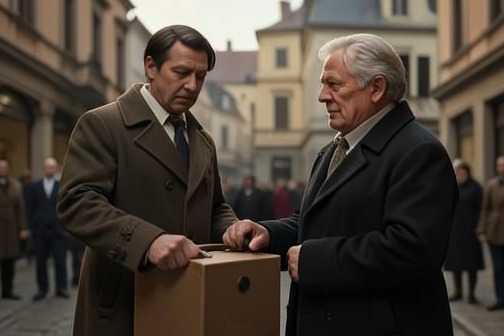
The [Osage Reign of Terror](entity:event-recall-event-osage-reign-of-terror-d9a3aed038ee) was a campaign of murder against Osage people whose oil-derived wealth and inherited headrights made them targets, while racialized financial controls and weak local enforcement left many exposed. Its significance lies not only in the killings attributed to [William K. Hale](entity:character-recall-character-william-k-hale-4e2a35719096) and his associates, but in a broader pattern: suspicious deaths began earlier than the conventional timeline, continued beyond Hale’s arrest, and were often disguised so successfully that families never learned what had happened.
## Land, wealth, and vulnerability
The history behind the murders reaches back well before the most notorious killings. The Osage were compelled to relinquish lands between the Arkansas and Missouri Rivers, then forced through further cessions that left them confined to a tract in southeastern [Kansas](entity:location-recall-location-dc1f7fb4994c). Settlers later seized Osage land by force; in 1870, after Osage people had been expelled from their homes and graves had been plundered, the tribe agreed to sell its Kansas lands. The violence surrounding dispossession was not a separate prelude so much as an earlier expression of the unequal power that would shape later struggles over Osage property.
Assimilation policy extended into family life. In 1894, when [Mollie Burkhart](entity:character-recall-character-mollie-burkhart-8744148694d1) was seven, her parents were told to enroll her at the [St. Louis School](entity:organization-recall-organization-st-louis-school-e0bd6f33e833), a Catholic boarding school for girls in [Pawhuska](entity:location-recall-location-pawhuska-37ec386b1006). In the late 1890s, the federal government pressed for allotment: the reservation was to be divided into private parcels, with remaining land opened to settlers. Osage negotiators, including [George Bigheart](entity:character-recall-character-george-bigheart-4b207f85cc08) and [John Palmer](entity:character-recall-character-23c0d8bb46ed), secured an agreement that divided land among tribal members rather than opening it to a settler land run. Each allotment consequently grew from the proposed 160 acres to 657 acres, and the agreement reserved oil, gas, coal, and other minerals to the Osage Tribe. That protection preserved collective mineral rights, but the resulting oil wealth also made the revenues attached to individual headrights objects of intense interest.
The economic stakes were compounded by government control over access to money. Officials classified many Osage people as unable to manage their own affairs and assigned them white guardians, sometimes regulating ordinary purchases. In practice, the decision was closely tied to blood quantum: full-blooded Osage people were far more likely to be placed under guardianship than mixed-blood people. A 1921 law added restrictions on withdrawals from trust funds, limiting what restricted people could spend even when they needed money for education or medical care. Mollie, a full-blooded Osage woman, was among those whose funds were restricted; her husband, [Ernest Burkhart](entity:character-recall-character-ernest-burkhart-4d0bad3fddae), served as her guardian. These arrangements did not themselves establish who committed a murder, but they placed property, income, and everyday financial authority in the hands of people outside the community.
## A widening pattern of violence
The murders took different forms and did not conform to a single killer’s routine. Investigators later noted the variety of methods and the spread of bodies across different parts of [Oklahoma](entity:location-recall-location-oklahoma-4e6205abe2e5) and beyond; this pattern suggested the use of accomplices rather than one impulsive perpetrator acting alone. The book describes a calculating criminal operation capable of using henchmen and, in some cases, substances that could make a killing appear to be illness or intoxication. Its organizing target was often the value that could pass through an Osage person’s headright, but the surviving evidence does not permit every suspicious death to be assigned to one conspiracy.
Violence against people who might expose crimes became part of the climate. In 1921, [Barney McBride](entity:character-recall-character-71cba91f9dff) traveled to [Washington, D.C.](entity:location-recall-location-1d5300173b80), carrying a Bible and a .45-caliber revolver. After a telegram warned him to be careful, he went out to play billiards; someone seized him outside and pulled a burlap sack over his head. His body was found the next morning in a Maryland culvert. He had been stabbed more than twenty times, beaten, and stripped except for his socks and shoes; a card bearing his name had been left in one shoe. Investigators believed more than one person had taken part and suspected the attackers had followed him from Oklahoma. News of his killing reached Mollie and her family, and the press treated it as a possible warning amid a conspiracy against wealthy Osage people.
Later, after [William Smith](entity:character-recall-character-61291b0da797) and his wife, [Rita Smith](entity:character-recall-character-rita-smith-1c5a6887f2c4), were caught in a bombing, William survived for nearly two days. He asked where Rita was buried. His doctor, [David Shoun](entity:character-recall-character-david-shoun-7b0843ece91a), believed William might be preparing to reveal what he knew about the bombing and its perpetrators, and tried to get information from him. William disclosed nothing relevant before dying on March 14. His death added another victim to the widening record of the terror.
The violence was not limited to shootings and explosions. In 1922, an Osage woman died of suspected poisoning without a thorough toxicology examination. In July, [Joe Bates](entity:character-recall-character-joe-bates-e0bbc6a31c1a) accepted whiskey from a stranger; after taking a sip, he began frothing at the mouth and collapsed. Authorities described the cause as a strange poison. He left a wife and six children. Such cases show both the human consequences and the evidentiary obstacle: when examination was inadequate and the cause of death remained uncertain, suspicion could persist without a conclusion that the family or authorities could rely on.
## Fear and the failure of local protection
After [Henry Roan](entity:character-recall-character-henry-roan-38491fdf790c) was killed, Osage families began putting electric bulbs outside their homes, on rooftops, windowsills, and above back doors. The lights pushed back the darkness around the houses, but they also marked a community living under threat, alert to the possibility of an unseen attacker. People suspected neighbors and friends. [Charles Whitehorn](entity:character-recall-character-charles-whitehorn-423b1a7d04e1)’s widow feared that the same people who had killed her husband would kill her too; a visitor in [Fairfax](entity:location-recall-location-fairfax-3bf95f4bec15) later recalled the community’s paralyzing fear. The question hanging over the illuminated homes was not only who had been killed, but who might be next.
By the time the official death toll had reached at least twenty-four Osage people, even ordinary public processes had been frightened into retreat. Anonymous threats stopped a justice of the peace from convening inquests; he was so afraid that he went behind a closed, bolted door merely to discuss the cases. The county sheriff admitted that he did not want to become involved and said the problem required the government. Local failure was not simply a shortage of investigative skill: the people charged with pursuing the crimes feared the consequences of doing so.
After the Smith bombing, the [Osage Tribal Council](entity:organization-recall-organization-osage-tribal-cou-075e42793fb9) formally requested that the Secretary of the Interior obtain help from the Department of Justice to capture and prosecute those responsible for murdering members of the tribe. The demand reflected the community’s loss of confidence in investigators who were connected to local or state authorities. The first federal response did not resolve the crisis. In spring 1923, an agent sent by the [Bureau of Investigation](entity:organization-recall-organization-bureau-of-invest-4f505fe6e949) spent weeks in [Osage County](entity:location-recall-location-osage-county-7479182a5967) and concluded that continued work was useless; other agents also failed to make progress. The Osage were made to finance part of the federal investigation, eventually paying $20,000. After [J. Edgar Hoover](entity:character-recall-character-j-edgar-hoover-bd16526d3587) took command of the bureau, he returned the case to state authorities rather than accept responsibility for that failure. Federal attention later produced important prosecutions, but intervention did not amount to a complete accounting of the killings.
## The limits of the official count
The familiar historical frame places the [Reign of Terror](entity:expression-recall-expression-reign-of-terror-c2ed6171dd61) between spring 1921, when Hale arranged [Anna Brown](entity:character-recall-character-anna-brown-76ad5cff9420)’s murder, and Hale’s arrest in January 1926. The book challenges that boundary. Mary Lewis was killed for her headright in 1918, three years before the generally accepted beginning. The account also identifies the suspected poisoning of [Kathryn Red Corn](entity:character-recall-character-kathryn-red-corn-f4cb96f8e297)’s grandfather in 1931, years after Hale’s arrest. Those cases do not prove that all Osage murders belonged to one scheme; they show why a single conspiracy cannot explain the full history of killings for headrights.
Records of guardianship deepen the uncertainty. In a register, [H. G. Burt](entity:character-recall-character-h-g-burt-57835ec6680a) appeared as guardian to George Bigheart’s daughter and four other Osage people, one marked dead. Scott Mathis, who managed the financial affairs of Anna Brown and her mother, [Lizzie](entity:character-recall-character-lizzie-e45debe8b469), was listed as guardian to nine Osage people; seven had died, and at least two deaths were known murders. Other guardians’ lists showed similarly startling numbers: one had eleven wards, eight of whom had died; another had thirteen, with more than half recorded as deceased; one had five, all dead. These entries do not establish that any guardian caused a particular death. They do make clear how much the records could reveal about concentrated vulnerability—and how much they could not, when so many cases had never been investigated.
The bureau estimated twenty-four Osage murders, but the book argues that the real number was undoubtedly higher. One documented concealment method involved getting an Osage person intoxicated, having a doctor attribute the condition to alcohol, and injecting morphine after the doctor left. A death certificate could then record alcohol poisoning. Other suspicious deaths were assigned explanations such as consumption, wasting illness, or unknown causes. [Dennis McAuliffe Jr.](entity:character-recall-character-dennis-mcauliffe-jr-955abefec5d2)’s study of the roll book counted 605 deaths among original allotted Osage members from 1907 through 1923, averaging about thirty-eight a year. The total alone cannot identify murders, but it sits alongside the guardianship lists and concealed poisoning practices as part of a record that official investigations never fully tested.
## Aftermath and unresolved memory
The murders left families with more than bereavement: they left uncertainty about how relatives had died and whether a trusted acquaintance or guardian had been involved. [Louis F. Burns](entity:character-recall-character-louis-f-burns-9f041ad4622d) observed that he knew no Osage family that had not lost a member because of headrights. A former bureau agent, speaking of the multitude of cases, estimated that there were hundreds. These assessments exceed the official tally, while the incomplete investigations make a precise total impossible.
The book’s later research brings that incompleteness into the present. In 2012, the reporter traveled to Pawhuska to investigate cases that were nearly a century old and had scarcely appeared in the history most Americans encountered in school. At the [Osage Nation Museum](entity:location-recall-location-osage-nation-museum-1f58bb6e04c1), a panoramic photograph of a 1924 ceremony showed tribal members alongside prominent white businessmen and leaders—but part of the image was missing. Kathryn Red Corn explained that the excised section was too painful to show. She also described the lasting loss within Osage families: parents, siblings, and cousins had been taken, and the pain had not gone away. The photograph’s gap becomes a measure of what the public record cannot restore.
For many descendants, there is no final resolution. Families continue private investigations, sometimes suspecting dead relatives, old friends, or guardians, without knowing whether those suspicions are just. History can expose some perpetrators and document some methods, but the concealed and unexamined deaths resist a complete accounting. The Reign of Terror therefore ends not with a verified number that closes the case, but with the boundary of what can be known—and with the continuing work of families trying to understand what the official record left behind.
Event 7
Murder of Barney McBride
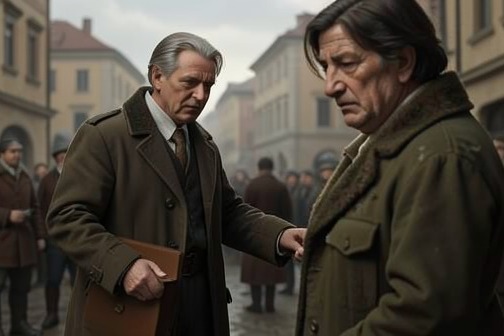
The [Murder of Barney McBride](entity:event-recall-event-murder-of-barney-mcbrid-d4e762a2ce53) transformed a request for federal help into an apparent warning. In August, as suspicious deaths continued among the Osage, [McBride](entity:character-recall-character-mcbride-f80fa2e3050b) traveled to [Washington, D.C.](entity:location-recall-location-1d5300173b80), to press authorities to investigate. He was seized outside an Elks Club, and the next morning his body was found in Maryland: stabbed more than twenty times, his skull beaten in, and his clothes removed except for his socks and shoes. The violence reached beyond the immediate crime scene; authorities suspected his killers had shadowed him from [Oklahoma](entity:location-recall-location-oklahoma-4e6205abe2e5).
## A Trusted Messenger
McBride was a fifty-five-year-old white oilman, wealthy and well known in Oklahoma’s Indian affairs. His wife, a Creek woman, had died, and he was raising his stepdaughter. The Osage trusted him, and his familiarity with officials in Washington made him an appealing intermediary at a moment when deaths were accumulating and local assurances were not enough. A reporter described him as kind-hearted and white-haired; the community’s choice of him rested not only on his access to federal authorities, but on the confidence he had earned.
McBride’s mission arose amid a wider atmosphere of danger. Earlier that year, an Osage woman had died of suspected poisoning without a thorough toxicology examination. In July, [Joe Bates](entity:character-recall-character-joe-bates-e0bbc6a31c1a) took a sip of whiskey obtained from a stranger, began frothing at the mouth, and collapsed; authorities attributed his death to a strange poison. Such cases, in which suspected toxins could resemble illness or accidental poisoning, helped make the growing number of deaths difficult to investigate and easy to dismiss. McBride was sent to ask federal authorities to act against that uncertainty.
## Seizure and Murder
When McBride checked into a Washington rooming house, a telegram from an associate was waiting: a warning to be careful. He carried a Bible and a .45-caliber revolver. That evening, he went to the Elks Club to play billiards. As he headed outside, someone seized him and tied a burlap sack tightly over his head. The following morning his body was discovered in a culvert in Maryland.
The condition in which he was found made the murder unmistakably violent. He had been stabbed more than twenty times, his skull had been beaten in, and he had been stripped naked except for his socks and shoes. A card bearing his name had been left in one shoe. Forensic evidence suggested more than one assailant. Authorities also suspected that the killers had followed him from Oklahoma, a possibility that made the attack appear not simply to have happened far from home, but to have reached across state lines after the messenger himself.
## A Murder Read as a Warning
News of the killing quickly reached [Mollie Burkhart](entity:character-recall-character-mollie-burkhart-8744148694d1) and her family. The Washington Post called it the most brutal crime in the District’s annals, while its headline announced a believed conspiracy to kill rich Indians. In the account, the murder seemed to carry a message: McBride had been trusted to take the Osage appeal to federal officials, and he was killed during that mission. The evidence presented does not identify his assailants or establish who ordered the crime; the force of the episode lies in the suspicion it sharpened and the fear it communicated.
That suspicion belonged to a place where oil wealth drew powerful interests and enormous sums. Federal auctions of Osage leases, held about four times a year under the Department of the Interior, had become a spectacle of competition over the reservation’s mineral wealth. At the same time, the guardianship system gave white guardians and administrators control over many Osage people’s finances. [Tom White](entity:character-recall-character-tom-white-05c25ce7617d)’s later investigation found widespread practices ranging from inflated purchases and kickbacks to outright theft; a government study estimated that guardians had taken at least $8 million from restricted Osage accounts before 1925. These conditions help explain why the deaths could not be separated from contests over wealth and power, but the available account does not prove that a particular financial interest caused McBride’s murder.
## Aftermath and Historical Memory
McBride’s death made the effort to obtain outside intervention seem dangerous in its own right. The authorities’ suspicion that the killers had tracked him from Oklahoma, combined with the apparent plurality of assailants and the message-like handling of his body, gave the killing a reach beyond the culvert where he was found. The murder did not settle the question of who was behind the growing violence; instead, it strengthened the perception that the deaths formed a broader assault on wealthy Osage people and on those who tried to bring their case before officials.
The event also belongs to a longer history in which the Osage had repeatedly been forced to defend their land and security against the power of white settlers and institutions. In 1870, after being expelled from their [Kansas](entity:location-recall-location-dc1f7fb4994c) homes, the Osage agreed to sell their land for $1.25 an acre, yet settlers massacred several people. Decades later, oil income and mineral rights brought wealth without removing the vulnerability built into systems of outside control. McBride’s murder stands at the point where a trusted appeal for protection met the violence it sought to expose: the messenger was killed, and the community received the news as a warning.
Event 8
Murder of Henry Roan
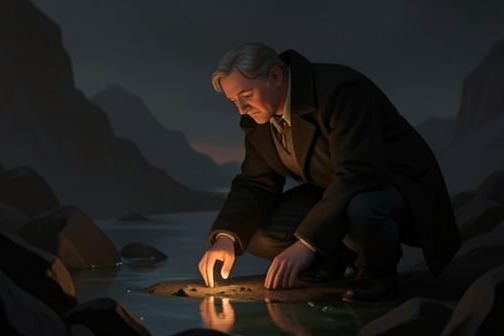
The [Murder of Henry Roan](entity:event-recall-event-murder-of-henry-roan-783afad45ee9) was the February 1923 killing of a forty-year-old Osage man whose body was found in a Buick northwest of [Fairfax](entity:location-recall-location-fairfax-3bf95f4bec15). The discovery ended a stretch of nearly six months without another suspicious death and renewed the fear that the violence targeting the Osage had never ceased. It also made the friendship between Roan and [William K. Hale](entity:character-recall-character-william-k-hale-4e2a35719096) newly consequential: Hale had described himself as Roan’s friend and had become beneficiary of his $25,000 life-insurance policy.
## Discovery and Identification
In the first days of February 1923, after violent cold had hardened the prairie, two men hunting four miles northwest of Fairfax noticed a car at the bottom of a rocky swale. They did not approach it. Instead, they returned to town and alerted authorities, sending a deputy sheriff and the town marshal to investigate. As dusk fell, the lawmen descended the steep slope toward the Buick. Curtains covered its windows, making the vehicle look like a black coffin; through a small opening on the driver’s side, the deputy saw a man slumped behind the wheel. He initially supposed the man was drunk, but opening the door revealed blood on the seat and floor. The fatal shot had entered the back of the man’s head. Its angle and the absence of a gun ruled out suicide, and the deputy recognized that the man had been murdered.
The cold had mummified the body, but the lawmen could identify him as [Henry Roan](entity:character-recall-character-henry-roan-38491fdf790c). He was forty, married, and the father of two children. His appearance recalled the Osage identity that boarding school had tried to erase: Roan had once worn his hair in two long braids, but had been forced to cut them off, just as he had been made to change his name from [Roan Horse](entity:character-recall-character-07e484f88b5a). Even in death, confined in the car, his long face and tall, lean frame evoked the image of an Osage warrior. The discovery therefore carried more than the confirmation of another killing: it returned a particular person, with a family and a history of imposed change, to a landscape where the violence had again become visible.
## Hale, the Inquest, and the Public Return of Fear
After the lawmen identified Roan, they returned to Fairfax and notified the justice of the peace. They also ensured that William K. Hale was told. Hale’s place in the story seemed, at first, to be that of a bereaved friend: Fairfax’s mayor later recalled that Roan considered him his best friend. Roan’s restricted financial allowance had often left him short of cash, and he had repeatedly asked Hale for advances. Hale said that he had helped him with so many loans that Roan named him beneficiary of a $25,000 life-insurance policy. The friendship, the loans, and the policy now sat beside the fact of a violent, unexplained death.
Hale went with the deputy and marshal when they returned to the ravine. Darkness had settled over the scene, so the men lined their vehicles along the hill and directed their headlights into the hollow, a law-enforcement official’s image of a valley of death. Hale remained on the hill as the coroner’s inquest began below, with men moving in and out of the shadowed Buick. One of the [Shoun Brothers](entity:character-recall-character-shoun-e555a70d3d4e), a doctor, estimated that Roan had been dead for about ten days. The body’s position was recorded: hands folded across the breast, head resting on the seat. The bullet had passed through his right eye and shattered the windshield; broken glass lay on the hood and on the ground beyond. Roan still carried twenty dollars in paper money, two silver dollars, and a gold watch. Nearby, tire marks in frozen mud suggested that another car had been present, likely the assassin’s.
The public announcement made the uncertainty itself part of the story. The Osage Chief placed the killing on its front page as a shooting by an unknown hand, reviving a prickling dread after almost six months without another suspicious death since the slaying of [Barney McBride](entity:character-recall-character-71cba91f9dff). In the same issue, the paper paid tribute to Abraham Lincoln as an inspiration to Americans; beside that remembrance, the report of Roan’s murder exposed the distance between public ideals and the danger facing the Osage. The cold had preserved the body and the traces around it, but neither the inquest nor the newspaper could yet name the killer.
## Testimony, Oil Wealth, and the Wider Stakes
Roan’s death also entered the record through [Mollie Burkhart](entity:character-recall-character-mollie-burkhart-8744148694d1)’s testimony. Asked whether she had seen [Anna Brown](entity:character-recall-character-anna-brown-76ad5cff9420) alive again after Anna left her mother’s home with [Bryan Burkhart](entity:character-recall-character-bryan-burkhart-ec4e4cf3a7fc), Mollie answered no; asked whether she had seen Anna’s body after it was found, she answered yes. This testimony concerned another killing, not the circumstances of Roan’s death, but it places his murder within the wider sequence of deaths and investigations that reached into the same family. Roan had briefly been married to Mollie in 1902, when she was fifteen. They later went their separate ways without a legal divorce, because their marriage had been contracted according to Osage custom. His killing therefore touched a past relationship that had ended, but had not been erased from the account of Mollie’s life.
The murder also took place amid a dramatic concentration of oil wealth and the institutions governing it. In 1917, a well on Lot 185 erupted with such force that the derrick trembled and workers fled before a black column of oil burst into the air. Gushers drew Osage spectators as well as oil workers; their spectacular spray could be celebrated even as it suggested the violence and danger embedded in extraction. By 1923, wealthy oilmen were arriving in [Pawhuska](entity:location-recall-location-pawhuska-37ec386b1006) for lease auctions held about four times a year under the supervision of the [United States Department of the Interior](entity:organization-recall-organization-united-states-de-2a37df8990aa). A typical lease covered 160 acres, and bidding had soared even though only part of the underground reservation had been opened to drilling. These details establish the value being generated and contested around Osage mineral rights, but they do not, by themselves, establish the motive for Roan’s killing.
The flow of that wealth was mediated by a guardianship system that could leave Osage people dependent on others for access to their own money. Roan’s restricted allowance had led him to seek cash advances from Hale. In the broader investigation, [Tom White](entity:character-recall-character-tom-white-05c25ce7617d) found that some guardians used their authority to overcharge wards, steer their business for kickbacks, claim their property, or steal outright. A government study estimated that guardians had taken at least $8 million directly from restricted Osage accounts before 1925. The evidence describes a social and financial structure in which dependence and exploitation could coexist with great oil revenues; it does not identify those abuses as proof of who killed Roan.
The boom’s later decline further altered the meaning of that wealth. During the [Great Depression](entity:time-recall-time-great-depression-1a196e2fd6b1), oil prices fell sharply, headright payments dwindled, and the oil fields gradually depleted. [Gray Horse](entity:location-recall-location-gray-horse-73527f7e97ed), where [Margie Burkhart](entity:character-recall-character-margie-burkhart-85fa680e4606) grew up, lost much of its former activity; she recalled hearing the wells pump until one day they stopped. That later contraction did not undo the earlier violence or resolve the murder. It shows instead that the wealth surrounding Roan’s death was neither evenly controlled nor permanent: the revenues could be extracted, intercepted, and diminished, while the murder remained a public wound first recorded as the work of an unknown hand.
## The Last Weeks and the Unanswered Gap
A couple of weeks before his death, Henry Roan telephoned William K. Hale in distress after learning that his wife was having an affair with Roy Bunch. Hale went to see him and tried to console him. Roan later said he would not bring something into town and would hide it instead; the account then records that he disappeared until his body was found. The sequence gives the murder a final interval of private anxiety and sudden absence, but does not establish what Roan intended to hide or connect that statement to the killing. His death therefore remained not only a case of an unidentified assassin, but a break in the record: the surviving details mark Roan’s distress and disappearance without resolving what happened between them.
Event 9
Smith house bombing
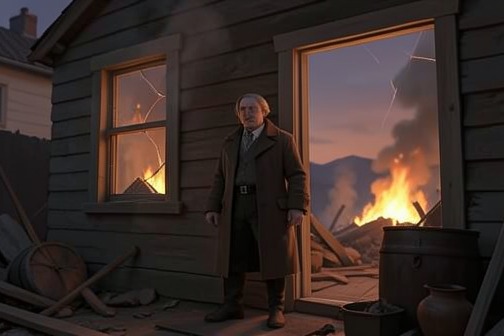
The [Smith house bombing](entity:event-recall-event-smith-house-bombing-4a02faee2331) was a deliberate nighttime attack in [Fairfax](entity:location-recall-location-fairfax-3bf95f4bec15) that destroyed Bill and [Rita Smith](entity:character-recall-character-rita-smith-1c5a6887f2c4)’s home, killed Rita Smith and Nettie Brookshire, and left Bill mortally injured. Its violence reached beyond the house: the blast shook the neighborhood, drew a terrified procession of residents to the ruins, and added another family to the widening toll of the [Osage Reign of Terror](entity:event-recall-event-osage-reign-of-terror-d9a3aed038ee).
## The Blast and Its Immediate Scene
Just before three in the morning, a nearby resident heard the explosion. Its force bent trees and signposts and shattered windows. In a Fairfax hotel, a night watchman sitting beside a window was showered with glass and thrown to the floor; a guest in another room was hurled backward. Nearer the Smith home, doors were torn from houses and wooden beams cracked. The blast was so violent that a witness, remembering it years later, could only describe the night as seeming never to stop trembling.
[Mollie Burkhart](entity:character-recall-character-mollie-burkhart-8744148694d1) and [Ernest Burkhart](entity:character-recall-character-ernest-burkhart-4d0bad3fddae) felt the explosion from their home. Ernest first mistook it for thunder. Mollie went to the window and saw a distant fire glowing in the sky; Ernest joined her, and together they watched the light. He then pulled on his trousers and ran outside. Residents emerged groggy and frightened, carrying lanterns and firing guns into the air as warnings and calls for help. People hurried toward the blast on foot and in cars, repeating that the explosion had struck [Bill Smith](entity:character-recall-character-bill-smith-99833f190659)’s house.
There was almost nothing left to approach. The house had become heaps of charred sticks, twisted metal, and shredded furniture, including furnishings Bill and Rita had bought only days before from the [Big Hill Trading Company](entity:organization-recall-organization-d3c46f3d65fc). Strips of bedding hung from telephone wires; debris floated through the dark, toxic air. The Studebaker Bill had parked in the garage was demolished, too. The wreckage, and the evident force of the blast, made clear that someone had planted a bomb beneath the house and detonated it.
## Rescue in the Rubble
Volunteer firemen carried water from nearby wells to fight the flames still consuming the ruins. As the fire rose above the wreckage, searchers looked for Bill and Rita Smith and Nettie Brookshire. One rescuer called for the men to come because a woman was inside. The justice of the peace, Scott Mathis, and the [Shoun Brothers](entity:character-recall-character-shoun-e555a70d3d4e) joined the search; even before anyone had found remains, two undertakers had arrived with hearses, hovering at the scene like predatory birds.
[James Shoun](entity:character-recall-character-james-shoun-2bdb02f65d6e) knew the house from having owned it and searched where the main bedroom had stood. There he heard a faint call for help, which other searchers soon heard too. Firemen doused the smoldering mound above the voice, and the men clawed away the rubble as the cries grew louder over the wreckage shifting and creaking. Bill Smith emerged alive beside his bed, his face blackened and his legs, back, and hands seared. [David Shoun](entity:character-recall-character-david-shoun-7b0843ece91a), a doctor, later said he had never seen a man in such agony. James tried to comfort Bill and promised not to let him suffer.
Rita lay beside Bill in her nightgown. Her face appeared unmarred, as if she were still sleeping, but the back of her head had been crushed; she was dead. When Bill understood that Rita was gone, he cried out and repeated the news. Ernest Burkhart, watching in a bathrobe someone had given him, could not turn away and kept muttering about the fire. He consented when the Big Hill Trading Company undertaker asked to remove Rita’s remains, so she could be embalmed before Mollie Burkhart saw her. With Rita dead, Mollie was left as the only surviving sister in her family, though she had once been expected to die first because of her diabetes.
Searchers found no substantial remains of Nettie. The justice of the peace concluded that the young married woman, who had a child, had been blown to pieces; there was not enough to hold an inquest. The rival undertaker nevertheless found enough to claim the burial fee, beating the Big Hill undertaker to the remains. The competition between the two men over that fee offered a grotesque counterpoint to the search for the victims.
The rescuers carried Bill toward an ambulance and took him to Fairfax Hospital. David Shoun injected him several times with morphine. Bill was the bombing’s lone survivor, but he lost consciousness before he could be questioned. Local officers had been away in [Oklahoma City](entity:location-recall-location-2410fcf3f0d0) for a court case, and an investigator later noted that the bombing had been timed for their absence. After the officers returned, they placed floodlights at both hospital exits and armed guards nearby, fearing the killers might try to finish Bill there.
## Bill Smith’s Death and the Public Response
At the hospital, Bill Smith drifted between life and death. In delirium he sometimes suggested that the people who had taken Rita had now come for him, while the friend who visited could make little sense of his muttering. The bombing had left him alive, but not yet able to give an account of what had happened or identify anyone responsible.
Nearly two days after the blast, Bill regained consciousness and asked about Rita, wanting to know where she had been buried. David Shoun believed Bill might be preparing to disclose what he knew about the bombing, and tried to draw out whether he had any idea who had done it. Bill revealed nothing relevant. On March 14, four days after the bombing, he died. His death turned the lone survivor of the attack into another victim of the Osage Reign of Terror, while leaving the question of who had planted the bomb unanswered.
The bombing provoked an editorial in a Fairfax newspaper that condemned the crime as beyond comprehension and demanded that the law leave no stone unturned to find and prosecute those responsible. At the scene, a firefighter had told Ernest Burkhart that the perpetrators deserved to be thrown into the fire and burned. The calls for justice were emphatic, but the hospital vigil had offered no testimony to carry them forward: Bill’s brief return to consciousness brought a question about Rita’s burial, not an account of the killers.
## An Investigation Undermined
In April 1923, [Oklahoma](entity:location-recall-location-oklahoma-4e6205abe2e5) Governor Jack C. Walton sent his top state investigator, [Herman Fox Davis](entity:character-recall-character-dde3a3ce3e92), to [Osage County](entity:location-recall-location-osage-county-7479182a5967). A lawyer and former private detective with the [William J. Burns International Detective Agency](entity:organization-recall-organization-william-j-burns-1110e9335843), Davis arrived with a carefully groomed appearance, puffing cigars as smoke veiled his bright eyes. His polished, theatrical manner struck one law-enforcement official as that of a detective from a dime novel. For many Osage, however, the need was urgent and practical: they suspected local authorities of colluding with the killers and hoped an investigator from outside the county might cut through its corruption and solve the mounting cases.
That hope quickly faltered. Within days Davis was seen associating with notorious local criminals; another investigator caught him taking a bribe from the head of a gambling syndicate in return for allowing its illicit businesses to operate. The state’s special investigator in the murder cases was himself corrupt. The bombing had already shown how vulnerable the victims were when local officers were absent; Davis’s exposure added a further obstacle to the demand for justice, placing the promised outside intervention inside the same compromised landscape.
Event 10
Murder of W. W. Vaughan
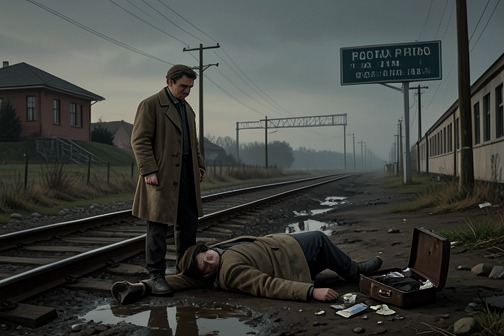
The [Murder of W. W. Vaughan](entity:event-recall-event-murder-of-w-w-vaughan-620beebe937b) was the killing of a [Pawhuska](entity:location-recall-location-pawhuska-37ec386b1006) attorney who had worked with investigators pursuing the Osage murder cases. After [Bigheart](entity:character-recall-character-540ddcdde84c) entrusted him with incriminating information, [Vaughan](entity:character-recall-character-w-w-044f27d09ed3) vanished from an overnight train; his body was found beside the tracks, and the evidence he had gathered was gone. The case left a widow and ten children without their provider and remained marked by unanswered questions about who killed him and how.
## Background and the Hospital Meeting
In June 1923, amid public suspicion that local authorities were colluding with the killers, Vaughan stood out as a former prosecutor committed to driving criminal influence from the region. He had worked closely with private investigators trying to solve the Osage murder cases. The danger around that work was not abstract: Vaughan had been gathering evidence and had arranged a hiding place for it, preparing his wife to retrieve the material and give it to authorities if anything happened to him.
The urgent call that set the final journey in motion came from a friend of Bigheart, who was suffering from suspected poisoning and had been taken to a hospital in [Oklahoma City](entity:location-recall-location-2410fcf3f0d0). Bigheart, a nephew of [James Bigheart](entity:character-recall-character-2458905531b2), said he had information about the murders but would speak only to Vaughan, whom he trusted. Vaughan’s wife had recently given birth to their tenth child. Before leaving for the hospital, he told her where he had concealed the evidence and that money for her and the children was there as well—a precaution that would give the later disappearance a chilling, practical meaning.
## The Train Disappearance and Discovery
At the hospital, [George Bigheart](entity:character-recall-character-george-bigheart-4b207f85cc08) was still conscious. He motioned for the others in the room to leave and apparently gave Vaughan his information, including incriminating documents. Vaughan stayed beside him for several hours, until Bigheart was pronounced dead. He then called the new [Osage County](entity:location-recall-location-osage-county-7479182a5967) sheriff and said he had all the information he needed and was rushing back on the first train. When the sheriff pressed him about whether he knew who had killed Bigheart, Vaughan replied that he knew more than that.
Vaughan went to the station and was seen boarding an overnight train. But when it arrived the following day, he was gone. The Tulsa Daily World announced, “OWNER VANISHES LEAVING CLOTHES IN PULLMAN CAR,” and reported, “MYSTERY CLOAKS DISAPPEARANCE OF W. W. VAUGHAN OF PAWHUSKA.” The vanished attorney had been carrying the documents Bigheart had entrusted to him; the disappearance therefore threatened not only Vaughan but the investigation those papers might advance.
The search brought in bloodhounds, and Boy Scouts joined in—a striking response in Pawhuska, where the first Boy Scout troop in the United States had been organized in 1909. Thirty-six hours later, Vaughan’s body was found beside the railroad tracks, thirty miles north of [Oklahoma City, Oklahoma](entity:location-recall-location-oklahoma-city-oklaho-6a09ea9c606a). He had been thrown from the train, his neck broken, and stripped virtually naked, as [Barney McBride](entity:character-recall-character-71cba91f9dff) had been. Bigheart’s documents were missing. When Vaughan’s widow went to the hiding place he had identified, it too had been cleared out, including the money meant for her and the children.
At the inquest, a prosecutor asked the justice of the peace whether Vaughan had known too much. The justice answered, “Yes, sir, and had valuable papers on his person.” The terse exchange linked the killing to the evidence Vaughan carried without establishing who had taken his life or removed the papers. Those questions remained central to the case.
## Aftermath, Suspects, and Unresolved Questions
The killing’s consequences continued long after the train reached its destination. Vaughan’s widow, Rosa, was left to raise ten children without income. The family left its two-story house for a storage garage, and the Osage community helped feed them. Some of the children, including [Martha Vaughan](entity:character-recall-character-martha-vaughan-5f48c3af02e0)’s father, went to live with Osage families, where they spoke Osage and learned traditional dances; he later recalled feeling safe among them. The family’s private loss thus unfolded alongside the wider community’s effort to care for those left behind by the violence.
Decades later, [Melville Vaughan](entity:character-recall-character-melville-vaughan-324ab1b2d03a) brought two binders of family research to a meeting about his grandfather’s murder. They held faded newspaper clippings, Vaughan’s death certificate, and an informant’s statement that Vaughan had said shortly before his death that he had collected “sufficient evidence to put Bill Hale in the electric chair.” The family believed Hale had wanted Vaughan silenced, but still could not establish who had carried out the killing or precisely how. They questioned whether Vaughan had been killed before he was thrown from the train or died on impact. The inquest had listed the cause of death as unknown, a finding the family believed reflected interference by someone influential.
Later records pointed toward [H. G. Burt](entity:character-recall-character-h-g-burt-57835ec6680a), but did not settle the case beyond doubt. A newspaper account placed Burt aboard the train with Vaughan and said he reported Vaughan missing from his berth. A bureau informant, asked about Vaughan’s murder, replied, “I think Herb Burt pulled that.” A [Fairfax town](entity:location-recall-location-aa296c98972b) marshal’s interview notes also implicated Burt and said a local tough had helped him throw Vaughan from the train; the marshal reported that Burt considered fleeing during the bureau’s 1925 investigation and moved to [Kansas](entity:location-recall-location-dc1f7fb4994c) that year. Other evidence tied Burt to George Bigheart’s affairs and showed that he had stolen money Bigheart intended for Vaughan. These leads supported suspicion, not a conclusive reconstruction of the murder.
The family’s attempts to pursue answers were themselves met with intimidation. After Hale went to jail, a relative who continued investigating received an anonymous warning that the family would end up like Vaughan if they kept pressing the case. They stopped. Martha’s older uncle later recalled the warning and remained frightened. The disappearance of the papers, the emptied hiding place, and the threat against the family left the murder not merely unsolved but actively difficult to investigate: even after the suspected perpetrators’ power had been challenged, the cost of asking who killed Vaughan remained palpable.
## Jurisdiction and the Limits of Resolution
Vaughan’s murder unfolded within a legal landscape already made treacherous by [William K. Hale](entity:character-recall-character-william-k-hale-4e2a35719096)’s influence. Federal prosecutors warned that trying Hale in [Oklahoma](entity:location-recall-location-oklahoma-4e6205abe2e5)’s state courts would be dangerous, yet the allotment of Osage land meant that many murders—including [Anna Brown](entity:character-recall-character-anna-brown-76ad5cff9420)’s—could be prosecuted only by the state. The distinction was not a technical footnote: the legal status of the ground where a killing occurred could determine which government had authority to act, while corruption weakened confidence in the institutions available to pursue the crime.
The prosecution of Hale and [John Ramsey](entity:character-recall-character-john-ramsey-6e9cdf445c59) for [Henry Roan](entity:character-recall-character-henry-roan-38491fdf790c)’s murder offered a rare federal route. Roan had been killed on an Osage allotment that had not been sold to white owners, and he was under federal guardianship; prosecutors therefore brought the case in federal court. The U.S. Supreme Court later ruled that the place where Roan was killed was indeed Indian land, restoring federal jurisdiction. That ruling helped the broader investigation proceed, but it did not recover the papers taken from Vaughan or establish who killed him. The contrast sharpens the case’s unresolved character: the law could clarify where a prosecution belonged, while the evidence needed to answer Vaughan’s murder had vanished.
Event 11
Teapot Dome scandal
The [Teapot Dome scandal](entity:event-recall-event-teapot-dome-scandal-c999bf7fb5c9) was a bribery affair in which oil interests secured access to the United States Navy’s strategic petroleum reserves through concealed payments to the secretary of the interior. Its exposure in 1924 revealed more than a corrupt lease: the effort to suppress the inquiry laid bare abuses within the Justice Department and helped trigger a top-to-bottom transformation of the [Bureau of Investigation](entity:organization-recall-organization-bureau-of-invest-4f505fe6e949). In the book, the scandal’s national reach stands beside the local exploitation of Osage wealth, showing how oil money could shape both resource access and public power.
## Oil wealth and political access
The scandal emerged from a moment when oilmen were accumulating not only fortunes but influence. In 1920, [Harry Sinclair](entity:character-recall-character-9650157f4784), [E. W. Marland](entity:character-recall-character-e-w-e111d97cb81f), and other oilmen helped finance Warren Harding’s successful presidential campaign. An [Oklahoma](entity:location-recall-location-oklahoma-4e6205abe2e5) oilman later told a friend that Harding’s nomination had cost him and his interests $1 million. The account presents this political investment against the prominence of the oil barons, whose wealth and power at the time rivaled or surpassed those of earlier railroad and steel magnates.
The book also places the scandal in the world of the Osage lease auctions. Held about four times a year under the supervision of the [United States Department of the Interior](entity:organization-recall-organization-united-states-de-2a37df8990aa), the auctions opened portions of the [Osage underground reservation](entity:state-recall-state-5c130aae8498) to drilling. A lease typically covered 160 acres, and bidding could rise dramatically. Oilmen studied geological maps and relied on employees and informants for information; the bidding drew powerful figures into the same contest for access to oil. Sinclair and Marland were among the men whose interests reached beyond the auction ground and into national politics. The local lease system and the federal reserve deal were not the same transaction, but the juxtaposition makes visible the scale of the industry’s reach.
## The reserve leases and concealed payments
The decisive arrangement concerned the Navy’s strategic oil reserves. Sinclair routed more than $200,000 to the new secretary of the interior, Albert B. Fall, through a bogus company. Separately, another oilman had his son deliver $100,000 to Fall in a black bag. The book identifies that second payment without naming the oilman, and does not merge it with Sinclair’s transaction.
In exchange, Fall allowed oil barons to tap the reserves. Sinclair received an exclusive lease to a Wyoming reserve known as [Teapot Dome](entity:location-recall-location-00007dd25c85), named for the shape of a nearby sandstone rock. The reserve was strategically valuable, and the secret payments turned control of public resources into a private bargain. At the time the oilmen were moving through the public theater of leasing and bidding, the illicit payoffs were not yet known to the public. The scandal’s force came from the contrast between oilmen treated as princes of capitalism and the concealed arrangement through which access had been secured.
## Exposure and obstruction
By 1924, a congressional investigation revealed that Sinclair had bribed Fall to drill in the federal reserve. The scandal then widened: Congress’s examination of the Justice Department exposed officials using law-enforcement tools not to pursue wrongdoing but to hinder the inquiry. During the Harding administration, the department had been crowded with political allies and unscrupulous officials. [William J. Burns](entity:character-recall-character-j-1ce644687b80), a celebrated private detective appointed to head the Bureau of Investigation in 1921, bent laws and hired crooked agents, including a confidence man who sold protection and pardons to members of the underworld.
When Congress investigated the department, Burns and the attorney general used the powers of their offices to thwart the inquiry. Members of Congress were shadowed; offices were broken into and phones tapped. The episode made the scandal larger than a story of bribery and an oil lease: the machinery supposedly charged with enforcing the law was itself deployed to shield profiteers and obstruct accountability. In the book’s account, this institutional response is a second scandal nested inside the first.
## Institutional consequences
By the summer of 1924, Calvin Coolidge had removed Burns and appointed Harlan Fiske Stone as attorney general. Stone concluded that the growth of the country and the spread of federal laws required a national police force, but that the Bureau of Investigation had to be rebuilt. He selected the bureau’s twenty-nine-year-old deputy director, [J. Edgar Hoover](entity:character-recall-character-j-edgar-hoover-bd16526d3587), as acting director while searching for a permanent replacement.
Hoover had not been a detective, made an arrest, or taken part in a shoot-out. He had, however, overseen the bureau’s intelligence division, which had spied on people because of their political beliefs. Seeking the directorship, he concealed from Stone the extent of his role in domestic surveillance and promised to disband the division. He also pursued reforms Stone wanted that served his own ambition to remake the bureau: he reviewed personnel files for agents he considered incompetent or corrupt and raised hiring qualifications to require legal training or accounting knowledge. In December 1924, Stone gave Hoover the position. The bureau rapidly became a more centralized force, one Hoover would lead for nearly five decades and use both to combat crime and to commit serious abuses of power.
The scandal also shaped T. B. White’s work in the aftermath. White had already been assigned to investigate one of the first law-enforcement corruption cases pursued after Teapot Dome. As warden of the federal penitentiary in Atlanta, he ran an undercover operation against officials who accepted bribes for improved conditions and early releases. The episode places White’s pursuit of corruption inside a broader institutional reckoning, while making clear that reform did not guarantee that power would never again be abused.
## Place in the book’s account of oil
The scandal’s national story resonates with, but should not be confused with, the book’s account of exploitation in [Osage County](entity:location-recall-location-osage-county-7479182a5967). Osage families’ oil income was subject to federally imposed guardianship; guardians and administrators could control spending and, in many cases, used that authority to swindle their wards. A government study estimated that guardians had stolen at least $8 million directly from restricted Osage accounts before 1925. Those practices were not presented as part of Fall’s reserve bargain. Rather, the parallel shows how oil wealth moved through systems of unequal authority: federal officials could bargain over public reserves, while local guardians controlled the property and income of Osage people.
The difference in scale does not erase the shared question of accountability. The Teapot Dome inquiry exposed bribery at the highest levels and an attempt to turn law enforcement against congressional scrutiny; the guardianship system allowed prominent local figures to extract wealth from people placed under their supervision. Together, these strands show that the oil boom produced spectacular riches while concentrating control over resources and money in hands that were often difficult to challenge.
Event 12
Tom White’s investigation of the Osage murders
T. B. White’s investigation of the Osage murders was both a federal attempt to bring a sprawling series of killings to court and a test of whether the [Bureau of Investigation](entity:organization-recall-organization-bureau-of-invest-4f505fe6e949) could recover from its own failures. [J. Edgar Hoover](entity:character-recall-character-j-edgar-hoover-bd16526d3587) assigned White to take command when a botched undercover operation and mounting political pressure threatened to turn the case into a scandal. White rebuilt the inquiry around corroboration and admissible proof, using undercover agents to penetrate a community where witnesses feared retaliation. The eventual convictions did not resolve every killing: later scrutiny of the record exposed gaps that complicated the Bureau’s claim that the case was closed.
## A Failed Inquiry Becomes a Crisis
The federal investigation had already faltered before White took charge. In 1923, after the [Osage Tribal Council](entity:organization-recall-organization-osage-tribal-cou-075e42793fb9) sought help from the Justice Department, Bureau director [William J. Burns](entity:character-recall-character-j-1ce644687b80) sent an agent to [Osage County](entity:location-recall-location-osage-county-7479182a5967). After only a few weeks, the agent concluded that continuing the inquiry was useless. Other agents followed without solving the murders, which by then numbered at least twenty-four. The Osage had to help finance the federal effort; their contribution eventually reached $20,000. After Hoover assumed command of the Bureau, he decided to return the case to state authorities, hoping to avoid responsibility for the investigation’s failure.
That retreat became harder to manage after Bureau agents persuaded [Oklahoma](entity:location-recall-location-oklahoma-4e6205abe2e5)’s governor to release [Blackie Thompson](entity:character-recall-character-blackie-thompson-470778544a11), a convicted bank robber, so he could work undercover among the oil-field criminals. The agents lost track of him in the [Osage Hills](entity:location-recall-location-osage-hills-54eed66301a1). Thompson then robbed a bank and killed a police officer; it took months to apprehend him. The Bureau’s role had been kept from the press, but the state attorney general blamed it for the failure, and [John Palmer](entity:character-recall-character-23c0d8bb46ed), a prominent advocate for the Osage, warned that corrupt or politically pressured officials might be obstructing the search for the killers. [Comstock](entity:character-recall-character-comstock-f71d770b62a1), an Oklahoma lawyer who had served as guardian to several Osage, also briefed a senator on the Bureau’s mishandling of the case.
By the time Hoover summoned White, the danger was institutional as well as investigative. Hoover regarded the situation in Oklahoma as acute and delicate: after the [Teapot Dome scandal](entity:event-recall-event-teapot-dome-scandal-c999bf7fb5c9), even the appearance of another federal scandal might cost him his position. He needed an experienced agent to take responsibility for the case, and told White to direct the investigation. White understood that the assignment would burden his family and that failure could mean professional exile; previous agents had been sent to distant posts or removed from the Bureau. He accepted it, aware as well that some people who had pursued the killers had themselves been killed.
## Rebuilding the Case
White took over the [Oklahoma City](entity:location-recall-location-2410fcf3f0d0) field office in July 1925 and began with the Bureau’s accumulated files. More than four years had passed since the killings of [Anna Brown](entity:character-recall-character-anna-brown-76ad5cff9420) and [Charles Whitehorn](entity:character-recall-character-charles-whitehorn-423b1a7d04e1). The records were not a coherent account but a mass of unsequenced reports, leads, and fragments. Earlier agents had concentrated on six apparently promising cases: the bombing that killed [Rita Smith](entity:character-recall-character-rita-smith-1c5a6887f2c4), her husband [Bill Smith](entity:character-recall-character-bill-smith-99833f190659), and their servant Nettie Brookshire, and the shootings of Anna Brown, [Henry Roan](entity:character-recall-character-henry-roan-38491fdf790c), and Charles Whitehorn. White had to search those records for connections across roughly two dozen murders.
The files suggested that wealthy Osage were being targeted and that Anna Brown, Rita Smith, and their mother, [Lizzie](entity:character-recall-character-lizzie-e45debe8b469), were related. They also showed how much investigators had missed: no one had spoken to Lizzie’s surviving daughter, [Mollie Burkhart](entity:character-recall-character-mollie-burkhart-8744148694d1). The variety of methods and locations argued against a single killer acting alone. White considered the possibility that a calculating organizer had employed other people, but the reports did not establish who that person was. Nor could a compelling theory substitute for proof. Many leads traced back to private detectives or local lawmen repeating hearsay; in a county where corruption seemed widespread, apparent information could itself be disinformation. Earlier investigators had generated leads without consistently corroborating them, disproving them, or turning them into evidence a court could admit.
White’s governing method was to separate what could be demonstrated from what merely made a persuasive story. His aim was to construct an unbroken chain of evidence, not to condemn a suspect on the strength of an attractive theory. He generally preferred to work alone, but the volume of murders and leads made a team necessary. Witnesses were reluctant to cooperate because of prejudice, corruption, and fear of being killed. White therefore planned to act as the investigation’s public representative while most of his agents worked undercover.
## Undercover Work in Osage County
Hoover promised to supply as many agents as White needed. White chose experienced field operatives, including older agents known as Cowboys, whom he believed could manage dangerous assignments, maintain cover, shadow suspects, and work for long stretches without sleep. He did not recruit his brother [Doc White](entity:character-recall-character-doc-white-563ae2b6db81): the brothers had avoided serving on the same cases since their Ranger days so that their family would not risk losing both at once.
The agents entered Osage County under deliberately simple identities. A former New Mexico sheriff posed as a quiet, elderly [Texas](entity:location-recall-location-texas-f19b16f8e87c) cattleman; a former Texas Ranger also presented himself as a rancher. An experienced operative opened a genuine insurance business in downtown [Fairfax](entity:location-recall-location-fairfax-3bf95f4bec15), and [John Wren](entity:character-recall-character-john-wren-44cc13ff3716) arrived as a medicine man searching for relatives. White’s instructions were meant to keep the covers from attracting suspicion. The two supposed cattlemen gained [William K. Hale](entity:character-recall-character-william-k-hale-4e2a35719096)’s confidence as fellow Texans, and Hale introduced them to prominent local residents. The insurance agent visited suspects’ homes under the ordinary pretext of selling policies. [Wren](entity:character-recall-character-ef2210e3e5ee) attended tribal gatherings and could gather information from Osage who might not speak to a white lawman. The team’s methods thus answered a central obstacle in the case: information had to be sought where frightened or distrustful witnesses might actually share it.
The investigation began amid damaged and missing records as well as human resistance. The coroner’s inquest records concerning Anna Brown had disappeared; a Fairfax justice of the peace said his desk had been broken into and the testimony taken. Such gaps made the discipline of corroboration especially important. Undercover access could generate leads, but missing documents and unreliable local channels meant each lead still required independent support.
## Convictions and Unclosed Questions
The authorities later treated the life sentences imposed on Hale and his conspirators as proof that the guilty parties had been found. Yet the Bureau had not connected Hale to all twenty-four murders. A later review of the records asked who had abducted oilman [Barney McBride](entity:character-recall-character-71cba91f9dff) in [Washington, D.C.](entity:location-recall-location-1d5300173b80), and who had thrown [W. W. Vaughan](entity:character-recall-character-w-w-vaughan-76ecea00e8f2) from a moving train. The evidence cited in that review did not place Hale’s usual associates with either killing. The conviction of central conspirators therefore marked a consequential result, not a complete explanation of the murders.
Archival research also brought [H. G. Burt](entity:character-recall-character-h-g-burt-57835ec6680a) into sharper focus as a suspected participant in the deaths of [George Bigheart](entity:character-recall-character-george-bigheart-4b207f85cc08) and [Vaughan](entity:character-recall-character-w-w-044f27d09ed3). A grand-jury record showed that the insurance agent who had arranged Henry Roan’s policy testified Burt had recommended another Osage person as a target for a similar insurance scheme. Bureau material described Burt as close to Hale and reported that the two had shared money obtained from [Bigheart](entity:character-recall-character-540ddcdde84c). Hale later claimed $6,000 from Bigheart’s estate using a bogus creditor’s note; Burt, meanwhile, became guardian of Bigheart’s young daughter and thereby gained control of her money. Records also indicated that Burt had taken money Bigheart intended for Vaughan, despite presenting himself as Vaughan’s close friend.
These details accumulated as circumstantial evidence, not a verdict. A newspaper account placed Burt on the train with Vaughan and said Burt reported Vaughan missing. A Bureau informant identified Burt as the person he thought had carried out the killing. Notes from an unpublished interview with the [Fairfax town](entity:location-recall-location-aa296c98972b) marshal further implicated Burt and described a local mayor as helping to throw Vaughan from the train; the marshal also said Burt feared the 1925 investigation and moved to [Kansas](entity:location-recall-location-dc1f7fb4994c) that year. The later account of these findings explicitly recognized that Burt could not answer or defend himself. The evidence sharpened suspicion while leaving important questions unresolved—including who was with Vaughan at the moment he disappeared and precisely how he died.
That distinction defines the investigation’s lasting significance. White’s insistence on verifiable links offered a corrective to rumor, corrupt channels, and earlier investigative drift, but a successful prosecution did not make every death legible or every perpetrator accountable. The case’s later record returns the reader to the difference between establishing guilt in court and claiming that a whole history of violence has been solved.
Event 13
Anna Brown murder
The [Anna Brown murder](entity:event-recall-event-2e14923ea081) began with a disappearance that her family first tried to explain away and ended with the identification of her decomposed body beside [Three Mile Creek](entity:location-recall-location-three-mile-creek-5c8ea577f067). Its discovery turned anxious uncertainty into the first public evidence of a killing, but the early inquest would preserve few clues capable of identifying the murderer.
## Disappearance and Discovery
On the evening Anna was last seen, her sister [Mollie Burkhart](entity:character-recall-character-mollie-burkhart-8744148694d1) stayed behind to care for their mother while [Ernest Burkhart](entity:character-recall-character-ernest-burkhart-4d0bad3fddae) took guests to [Fairfax](entity:location-recall-location-fairfax-3bf95f4bec15), five miles northwest, to meet [William K. Hale](entity:character-recall-character-william-k-hale-4e2a35719096) and attend a touring musical. [Bryan Burkhart](entity:character-recall-character-bryan-burkhart-ec4e4cf3a7fc) offered to drive Anna home. Before they parted, Mollie washed Anna’s clothes, gave her food, and waited until she seemed sober enough to be herself again. The sisters shared a quiet reconciliation; Anna said goodbye with a gold filling flashing in her smile.
As the nights passed without Anna, Mollie became increasingly anxious. Bryan maintained that he had taken Anna straight home and left her there before going to the show. After the third night, Mollie pressed the family to act and sent Ernest to Anna’s house. He found the door locked and the rooms dark. Anna’s absence still admitted less terrible possibilities: perhaps she had gone to [Oklahoma City](entity:location-recall-location-2410fcf3f0d0) or [Kansas](entity:location-recall-location-dc1f7fb4994c) City, or to a jazz club she liked. She often carried a small pistol in her alligator purse, and Ernest reassured Mollie that she would soon return. The reassurance could not quiet the growing unease, especially because [Charles Whitehorn](entity:character-recall-character-charles-whitehorn-423b1a7d04e1), another Osage man, had disappeared a week before Anna. He had left home for [Pawhuska](entity:location-recall-location-pawhuska-37ec386b1006) on May 14 and never returned.
About a week after Anna vanished, an oil worker on a hill a mile north of downtown Pawhuska noticed something in the brush near a derrick. It was a badly decomposed corpse with two bullet holes between the eyes. The body was so damaged that those who gathered could not identify it by appearance. A letter found in one pocket supplied the name: it was addressed to Charles Whitehorn. Near the same time, a teenage boy squirrel hunting with his father and another man by Three Mile Creek spotted a body in a ravine near Fairfax. He called his father down to the creek, where the men found a dead woman.
Unable to find lawmen in Fairfax, the men went to the [Big Hill Trading Company](entity:organization-recall-organization-d3c46f3d65fc), whose proprietor, Scott Mathis, alerted the undertaker. The group hauled the swollen corpse from the ravine, placed it in a wooden box beneath a blackjack tree, and covered it with salt and ice. Mathis, who managed Anna’s financial affairs, contacted Mollie. She came with Ernest, her sister [Rita Smith](entity:character-recall-character-rita-smith-1c5a6887f2c4), and Rita’s husband, [Bill Smith](entity:character-recall-character-bill-smith-99833f190659), followed by people who had known Anna and by curious onlookers, including the bootlegger [Kelsie Morrison](entity:character-recall-character-kelsie-morrison-209b2cf9552f).
The body’s face was almost impossible to recognize. Mollie and Rita identified the Indian blanket and clothes Mollie had washed for Anna. Bill used a stick to open the dead woman’s mouth, revealing the gold fillings Mollie had seen when the sisters said goodbye. The family recognized Anna. Rita wept and was led away; Mollie, usually composed, silently confirmed the identification and left the creek with Ernest. A family farewell that had seemed an ordinary moment of reconciliation now returned as the last time Mollie had seen her sister alive.
A coroner’s inquest was hastily convened at the ravine, with a justice of the peace selecting jurors from the white men present, including Mathis. The jurors were charged with determining whether Anna had died by an act of God or by human violence and, if a felony had occurred, identifying those responsible. Doctors [James Shoun](entity:character-recall-character-james-shoun-2bdb02f65d6e) and [David Shoun](entity:character-recall-character-david-shoun-7b0843ece91a), who cared for Mollie’s family, examined the body. Decomposition prevented a precise estimate, but they judged that Anna had been dead for five to seven days. When they shifted her head in the wooden box, part of her scalp slipped away, exposing a small, round hole in the back of her skull. The wound and the bullet’s downward path made clear that she had been shot; the inquest’s initial question of how she had died had become a question of murder.
## Investigation, Conspiracy, and Trial
The inquest established that Anna had been murdered, but the scene yielded little that could identify the killer. Investigators found blood smears beside a rock at Three Mile Creek and a bottle partly filled with clear liquid that smelled of moonshine. They surmised that Anna had been drinking on the rock when someone approached from behind and shot her at close range. A marshal also found two sets of car tracks leading between the road and the gulch, apparently entering from the southeast and circling back. The lawmen made no cast of the tracks, searched no fingerprints from the bottle, tested no gunpowder residue, and took no photographs; the crowd had already disturbed the scene.
The missing bullet became another unresolved clue. During a later federal investigation, [Tom White](entity:character-recall-character-tom-white-05c25ce7617d) examined the skull the undertaker had secretly retained. He saw the entry wound at the back and no exit wound in front, evidence that the bullet had lodged inside Anna’s head. Since it should have been found during the autopsy, White suspected that someone present had taken it. The justice of the peace shared the suspicion, but neither he nor White could establish who had removed it. The coroner’s inquest testimony had also vanished: the justice said his desk had been broken into and the records taken. The case thus opened with evidence of a deliberate killing and an investigative record already compromised.
Bryan Burkhart’s account that he had left Anna safely at home began to unravel when witnesses placed him with her after he said he had dropped her off. One witness saw Bryan driving and wearing a cowboy hat as he and Anna went west through town. Another reported them at a speakeasy until about ten at night, then at a second drinking place several miles north of Fairfax, where they stayed until roughly one in the morning. The presence of Bryan’s uncle there raised the possibility that he, too, had concealed what he knew. Later sightings were less certain: some placed the pair at another speakeasy; others said a third man accompanied them. The last reported sighting, around three in the morning, was of a car stopping near a Fairfax home and a man believed to be Bryan calling for Anna to get into it. Bryan returned home at sunrise, according to a neighbor, and paid him to keep quiet. Investigators concluded that Bryan had lied under oath when he claimed to have left Anna at home between 4:30 and 5 p.m.; the lie established that his alibi was false, though the scattered sightings left gaps in the final hours.
The identity of the reported third man emerged later through Ernest Burkhart. He told investigators that it was Kelsie Morrison, a bootlegger and dope peddler who had served as an undercover informant for the authorities while also passing information to William K. Hale. Ernest identified Morrison as the man who had fired the fatal shot. The disclosure exposed a betrayal inside the investigation itself: the supposed source helping agents find the third man was, according to Ernest, the killer they sought. As authorities moved to arrest Morrison, they also arranged for a doctor to examine Mollie Burkhart, who appeared gravely ill. Investigators believed she had been slowly poisoned; an agent later reported that she recovered promptly after being removed from the control of Ernest and Hale. Ernest never admitted knowing of the poisoning, leaving unresolved whether he had been excluded from that plot or simply refused to acknowledge it.
At trial, Morrison’s testimony gave the murder a fuller account while making the prosecution’s dependence on a self-interested accomplice plain. He had changed sides before: when he believed Hale had greater power, he acted as Hale’s double agent; after the authorities exposed him, he turned against the conspiracy. In court he testified that Hale wanted to eliminate Mollie’s family so Ernest would inherit everything, and that Hale had recruited him to kill Anna and supplied a .380 automatic. Morrison said Bryan helped get Anna drunk and drive her to Three Mile Creek. Morrison’s wife was with them and remained in the car while the two men carried Anna, too drunk to walk, down into the ravine. Bryan helped her sit up on a rock; Morrison’s testimony placed the fatal shooting there. The account connected the creekside scene to a larger plan aimed not only at Anna but at the family whose property and inheritance were at stake.
A year after the other prosecution described in the book, Mollie attended the trial for Anna’s murder. Morrison had recanted his confession and again shifted allegiance, seeking compensation from Hale; authorities had seized a prison letter in which he threatened to burn the authorities if he got the chance. Prosecutors granted Bryan immunity, believing his testimony necessary to convict Morrison. Mollie therefore heard the circumstances of her sister’s death from Bryan himself: that he had helped get Anna drunk and supported her body while Morrison shot her in the back of the head. Bryan had also been among the people who went with Mollie and her family to identify Anna’s body. He knew the corpse was there while standing beside Mollie and feigning grief, a fact that transformed the earlier scene of recognition into evidence of calculated deception.
Morrison was convicted. Ernest, who had comforted Mollie at the creek, had known that Anna’s killers were only feet away; he had also known who was responsible for the Smith house explosion and had concealed the truth while Mollie searched for the perpetrators. By the time Morrison’s conviction was secured, Mollie could no longer look at her husband. She soon divorced him and recoiled whenever his name was mentioned. The murder’s aftermath therefore reached beyond the verdict: the search for Anna’s killer exposed the betrayal embedded in Mollie’s marriage, while the conviction could not restore her sister or repair the family that the plot had targeted.
## Community Memory and Return
The murder’s afterlife appears in the book’s account of a 2012 visit to the [Osage Nation Museum](entity:location-recall-location-osage-nation-museum-1f58bb6e04c1). Its director, [Kathryn Red Corn](entity:character-recall-character-kathryn-red-corn-f4cb96f8e297), showed photographs of the 2,229 Osage who received headrights in 1906. Among the images were Mollie Burkhart with her sisters and their mother [Lizzie](entity:character-recall-character-lizzie-e45debe8b469), as well as [George Bigheart](entity:character-recall-character-george-bigheart-4b207f85cc08), [Henry Roan](entity:character-recall-character-henry-roan-38491fdf790c), and Charles Whitehorn—faces the visitor recognized as victims of the [Reign of Terror](entity:expression-recall-expression-reign-of-terror-c2ed6171dd61). The museum’s display thus placed Anna’s murder within the losses of a community, rather than isolating it as a single solved crime.
A panoramic photograph of a 1924 ceremony carried that history in its own physical alteration. A panel had been removed from the image; Red Corn later showed a small print of the missing portion, which depicted William K. Hale staring at the camera. The Osage had not removed his image in order to forget the murders, the account emphasizes, but because they could not forget. The cut in the photograph made remembrance visible: Hale’s presence remained known even where the public display had left a blank.
The retained skull that had once supplied Tom White with evidence also returned to the story through Red Corn’s account. A man approached her at a party in Bartlesville and said he had [Anna Brown](entity:character-recall-character-anna-brown-76ad5cff9420)’s skull, apparently the portion the undertaker had kept and given to federal agents for analysis. Red Corn insisted that it be buried in the Osage community. She contacted the Osage chief, and the skull was retrieved and interred with Anna’s other remains at a quiet ceremony. An object held back from burial for investigative purposes was finally returned to the dead woman’s resting place.
Red Corn also described how painful it remained for Osage families to speak about the Reign of Terror: so many had lost mothers, fathers, sisters, brothers, or cousins, and the pain did not go away. The book sets that continuing grief beside the [I’n-Lon-Schka Osage ceremonial dances](entity:event-recall-event-i-n-lon-schka-6fdcd3fcdd8d), held over several June weekends in Hominy, Pawhuska, and [Gray Horse](entity:location-recall-location-gray-horse-73527f7e97ed). The gatherings bring Osage people from across the country together to preserve traditions, reconnect with family and friends, cook, and remember. Anna’s murder therefore ends not simply with Morrison’s conviction or Mollie’s divorce, but within a community’s continuing work of mourning, keeping its history, and sustaining Osage life.
## Community Memory and Return
In 2012, a journalist researching the still-unresolved questions surrounding the murders visited the Osage Nation Museum in Pawhuska. Its longtime director, Kathryn Red Corn, showed photographs of the 2,229 Osage allotted members who had received headrights in 1906. Images of Mollie Burkhart with her sisters and their mother Lizzie appeared alongside portraits of George Bigheart, Henry Roan, and Charles Whitehorn. The display gathered individual lives into a communal record of loss, making Anna Brown’s murder part of a wider history rather than a crime isolated from its victims’ families and people.
A panoramic photograph of a 1924 ceremony made that history visible through an absence. A panel had been cut from the image; Red Corn showed the journalist a small print of the missing portion, which depicted William K. Hale looking directly at the camera. She explained that the Osage had removed the image not because they wished to forget, but because they could not. The blank in the displayed photograph was therefore not an erasure of Hale’s presence: it marked a memory the community continued to carry.
The physical remains of Anna’s skull also returned to the community. At a party in Bartlesville, a man told Red Corn that he had the skull, apparently the portion the undertaker had retained in 1921 and that federal agents had used in their investigation. Red Corn insisted that it belonged buried in the Osage community, contacted the Osage chief, and helped secure its retrieval. It was interred with Anna’s other remains in a quiet ceremony, bringing an object preserved as evidence back to the burial from which the investigation had separated it.
Red Corn described the continuing pain of speaking about the Reign of Terror: Osage families had lost mothers, fathers, sisters, brothers, and cousins, and the grief had not gone away. The June I’n-Lon-Schka ceremonial dances offer a living setting for that memory. Held over several weekends in Hominy, Pawhuska, and Gray Horse, they bring Osage people from many places together to preserve traditions, reconnect with family and friends, and remember. Anna’s murder consequently remains present not only in the criminal record, but in acts of return, remembrance, and community life.
Event 14
Smith family home bombing
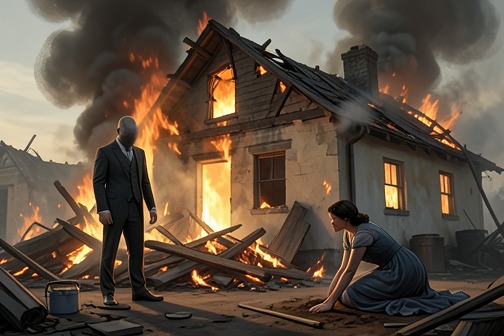
The [Smith family home bombing](entity:event-recall-event-9e90a93b6854) turned the investigation of the Osage murders toward a crime scene that had been destroyed along with much of its physical evidence. The attack killed [Rita Smith](entity:character-recall-character-rita-smith-1c5a6887f2c4) and, after she had survived her by several days, her husband [William Smith](entity:character-recall-character-61291b0da797). For T. B. White, the bombing’s method, the family’s inheritance arrangements, and the testimony that emerged later connected it to a broader effort to channel Osage wealth toward [Mollie Burkhart](entity:character-recall-character-mollie-burkhart-8744148694d1)—and, through her, toward [William K. Hale](entity:character-recall-character-william-k-hale-4e2a35719096) and [Ernest Burkhart](entity:character-recall-character-ernest-burkhart-4d0bad3fddae).
## The family and the inheritance pattern
In September 1925, White was trying to determine what Hale and his nephews Ernest and [Bryan Burkhart](entity:character-recall-character-bryan-burkhart-ec4e4cf3a7fc) were concealing. He considered whether William Smith, Rita’s husband and Mollie Burkhart’s brother-in-law, had discovered more than other investigators knew. William had suspected that [Lizzie](entity:character-recall-character-lizzie-e45debe8b469) was poisoned and had looked into the possibility of a larger conspiracy tied to the family’s oil wealth. If his death followed from what he had learned, White reasoned, the information he had pursued might help expose the conspiracy.
The family’s succession of deaths gave the bombing a particular financial significance. [Anna Brown](entity:character-recall-character-anna-brown-76ad5cff9420), who had no children, left nearly all her wealth to her mother, Lizzie. Lizzie’s will directed most of her headright to her surviving daughters, Mollie and Rita. White saw Anna’s death as the first step in a sequence that made Lizzie, and then Rita and William, targets. Rita and William’s wills stipulated that if they died at the same time, much of Rita’s headright would pass to Mollie. Their simultaneous deaths would therefore have advanced the concentration of family wealth in Mollie’s hands.
The plan did not work exactly as intended: Rita died first, but William survived her by several days. He consequently inherited much of her wealth, which went to one of his relatives when he died. Even so, White concluded, most of the family’s headrights had been directed to Mollie, whose wealth was controlled by Ernest. He suspected that Hale had made an indirect route to the family’s assets through his nephew. White could not establish whether Ernest’s marriage to Mollie, four years before Anna’s murder, had been part of the original design or whether Hale turned him against her after the marriage. The sequence suggested a scheme that made family life and inheritance inseparable from the murders.
## The bombing and Lawson’s account
The bombing destroyed the Smiths’ house, and William was treated in a hospital before his death. The account that later implicated Hale came from [Burt Lawson](entity:character-recall-character-burt-lawson-685fb8c14bc1), who was in jail after being arrested for killing a fisherman. Hale, then a reserve deputy sheriff who could enter and leave the jail, visited Lawson and pressed him to take on what Hale called a job. Lawson eventually agreed.
Lawson recalled that another deputy let him out of his cell one night and led him to Hale’s car. Hale drove him to a building in [Fairfax](entity:location-recall-location-fairfax-3bf95f4bec15), where Ernest was waiting. At Hale’s instruction, Ernest brought out a wooden box containing a jug of nitroglycerin with a long, coiled fuse attached to its spout. After they loaded it into the car, the three men drove toward the Smith home. Lawson said Hale and Ernest drove on after he got out with the box and fuse. He entered the cellar by the back way, placed the box in a far corner, laid out the fuse as Hale had directed, and waited in the dark.
Lawson watched the lights come on and then go out. After allowing what he estimated was about forty-five minutes, he lit a short piece of fuse and fled as the long fuse began to burn. He heard the house breaking apart. Hale and Ernest picked him up nearby and returned him to the jail, where the deputy smuggled him back into his cell. Before leaving, Hale threatened to kill him if he ever told anyone what had happened. The account supplied White with a witness who directly implicated Hale in the bombing; it also placed Ernest at the scene and described his role in bringing out the explosives.
## What the surviving testimony established
Lawson’s account did not resolve every question. White and Agent Smith still needed to investigate whether [Asa Kirby](entity:character-recall-character-asa-kirby-a06409753e99), known as the soup man, had prepared the bomb; the investigators considered that possible, but Lawson’s account did not mention Kirby. In October 1925, White reported to [J. Edgar Hoover](entity:character-recall-character-j-edgar-hoover-bd16526d3587) that Lawson had confessed to placing and setting off the explosive and said that Ernest Burkhart and Hale had persuaded, prompted, and assisted him.
At Ernest’s later trial, he admitted a separate but connecting act: he had delivered Hale’s message to [John Ramsey](entity:character-recall-character-john-ramsey-6e9cdf445c59), telling him to let Kirby know it was time to blow up the Smith house. Ernest said he had acted because his uncle had requested it, and presented his admission as a reason to stop the trial and acknowledge the truth. The accounts therefore described different links in the operation: Lawson’s placement and detonation of the explosive, and Ernest’s relaying of the signal. Ernest’s statement did not erase the uncertainty about Kirby’s precise role, but it confirmed that Hale’s instruction had passed through his nephew to others involved in the attack.
The bombing also left a trail of unrecorded or inaccessible evidence. After the explosion, agents asked the nurse who had cared for William whether he had spoken about the murders. She recalled that he sometimes muttered names in feverish sleep, though she could not make them out, and that he seemed worried after waking that he might have said something he should not have. Shortly before he died, William met with his doctors, [James Shoun](entity:character-recall-character-james-shoun-2bdb02f65d6e) and [David Shoun](entity:character-recall-character-david-shoun-7b0843ece91a), and his lawyer. The doctors asked the nurse to leave; she suspected that William had made a statement identifying who had blown up his house. David later acknowledged that the brothers had summoned the lawyer because they thought William might name his killers, but said that he had not done so. The hoped-for dying disclosure remained unconfirmed.
## Legal and historical aftermath
The bombing became the basis for state charges against Hale and Ramsey when a federal jurisdiction ruling threatened their release in the [Henry Roan](entity:character-recall-character-henry-roan-38491fdf790c) case. While Hale and Ramsey were celebrating in court, Sheriff [Harve M. Freas](entity:character-recall-character-harve-m-freas-38dab5d2f50a) served Hale with an arrest warrant. White and prosecutors had worked with the [Oklahoma](entity:location-recall-location-oklahoma-4e6205abe2e5) attorney general to keep the men in custody by bringing state charges for the bombing murders. The prosecution then had to proceed in [Pawhuska](entity:location-recall-location-pawhuska-37ec386b1006), which White regarded as a difficult setting because Hale had strong local influence. At a preliminary hearing, Osage relatives of victims, Hale’s supporters, journalists, and other townspeople crowded into the courtroom to hear the case.
The bombing’s evidence belongs to a wider record marked by gaps. In Anna Brown’s case, the coroner’s inquest testimony had vanished; elsewhere, investigators had preserved little from crime scenes. Years later, a hand-kept [Office of Indian Affairs](entity:organization-recall-organization-office-of-indian-ca5d4f965b72) guardianship log showed how many Osage wards had died under particular guardians, while the circumstances of many deaths had never been investigated as homicides. The pattern cannot by itself identify who caused those deaths, but it shows why the Smith bombing mattered beyond its immediate victims: it was one attack that investigators could connect to named participants, set against a much larger history in which violence and financial exploitation often left scant, compromised, or missing records.
That conflict between remembered violence and public erasure recurs in the later account of the case. At the [Osage Nation Museum](entity:location-recall-location-osage-nation-museum-1f58bb6e04c1), a 1924 panoramic photograph had a section cut away; the missing panel showed Hale. The Osage had removed his image not because they had forgotten the murders, but because they could not forget them. The bombing thus remains both a particular crime—with a cellar, a box of nitroglycerin, and testimony about who set the fuse—and part of a history whose surviving evidence is incomplete, contested, and consequential.
Event 15
Henry Roan murder
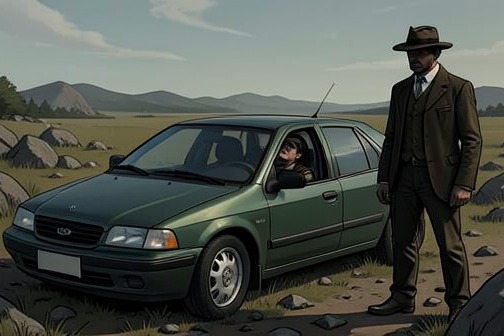
The [Henry Roan murder](entity:event-recall-event-78319016cbd0) exposed the return of the killings in [Osage County](entity:location-recall-location-osage-county-7479182a5967) and, as investigators followed the trail from a life-insurance policy to a hired gunman, became a case against [William K. Hale](entity:character-recall-character-william-k-hale-4e2a35719096) and [John Ramsey](entity:character-recall-character-john-ramsey-6e9cdf445c59). Its first public image was a Buick at the bottom of a rocky swale; its deeper significance emerged only as the apparent friendship between Hale and Roan gave way to evidence of a calculated plot.
## Discovery and the Friendship Behind the Case
In the first days of February 1923, two hunters spotted a car four miles northwest of [Fairfax](entity:location-recall-location-fairfax-3bf95f4bec15) and went back to town rather than approach it. A deputy sheriff and the town marshal descended the steep slope toward the Buick. Curtains covered its windows, making the car resemble a black coffin. Through a small opening, the deputy saw a man slumped behind the steering wheel. He initially supposed the man was drunk; when he opened the door, he found blood on the seat and floor. The man had been shot in the back of the head, and the absence of a gun ruled out suicide.
The cold had mummified the body, but the lawmen recognized [Henry Roan](entity:character-recall-character-henry-roan-38491fdf790c), a forty-year-old Osage man who was married and had two children. He had once worn his hair in two long braids, before boarding school forced him to cut them and change his name from [Roan Horse](entity:character-recall-character-07e484f88b5a). His long face and tall, lean frame still called to mind an Osage warrior. The killing ended nearly six months without another suspicious death since the slaying of oilman [Barney McBride](entity:character-recall-character-71cba91f9dff), and made clear that the violence had not stopped.
The lawmen notified the justice of the peace and ensured that Hale was told. Fairfax’s mayor later recalled that Roan considered Hale his best friend. Roan’s allowance had been curtailed, and he often asked Hale for advances. Hale said that he had lent Roan money repeatedly, and that Roan had named him beneficiary of a $25,000 life-insurance policy. The friendship was therefore not merely personal background: it connected Roan’s financial vulnerability to the benefit Hale stood to receive after his death.
## The Policy and the Altered Note
[Tom White](entity:character-recall-character-tom-white-05c25ce7617d) reopened the question of why Hale had been named beneficiary of Roan’s $25,000 life-insurance policy. The sheriff and other local lawmen had not investigated Hale after Roan’s death, an omission that now seemed consequential. White located the salesman who had originally sold the policy in 1921. Hale had explained that Roan made him beneficiary because of the money Hale had lent him, but the salesman recalled Hale himself pressing for a policy. When the salesman suggested $10,000, Hale insisted on $25,000. The salesman admitted he had no proof of the alleged debt and had wanted the commission; his own involvement showed how the so-called “[Indian business](entity:expression-recall-expression-indian-business-9dcd18ae4388)” could bind people to a transaction without establishing that its central claim was true.
Securing the policy required overcoming concerns about Roan’s health. A physician refused to approve the heavy-drinking Roan, but Hale sought other doctors until one in [Pawhuska](entity:location-recall-location-pawhuska-37ec386b1006) recommended him; [James Shoun](entity:character-recall-character-james-shoun-2bdb02f65d6e) also did so. The first insurance company rejected the application. Hale then approached a second company, whose application asked whether a competitor had previously turned Roan down. The answer was falsely entered as no. This time Hale supplied a creditor’s note, purportedly signed by Roan, to substantiate a debt. The amount Hale had earlier described as $10,000 or $12,000 had become $25,000—the exact value of the policy—and the note bore a January 1921 date, making it appear to predate the insurance effort.
Document analysis gave White a more specific lead. A Treasury Department examiner found that the note’s date had originally read “June”: close examination under slanting light showed disturbed paper fibers where the letters u and e had been rubbed away and replaced to make “Jany.” White suspected Hale had prepared the note during the attempt to obtain insurance and altered the date after realizing the original one undermined his claim. The man Hale identified as the note’s typist denied ever seeing it and, when asked whether Hale was lying, answered, “Absolutely.” After the second company approved the policy, the doctor who examined Roan recalled asking Hale, “Bill, what are you going to do, kill this Indian?” Hale laughed and answered, “Hell, yes.” The policy’s suspicious origin now sat beside a direct, if reported, indication of Hale’s murderous intent.
## The Headright Motive and the Gunman
The insurance policy did not, by itself, explain how Roan’s murder might fit the wider pattern of killings. White found a possible motive in a transaction Hale had attempted before Roan died: Hale had tried to buy Roan’s headright, his share in the Osage mineral trust. The law prohibited buying or selling headrights, but Hale believed influential white people might persuade Congress to change that rule and permit some Osage people to convey their mineral rights. When the law remained in place, White suspected, Hale turned to a plan that would let him benefit through inheritance instead.
As White examined probate records, the movement of headrights among the members of [Mollie Burkhart](entity:character-recall-character-mollie-burkhart-8744148694d1)’s family began to suggest a deliberate sequence rather than unrelated deaths. [Anna Brown](entity:character-recall-character-anna-brown-76ad5cff9420), who had no children, left nearly all her wealth to her mother, [Lizzie](entity:character-recall-character-lizzie-e45debe8b469); Lizzie left most of her headright to her surviving daughters, Mollie and Rita. After their deaths, the inheritance arrangements could direct wealth toward Mollie, whose husband was Hale’s nephew Ernest. The pattern made the marriage part of the suspected scheme’s financial logic: Ernest was described by an agent as controlled by Hale, and [Kelsie Morrison](entity:character-recall-character-kelsie-morrison-209b2cf9552f) told investigators that Ernest and [Bryan Burkhart](entity:character-recall-character-bryan-burkhart-ec4e4cf3a7fc) followed their uncle’s directions. It was a hypothesis built from successive deaths and probate records, not proof that the policy alone had supplied the motive for every killing.
The case against Hale still had serious gaps. White had circumstantial evidence, but no fingerprints or credible eyewitness placing Hale at the shooting or proving that he ordered it. Local lawmen had instead pursued Roy Bunch, who had been having an affair with Roan’s wife. White’s agents investigated Bunch and ruled him out, concluding that the affair could serve as a screen for the actual perpetrators. Hale’s conduct after the murder deepened suspicion: he visited Roan’s widow about claims against the estate and left her a bottle of whiskey, which she feared might be poisoned. These details did not close the evidentiary gap, but they placed the insurance maneuver, the attempted headright purchase, and the diversion of suspicion within the same investigation.
[Ernest Burkhart](entity:character-recall-character-ernest-burkhart-4d0bad3fddae) eventually supplied the account that connected Hale to a triggerman. He identified John Ramsey as the man who killed Roan and described an arrangement involving Hale and [Henry Grammer](entity:character-recall-character-henry-grammer-a6d4b8c19023). According to Ramsey’s sworn statement and other testimony, [Grammer](entity:character-recall-character-1e42afabab89) told him that Hale wanted an Indian killed. Ramsey agreed, lured Roan into a canyon with the promise of whiskey, and shot him in the back of the head as Roan sat by his car. Ramsey then drove back to Fairfax. His account matched the central circumstances of the discovery: Roan had been shot from behind in the Buick, with no weapon present to suggest suicide. Ramsey’s language also exposed the racial contempt within the crime; he referred to Roan as an Indian rather than by name and maintained that white people in [Oklahoma](entity:location-recall-location-oklahoma-4e6205abe2e5) regarded killing an Indian as little more than they had in 1724.
## The Inquest, the Family, and the Verdict
When the lawmen returned to the ravine, William K. Hale went with them but stayed on the hill as the coroner’s inquest began below. The [Shoun Brothers](entity:character-recall-character-shoun-e555a70d3d4e) doctor estimated that Henry Roan had been dead about ten days. Investigators recorded Roan’s hands folded across his breast and his head resting on the seat; the bullet had exited through his right eye and shattered the windshield, leaving broken glass on the hood and ground. They also noted the money and gold watch still with him, and tire marks in the frozen mud that suggested another car had been nearby. The scene’s carefully recorded details gave the investigation a physical counterpoint to the friendship Hale publicly claimed.
Roan’s death also reached Mollie Burkhart as more than another killing in her family. She and Roan had briefly been married in 1902, when she was fifteen. The surviving accounts are sparse, but the marriage was likely arranged; because it followed Osage custom, no legal divorce was needed when they went their separate ways. Their connection appears to have ended without bitterness, perhaps with some warmth still attached to it. Many county residents attended Roan’s funeral, where Osage elders sang traditional songs for the dead. Hale, presenting himself again as the bereaved friend, served as a pallbearer.
The federal trial of Hale and John Ramsey opened in [Guthrie](entity:location-recall-location-guthrie-fe33b2ffd162) in the last week of July 1926. It followed Ernest Burkhart’s confession implicating Hale in the Smith bombing conspiracy, which the press described as a prologue to the trial over Roan’s murder. Because witnesses against Hale might be pressured or prevented from testifying, Tom White placed extra guards at the jail. Hale attempted to recruit [Blackie Thompson](entity:character-recall-character-blackie-thompson-470778544a11) to stay silent in exchange for arranging his escape; his proposal also called for Thompson to kidnap Ernest Burkhart and take him to Mexico before he could testify. The effort showed that the case’s danger did not end with the gathering of evidence: the testimony on which the prosecution relied remained vulnerable to coercion and disappearance.
After eight days of testimony, the jury deliberated overnight. On October 29, it found Hale and Ramsey guilty of first-degree murder. The verdict carried life imprisonment rather than death: the jurors would punish the defendants for killing an Osage man, but would not impose the death penalty for it. The judge sentenced both to prison for the rest of their lives. When asked whether he had anything to say, Hale stared ahead and answered, “No, sir.” The sentence closed the murder prosecution, while its qualified severity exposed the boundary of the justice the court was willing to deliver.
Event 16
Ernest Burkhart’s 1926 trial and confession
[Ernest Burkhart’s 1926 trial and confession](entity:event-recall-event-1926-cc1c5adb3fd0) transformed a prosecution that seemed to be collapsing into a public admission of his role in the [Smith house bombing](entity:event-recall-event-smith-house-bombing-4a02faee2331). Burkhart first withdrew from cooperation with the state and testified for [William K. Hale](entity:character-recall-character-william-k-hale-4e2a35719096), but later changed course, pleaded guilty, and said that he had acted at Hale’s request. The reversal restored an important part of the case against Hale while exposing how vulnerable testimony could be to Hale’s influence—and how much remained unresolved beyond the trial.
## From state witness to defense witness
Burkhart’s appearance in court initially seemed to offer the prosecution a chance to secure testimony against Hale. After weeks away from [Osage County](entity:location-recall-location-osage-county-7479182a5967), he entered the courtroom unsteadily as [Mollie Burkhart](entity:character-recall-character-mollie-burkhart-8744148694d1) watched. Hale glowered at his nephew, and one of Hale’s lawyers called Burkhart a traitor to his own blood. Before taking the stand, Burkhart had confided to a prosecutor that he feared they would kill him if he testified. His evident difficulty reaching the witness chair made the pressure surrounding his decision visible before he spoke.
A defense lawyer then claimed Burkhart as his client and asked to confer with him privately. Burkhart said the lawyer was not his attorney, but agreed to talk. He left the stand with Hale’s lawyers and spent roughly twenty minutes in the judge’s chambers before the court allowed him until the following day to confer with the defense. Hale personally buttonholed him in the courtroom. T. B. White tried to catch Burkhart’s attention as he left, but Hale’s supporters swept him away. [John Leahy](entity:character-recall-character-john-leahy-7805c41923f7), the prosecutor hired by the [Osage Tribal Council](entity:organization-recall-organization-osage-tribal-cou-075e42793fb9), regarded the lawyers’ conduct as exceptionally high-handed and unusual.
The next morning, the prosecution announced that Burkhart would not testify for the state. In a memorandum to [John Edgar Hoover](entity:character-recall-character-j-1a9269cd7bf5), White explained that Burkhart’s nerve had failed after he was allowed to see Hale and came once more under his domination. Instead, Burkhart took the stand for the defense. Asked whether he had discussed [Henry Roan](entity:character-recall-character-henry-roan-38491fdf790c)’s murder or another Osage murder with Hale, he denied it; he also denied that Hale had asked him to hire someone to kill Roan. In a quiet monotone, he recanted his earlier account step by step.
## The prosecution’s setback
The recantation struck at two central supports of the case against Hale: Burkhart’s confession and [John Ramsey](entity:character-recall-character-john-ramsey-6e9cdf445c59)’s confession. Prosecutors responded by charging Burkhart separately as a co-conspirator in the bombing of the Smiths’ house and scheduling his trial first, hoping an early conviction would strengthen their position against Hale and Ramsey. But the collapse of the two confessions gave Hale and Ramsey reason to appear triumphant. White remembered their grins and the sense that the King was on top again.
Burkhart’s trial, which began in late May, brought a new crisis for the investigators. Hale testified under oath that White and his agents had brutally tried to force a confession from him. He alleged that an agent had put a pistol in his face, that he had been threatened with violence, and that the investigators had strapped him into a chair, attached wires, hooded him, and shocked him while threatening electrocution. These were Hale’s accusations from the witness stand, not an established account of what had happened. Their effect was to put the investigators’ conduct, as well as the defendants’ credibility, in dispute.
## Burkhart changes course
On June 7, several days after his daughter’s death, Burkhart was being escorted from the courtroom to the county jail when he slipped a note to a deputy sheriff. The note asked Leahy to see him that night. In his cell, pacing with deep circles beneath his eyes, Burkhart said he was finished lying and did not want the trial to continue. Leahy cautioned that, as a prosecutor, he was not in a position to advise him and suggested that Burkhart speak to his lawyers. Burkhart said he could not tell them. He appeared sincere to Leahy, though the prosecutor remained alert to the possibility that the approach was another maneuver.
Burkhart asked Leahy to arrange a visit from Flint Moss, an attorney he knew. After speaking with Moss, Burkhart returned to court on June 9 and no longer sat with Hale’s defense team. He told the judge that he wished to dismiss those attorneys and have Moss represent him. Despite the defense’s protests, the judge allowed the change. Moss then announced that Burkhart wanted to withdraw his not-guilty plea and plead guilty. When the judge asked whether this was his desire, Burkhart affirmed that it was. Burkhart had decided to place himself at the court’s mercy; he had told Moss that he was tired of the proceedings and wanted to admit exactly what he had done.
## The admission and its immediate effect
Burkhart read a statement admitting that he had delivered a message from Hale to Ramsey: Kirby was to be told that it was time to blow up the Smith house. He said he had acted because Hale, his uncle, had requested it, and described stopping the trial and acknowledging the truth as the honest and honorable course. The statement converted the trial’s central uncertainty—from whether Burkhart would support or disown his earlier account—to a guilty plea and a direct assertion of Hale’s part in the plot.
Before accepting the plea, the judge asked whether federal agents had forced Burkhart to sign a confession at gunpoint or threatened him with electrocution. Burkhart said that, apart from keeping him up late, the agents had treated him well. He later said that some of Hale’s attorneys had prodded him to lie on the stand. The judge accepted the guilty plea, and the courtroom erupted. The New York Times reported that Burkhart had confessed to hiring a man to dynamite the Smith home and said that his uncle headed the plot.
White reported to Hoover that Burkhart, in tears, said he had lied and would now tell the truth, and that he would testify to that effect in any court in the United States. After the admission, the campaign to fire White and his men ended. [Oklahoma](entity:location-recall-location-oklahoma-4e6205abe2e5)’s attorney general publicly praised the investigators. The turn was consequential, but it did not erase the earlier recantation or settle every question about the investigation; the courtroom had shown how swiftly Burkhart’s account could change under pressure and influence.
## A confession, not a closed case
The book’s later examination places the plea beside the larger limits of the prosecutions. Authorities treated the life sentences for Hale and his conspirators as proof that the guilty parties had been found, and the cases were declared closed with a sense of triumph. Yet the Bureau had not connected Hale to all twenty-four murders. The killings of [Barney McBride](entity:character-recall-character-71cba91f9dff) in [Washington, D.C.](entity:location-recall-location-1d5300173b80), and [W. W. Vaughan](entity:character-recall-character-w-w-vaughan-76ecea00e8f2), thrown from a moving train, remained unresolved; the evidence did not establish that Hale’s familiar associates had followed [McBride](entity:character-recall-character-mcbride-f80fa2e3050b) or accompanied [Vaughan](entity:character-recall-character-w-w-044f27d09ed3). Burkhart’s admission therefore clarified his role in the Smith bombing without explaining every death associated with the Osage murder cases.
Later archival research sharpened that distinction rather than resolving it. Records suggested that [H. G. Burt](entity:character-recall-character-h-g-burt-57835ec6680a) was close to Hale, had been connected to schemes involving insurance, and became guardian of [George Bigheart](entity:character-recall-character-george-bigheart-4b207f85cc08)’s daughter, giving him control of her money. Investigators had described Burt as a murderer, and records and witness accounts placed him near [Bigheart](entity:character-recall-character-540ddcdde84c) before Bigheart’s apparent poisoning and aboard the train with Vaughan. An informant thought Burt had carried out Vaughan’s killing; a town marshal also implicated him, while the circumstances of Vaughan’s death remained uncertain. The book explicitly treats the case against Burt as circumstantial. These later suspicions do not undo Burkhart’s plea, but they show why a confession and convictions in particular cases could not by themselves make the history of the wider violence complete.
Event 17
Hale and Ramsey trial for Henry Roan’s murder
The trial of [William K. Hale](entity:character-recall-character-william-k-hale-4e2a35719096) and [John Ramsey](entity:character-recall-character-john-ramsey-6e9cdf445c59) for [Henry Roan](entity:character-recall-character-henry-roan-38491fdf790c)’s murder became a test not only of the government’s evidence but of whether the courts could deliver justice when jurors and witnesses might be bought or threatened. A first jury failed to agree; a second convicted both defendants of first-degree murder and sentenced them to life imprisonment. The outcome punished the killers, yet its refusal to impose death left a stark measure of the limits of that victory.
## The First Trial and Its Stakes
In the last week of July 1926, amid punishing summer heat, Hale and Ramsey went on trial at the redbrick courthouse in [Guthrie](entity:location-recall-location-guthrie-fe33b2ffd162). The Tulsa Tribune presented the proceeding as the long-awaited federal trial of two old-time cowboys, while casting the earlier trial of [Ernest Burkhart](entity:character-recall-character-ernest-burkhart-4d0bad3fddae) as only a prologue. Burkhart’s confession had implicated Hale in the Smith murder conspiracy, but the new case centered on Henry Roan’s murder and the alleged responsibility of Hale and Ramsey.
The government faced a formidable evidentiary task and a separate danger: even persuasive proof could be defeated if the jury were tainted. At Burkhart’s trial, the first panel of prospective jurors had been dismissed after evidence emerged that Hale had tried to bribe them. Before selecting a jury for the Roan case, prosecutors therefore questioned candidates about whether anyone had approached them. The twelve chosen jurors swore to decide according to law and evidence, but the selection process could not guarantee that the proceedings would remain untouched by pressure.
## Deadlock and Allegations of Corruption
On August 20, the first jury began deliberating. The discussion continued through the day and into the next, while the Tulsa Tribune reported that betting around Guthrie stood five to one in favor of a hung jury. After five days, the judge asked whether agreement on a verdict was possible. The foreman answered that it was not.
Prosecutor [Roy St. Lewis](entity:character-recall-character-roy-st-lewis-fea07f3f61e4) then said he had been informed that at least one juror, and possibly more, had been bribed. The judge dismissed the jury and ordered that Hale and Ramsey be held for another trial. The deadlock did more than delay a verdict: it turned suspicion about interference into a direct question about the integrity of the court. [Tom White](entity:character-recall-character-tom-white-05c25ce7617d), stunned that more than a year of his work and more than three years of the Bureau’s effort had reached an impasse, now had to protect Hale from an angry public even as he sought to bring him to justice. The Osage were outraged, and there were murmurings about taking justice into their own hands.
The threat to the prosecution was not limited to the first jury. Before the retrial, Hale, held on a separate tier from [Blackie Thompson](entity:character-recall-character-blackie-thompson-470778544a11), passed him a note through a ceiling opening around a radiator pipe. Thompson told agents Hale had asked what it would take for him not to testify. Thompson said he offered to withhold his testimony if Hale arranged his escape. In response, Hale promised to help him get out in exchange for another act: kidnapping Ernest Burkhart and making him disappear in Mexico before he could testify. The plan, as Thompson described it, was not simply to silence a witness in court but to remove him beyond the reach of investigators in the United States.
## Safeguarding the Retrial
The government prepared to retry Hale and Ramsey and asked White to investigate corruption surrounding the first trial. White uncovered evidence of a conspiracy to obstruct justice involving bribery and perjury. A witness said that defense attorney [Jim Springer](entity:character-recall-character-jim-springer-ea57e34f22eb) had offered him money to lie on the stand; when he refused, Springer allegedly threatened him while appearing to point a gun from his pocket. In early October, a grand jury recommended charges against Springer and several witnesses for what it called flagrant attempts to obstruct justice. Several witnesses were indicted and convicted. Prosecutors did not charge Springer, however, because his own case could have forced a delay of the retrial.
As the second trial approached in late October, a Justice Department official warned St. Lewis that the defense was built on lies and that the government had to prevent the jury from being fixed. White’s men were assigned to safeguard the jurors. The prosecution presented essentially the same case, but in a more streamlined form. The renewed precautions made the jury’s independence part of the trial’s substance: the court had to establish not only what Hale and Ramsey had done, but that the verdict itself had not been purchased or coerced.
## Conviction Without the Death Penalty
After eight days of testimony, both sides rested. On the evening of October 28, the jury began deliberating; by the following morning, the courtroom had filled again. In the stillness, the foreman handed the verdict to the judge, who passed it to the clerk. The clerk read that Hale and Ramsey were guilty of first-degree murder.
The verdict brought the case to a decisive turn, but the punishment was qualified. The judge explained that first-degree murder could carry the death penalty, while the jury had specified life imprisonment. He sentenced both men to the penitentiary for the rest of their lives. Hale and Ramsey appeared shocked; Hale stared ahead and said he had nothing to say. The jury was willing to convict them of murdering an Osage man, but it would not have them hanged. Thus the retrial secured a formal judgment where the first proceeding had collapsed, while also exposing a boundary in the justice it achieved: conviction and lifelong imprisonment, not the full penalty available under the law.
Event 18
Supreme Court ruling on jurisdiction in the Roan murder case
The [Supreme Court ruling on jurisdiction in the Roan murder case](entity:event-recall-event-733d6c38f605) determined whether the prosecution of [William K. Hale](entity:character-recall-character-william-k-hale-4e2a35719096) and [John Ramsey](entity:character-recall-character-john-ramsey-6e9cdf445c59) could proceed in federal court. By holding that the place where [Henry Roan](entity:character-recall-character-henry-roan-38491fdf790c) was killed was Indian land, the Court reopened a federal path to trial after a lower-court ruling had threatened to send the case to [Oklahoma](entity:location-recall-location-oklahoma-4e6205abe2e5) state court—and to release the defendants while that change of venue was arranged.
## Jurisdiction and the Allotment Problem
The dispute arose from a legal boundary made complicated by allotment. Federal authorities could claim jurisdiction over a murder committed on Indian territory, but allotment had transferred control of much of the reservation’s surface land away from the Osage. The killing of [Anna Brown](entity:character-recall-character-anna-brown-76ad5cff9420), for example, had occurred on land no longer under tribal control, and Justice Department officials concluded that her case could be tried only by the state. The location of Roan’s murder offered a possible exception: it was on an individual allotment that had not been sold to white owners, and its Osage owner was under federal guardianship as a ward of the government.
That status connected land jurisdiction to the federal government’s broader control over Osage property. Under the guardianship system, officials classified some Osage as unable to manage their own affairs and required white guardians to oversee their spending. The federal prosecutors’ jurisdictional argument in Roan’s case therefore rested not simply on where the killing happened, but also on the legal status of the allotment and its owner. The case exposed how the boundaries between tribal, federal, and state authority could turn on the particular history and classification of a parcel of land.
## The Trial Court’s Setback
Prosecutors working with [Tom White](entity:character-recall-character-tom-white-05c25ce7617d) chose Roan’s murder as the first case against Hale and Ramsey. The federal charge carried the death penalty. But on March 1, 1926, the judge accepted the defense argument that an individual Osage allotment was not equivalent to tribal land. On that reasoning, Roan’s murder could be adjudicated only in state court. The ruling threatened to undo the federal prosecution at the point when the government had brought its case into court.
The Supreme Court appeal could take months, and Hale and Ramsey would have to be released in the meantime. The prospect was especially troubling because Hale’s influence reached through Oklahoma’s fragile legal institutions. A federal prosecutor had warned that trying him in the state system was not merely useless but dangerous. White, anticipating a state proceeding in [Pawhuska](entity:location-recall-location-pawhuska-37ec386b1006), likewise feared that local juries could not be trusted to try Hale and his associates fairly.
## Keeping the Defendants in Custody
The jurisdictional ruling did not immediately put Hale and Ramsey beyond the reach of law enforcement. As they celebrated in the courtroom, Sheriff Freas arrested Hale under a state warrant. White and the prosecutors had coordinated with the Oklahoma attorney general to file state charges connected with the bombing murders, a measure intended to keep the men behind bars while the federal appeal remained unresolved. The prosecution then had to prepare for a state case in Pawhuska, a Hale stronghold, even as White warned that deceit and legal maneuvering could undermine a trial there.
This interim turn showed the practical stakes of jurisdiction: it affected not only which court could hear the murder charge, but whether the accused could be held while that question was decided. The federal case had offered a way around the local influence that prosecutors feared; once the trial judge rejected that route, state charges became a temporary means of preventing the defendants’ release.
## The Supreme Court’s Reversal of Course
The Supreme Court ultimately ruled that the place where Roan had been murdered was indeed on Indian lands. Tom White later noted that the decision put the case back in federal district court. Its significance was procedural but decisive: the Court restored the federal jurisdiction on which prosecutors had based the Roan charge, reversing the immediate effect of the lower court’s interpretation of allotment.
The ruling did not, by itself, establish who had killed Roan or prove the wider conspiracy. Instead, it determined where the government could pursue the case. In the book’s account, that distinction is central: on a landscape reshaped by allotment, the route to accountability depended on how the law recognized the land beneath a crime and the status of the Osage person whose allotment it was.
Event 19
Bryan Burkhart and Kelsie Morrison trial for Anna Brown’s murder
The trial of [Bryan Burkhart](entity:character-recall-character-bryan-burkhart-ec4e4cf3a7fc) and [Kelsie Morrison](entity:character-recall-character-kelsie-morrison-209b2cf9552f) for [Anna Brown](entity:character-recall-character-anna-brown-76ad5cff9420)’s murder turned a family tragedy into courtroom testimony—and made [Mollie Burkhart](entity:character-recall-character-mollie-burkhart-8744148694d1) confront the betrayal concealed within her own memories. As witnesses reconstructed the killing and its aftermath, the trial disclosed not only how Anna had died but how Bryan and [Ernest Burkhart](entity:character-recall-character-ernest-burkhart-4d0bad3fddae) had remained near Mollie while hiding what they knew.
## Testimony and Recognition
A year after the earlier proceedings, Mollie attended the prosecution of Anna’s murder. Morrison had recanted his confession and shifted his allegiance again, hoping to obtain compensation from [William K. Hale](entity:character-recall-character-william-k-hale-4e2a35719096). Prosecutors granted Bryan Burkhart immunity because they believed his testimony was necessary to secure Morrison’s conviction. The case thus depended on testimony from a participant in the crime, whose changing loyalties formed part of the history the court was trying to establish.
Mollie heard the killing described in its brutal sequence: Bryan got Anna drunk, then propped her body up while Morrison shot her in the back of the head. Bryan described what he had done as having “watered” her. The trial also revisited the return to the scene a week later, when Mollie and her family went to identify Anna’s decomposing body. Bryan testified that he had gone with them. Under questioning, he confirmed that he knew Anna’s dead body was there. The testimony gave Mollie a new understanding of a scene she had already lived through: Bryan had stood near her, looking down at the woman he had helped kill while pretending to grieve.
## What the Testimony Reached Beyond the Killing
The trial’s revelations extended beyond the account of Anna’s death. Morrison had been among those who gathered at the scene, and Ernest had been there too, comforting Mollie while knowing that the two killers were only a few feet away. His concealment reached back to another family catastrophe: he had known who was responsible when Rita and [William Smith](entity:character-recall-character-61291b0da797)’s house exploded, and he continued to hide that knowledge while Mollie searched for the perpetrators.
By the time Morrison was convicted, the testimony had transformed Mollie’s memories of those who stood beside her after the violence. She could no longer look at Ernest. She soon divorced him, and hearing his name thereafter made her recoil in horror. The case could establish criminal responsibility in court, but it could not restore the trust that had been destroyed inside the family.
## Jurisdiction and the Limits of the Prosecution
The trial also belonged to a fragmented legal landscape. Because Anna Brown was killed on allotted surface land that had passed out of tribal control, Justice Department officials concluded that her murder could be prosecuted only by [Oklahoma](entity:location-recall-location-oklahoma-4e6205abe2e5), rather than by federal authorities. The distinction was consequential: jurisdiction depended not simply on the victim’s Osage identity, but on the legal status of the land where the crime occurred. In contrast, prosecutors pursued [Henry Roan](entity:character-recall-character-henry-roan-38491fdf790c)’s murder in federal court because he had been killed on an Osage allotment that had not been sold to whites and its owner was under federal guardianship.
The book’s later return to the cases places the Anna Brown prosecution within a broader reckoning over what the convictions did—and did not—resolve. Officials treated life sentences for Hale and his conspirators as closure, although the Bureau had not connected Hale to all twenty-four murders. The trial exposed the intimate concealment surrounding Anna’s death, but neither its testimony nor its verdict could establish the full extent of the violence or repair what that concealment had done to Mollie Burkhart.
## Public Legacy and Unfinished Cases
The convictions also became part of a public story about federal law enforcement. [J. Edgar Hoover](entity:character-recall-character-j-edgar-hoover-bd16526d3587) presented the Osage investigation as evidence that a more professional national force could succeed where local sheriffs, prosecutors, and state officials had failed. That account made the prosecution a showcase for the [Bureau of Investigation](entity:organization-recall-organization-bureau-of-invest-4f505fe6e949), but it concealed the bureau’s earlier failures, including an escaped suspect who later killed a policeman and investigative false starts during which further murders occurred. The courtroom outcomes therefore carried a second consequence: they helped establish the bureau’s public authority even as its own record was being selectively presented.
Later scrutiny unsettled the impression that the trials had closed the history of the killings. The authorities treated life sentences for Hale and his conspirators as resolution, although the bureau had not connected Hale to all twenty-four murders. The unanswered cases of [Barney McBride](entity:character-recall-character-71cba91f9dff) and [W. W. Vaughan](entity:character-recall-character-w-w-vaughan-76ecea00e8f2) made the limits visible: the evidence did not establish who had abducted [McBride](entity:character-recall-character-mcbride-f80fa2e3050b) in [Washington, D.C.](entity:location-recall-location-1d5300173b80), or who had thrown [Vaughan](entity:character-recall-character-w-w-044f27d09ed3) from a moving train. In retrospect, the Anna Brown prosecution stands both as a consequential courtroom reckoning and as part of a larger inquiry whose convictions could not account for every killing.
Event 20
Amendment to Osage headright inheritance law
The [Amendment to Osage headright inheritance law](entity:event-recall-event-fabe7d3f7db1) was a protective measure the Osage persuaded the [United States Congress](entity:organization-recall-organization-united-states-co-ed0cec3b50c8) to pass after a wave of murders aimed at their families and wealth. It barred anyone who was not at least half Osage from inheriting a member’s headrights, using a blood-quantum threshold to limit outsiders’ access to the income-bearing rights.
## Background: Wealth under control
The amendment addressed one part of a wider system in which Osage wealth was both coveted and tightly managed. Under federal rules, the [Office of Indian Affairs](entity:organization-recall-organization-office-of-indian-ca5d4f965b72) judged whether individual Osage could manage their trust funds. Many, including [Anna Brown](entity:character-recall-character-anna-brown-76ad5cff9420) and her mother, [Lizzie](entity:character-recall-character-lizzie-e45debe8b469), were deemed legally incompetent and assigned white guardians who authorized even ordinary purchases. The arrangement placed decisions about Osage money in the hands of local white citizens, while the government’s classification of people by ancestry shaped who could exercise financial authority.
In 1921, Congress imposed a further restriction: Osage people with guardians were also classified as restricted, limiting their annual withdrawals from trust funds to a few thousand dollars. The limit applied even when money was needed for education or a child’s medical care. These financial controls were distinct from the inheritance amendment. The former constrained access to a person’s own funds; the new law set a qualification for inheriting headrights.
## The inheritance restriction
After [William K. Hale](entity:character-recall-character-william-k-hale-4e2a35719096) and [John Ramsey](entity:character-recall-character-john-ramsey-6e9cdf445c59) were convicted, the Osage took steps to guard against future plots. They persuaded the United States Congress to prohibit anyone below the half-Osage threshold from inheriting headrights from a member of the tribe. The rule made ancestry a formal condition of inheritance and narrowed the pool of people who could acquire the rights.
The available account establishes the law’s threshold and its protective purpose, but does not specify how it was enforced or describe its effects in individual estates. Its significance lies in the boundary it drew: headrights could still pass by inheritance, but a person’s eligibility now depended on meeting a stated blood-quantum standard.
## Community protection and the limits of reform
The amendment was part of the Osage response to a landscape in which relatives’ deaths could expose families’ wealth to outsiders. The murders and the inheritance rule therefore meet at the point of succession: the law sought to prevent a person outside the defined threshold from gaining headrights through inheritance. It did not, on the evidence available, resolve the broader system of guardianship or the restrictions on withdrawals from trust funds.
The [Osage Tribal Council](entity:organization-recall-organization-osage-tribal-cou-075e42793fb9) also publicly recognized the investigators who had worked on the murder cases, naming the federal agents and undercover operatives in a resolution of gratitude. The inheritance law was another form of collective action, but one directed at the rules governing wealth rather than at criminal prosecutions. It records the Osage acting to protect their community through legislation, while the existing financial controls show how much authority over that wealth remained contested.
Event 21
I’n-Lon-Schka Osage ceremonial dances
The [I’n-Lon-Schka Osage ceremonial dances](entity:event-recall-event-i-n-lon-schka-6fdcd3fcdd8d) are recurring June gatherings in which ceremony, community life, and inherited memory meet. Held over several weekends in Hominy, [Pawhuska](entity:location-recall-location-pawhuska-37ec386b1006), and [Gray Horse](entity:location-recall-location-gray-horse-73527f7e97ed), the dances preserve traditions and draw Osage people from many places back into contact with family and friends. In the book, a visit to the gathering at Gray Horse becomes more than an account of performance: the dance pavilion is also where the narrator meets [Margie Burkhart](entity:character-recall-character-margie-burkhart-85fa680e4606), a descendant whose family history brings the continuing consequences of the [Osage Reign of Terror](entity:event-recall-event-osage-reign-of-terror-d9a3aed038ee) into the present.
## Annual gathering and setting
The dances take place in three areas where the Osage first settled after coming to the reservation in the 1870s: Hominy, Pawhuska, and Gray Horse. Their annual recurrence gives people scattered across the state and country a reason to return, see relatives and old friends, cook out, and reminisce. The gathering is therefore both ceremonial and social, joining the work of preserving tradition to the ordinary but consequential work of maintaining relationships across distance and time.
The Gray Horse visit makes the contrast between the place’s past and present visible. Almost nothing of the original settlement remained except rotted beams and bricks partly buried in wild grasses. Amid that landscape, the Osage had built a pavilion for the dances: an open circular space with a mushroom-shaped metal roof, an earth floor, and concentric rows of wooden benches. The gathering did not erase what had disappeared from Gray Horse. It took place within sight of that loss, with community life assembled in a structure made for the occasion.
The benches themselves carried family names. As the narrator walked around the pavilion, the name Burkhart identified the place where the family’s history would enter the scene. The marker was simple, but it made kinship legible within the larger gathering: the ceremony brought together a people while also locating particular families inside that shared space.
## Music and movement
At the center of the pavilion, male musicians and singers gathered around a sacred drum used to commune with [Wah’Kon-Tah](entity:concept-recall-concept-wah-kon-tah-69aa74e58776). The lady singers formed a ring around them, and male dancers stood in a wider circle. Young and old dancers wore leggings, brightly colored ribbon shirts, and bands of bells below their knees. Their headdresses, typically made from an eagle feather, porcupine quills, and a deer tail, rose above them like a Mohawk.
The drumming and singing set the movement in motion. The dancers stepped counterclockwise, commemorating the rotation of the earth; their feet beat the soft ground as the bells sounded around the circle. As the music intensified, they bent slightly and moved more quickly, maintaining a precise collective rhythm. Individual gestures made the circle varied without breaking its shared pattern: one dancer nodded his head, another flapped his arms like an eagle, while others acted out scouting or hunting.
Women now danced at these events, although there had been a time when they were not allowed to join in. They formed a slower, dignified circle around the men, wearing blouses, broadcloth skirts, and handwoven belts. Their torsos and heads remained straight as they bobbed with each step. The changed participation is part of the ceremony’s present form: the gathering sustains tradition, but the account also records that participation has not remained fixed.
Around the dancers, many people watched from the benches, fanning themselves in the heat. A few glanced at their cell phones; most watched reverently. The scene held contemporary life and ceremonial practice together without making them interchangeable: phones were present at the edge of the event, while the drum, the coordinated circles, and the family-named benches organized the pavilion’s attention.
## Family memory at the dance
The narrator’s visit to Gray Horse followed an earlier trip to Pawhuska in the summer of 2012, when the search for information about the nearly century-old murders led to the [Osage Nation Museum](entity:location-recall-location-osage-nation-museum-1f58bb6e04c1) and its longtime director, [Kathryn Red Corn](entity:character-recall-character-kathryn-red-corn-f4cb96f8e297). Red Corn showed photographs of allotted Osage members, including victims and members of the Burkhart family. When the narrator later returned to the region to attend the dances and meet someone affected by the murders, Red Corn’s recommendation led to Margie Burkhart.
Margie was the granddaughter of [Mollie Burkhart](entity:character-recall-character-mollie-burkhart-8744148694d1). She had driven from Tahlequah with her husband, Andrew Lowe, to attend the gathering, and she served on a board directing health-care services for the Osage. While watching the dancers from the Burkhart bench, she spoke about her father, James “Cowboy” Burkhart, the son of Mollie and [Ernest Burkhart](entity:character-recall-character-ernest-burkhart-4d0bad3fddae). Cowboy and his sister, Elizabeth, had witnessed the Osage Reign of Terror from inside their father’s house of secrets. Margie described Ernest’s actions as having taken away her father’s aunts, cousins, and trust. She also recalled the tenderness Cowboy felt for Mollie, remembering that when he was a child and suffered bad earaches, Mollie would blow into his ears to ease the pain.
The family history continued into Margie’s own childhood. Her parents told her what Ernest and [William K. Hale](entity:character-recall-character-william-k-hale-4e2a35719096) had done when she was young. She remembered worrying, after doing something naughty, that she might be the bad seed. When The FBI Story aired on local television, she and her family watched and cried. At the dance, these memories were not detached testimony delivered elsewhere: they were shared on a family bench while the ceremony continued around them. The gathering’s public rhythms and the family’s private grief occupied the same place.
## Continuity and remembrance
The dances give form to a history in which the Osage repeatedly faced pressure to surrender land, community autonomy, and cultural practices. After forced removals and the loss of [Kansas](entity:location-recall-location-dc1f7fb4994c) lands, the Osage negotiated an allotment agreement that divided land among tribal members while reserving mineral rights to the tribe. Government pressure also extended to children: in 1894, when Mollie was seven, her parents were compelled to send her to the [St. Louis School](entity:organization-recall-organization-st-louis-school-e0bd6f33e833), with the threat that the family’s annuity payments would be withheld if they refused. Later allotment policy sought to replace communal life with private property and open remaining territory to settlers. The June gathering does not undo that history; its continued practice and its ability to bring people together show that cultural survival is not the same as remaining untouched by loss.
Osage historian [Louis F. Burns](entity:character-recall-character-louis-f-burns-9f041ad4622d) warned against imagining that his people had survived intact. What could be salvaged, he wrote, was precious precisely because it survived; what had been lost remained treasured as part of what the Osage had been. The dances enact that distinction through repetition and assembly: people return, gather around the drum, move in circles, and meet again as families, while the absences and changes remain part of the history they carry. Their significance in the book lies not in presenting ceremony as a cure for inherited trauma, but in showing a living community gathering its past and present without pretending that the past has ended.
Event 22
2011 Osage settlement agreement
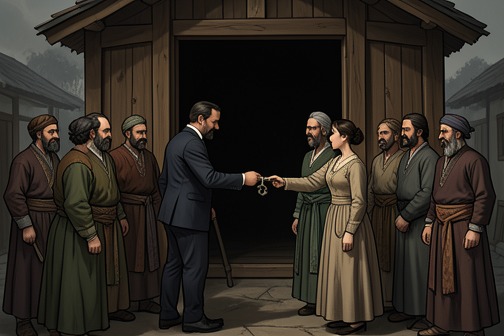
The [2011 Osage settlement agreement](entity:event-recall-event-2011-3164a000ee90) marked a partial reckoning over the federal government’s handling of Osage oil funds. After an eleven-year legal battle, the government agreed to pay $380 million to settle a lawsuit brought by the Osage. The agreement returned at least a portion of funds mismanaged over decades, while leaving a much longer history of land loss, restricted access to wealth, and exploitation beyond the reach of a single settlement.
## Land Loss and Mineral Rights
The dispute’s background extended well before oil wealth transformed Osage territory. After the United States compelled the Osage to relinquish vast ancestral lands, the tribe was expelled from [Kansas](entity:location-recall-location-dc1f7fb4994c). In 1870, the Osage agreed to sell their Kansas lands to settlers for $1.25 an acre; the agreement came amid violence against Osage people, including killings and the mutilation of bodies. The Osage then sought a new homeland in [Indian Territory](entity:location-recall-location-2c7ac31cd1b6).
As the federal government prepared to divide Indian Territory and make it part of [Oklahoma](entity:location-recall-location-oklahoma-4e6205abe2e5), Osage leaders negotiated for terms that would preserve tribal control over mineral resources. Under the 1906 allotment agreement, land was divided among tribal members, with each allotment increased from the 160 acres used elsewhere to 657 acres. Crucially, the agreement reserved the oil, gas, coal, and other minerals to the Osage Tribe. The reservation created an enduring source of collective revenue—and a distinct resource whose income could be contested even as individual surface lands were allotted.
## Oil Wealth and Financial Control
The oil beneath the reservation became extraordinarily valuable. Federal auctions, held about four times a year from 1912, offered leases for drilling, commonly on 160-acre tracts. As bidding escalated, the underground mineral estate became a source of immense wealth and a target for those seeking access to its returns.
That wealth did not mean that Osage people could freely control their own money. Under the [Indian guardianship system](entity:concept-recall-concept-indian-guardianship-s-5e0523355d81), federal officials classified many Osage as unable to manage their finances and required a local white guardian to oversee spending. The classification was closely tied in practice to blood quantum: full-blooded Osage were routinely assigned guardians, while mixed-blood people rarely were. For those under guardianship, even ordinary purchases could require a guardian’s authorization.
The administration of these estates also enabled extensive financial abuse. Some guardians inflated prices on goods sold to their wards, steered business to favored stores and banks for kickbacks, claimed to buy property for Osage clients while acquiring it for themselves, or stole outright. A government study estimated that, before 1925, guardians had taken at least $8 million directly from restricted Osage accounts. This history of private exploitation is distinct from the later lawsuit’s focus on oil funds mismanaged by the United States government, but both exposed how formal oversight could fail to protect the people whose wealth it purported to manage.
## The Lawsuit and Agreement
The Osage brought a lawsuit seeking to recover oil funds that the United States government had mismanaged over decades. After eleven years of litigation, the government agreed in 2011 to settle for $380 million. The result was a substantial recovery, but the account describes it as only a portion of the funds at issue; it does not present the agreement as compensation for every loss produced by guardianship, dispossession, or exploitation.
## Recovery and Limits
The settlement formed part of a broader effort by the Osage to sustain their community and recover resources. The Nation also developed new revenue sources, including seven casinos on its territory, whose proceeds help fund tribal government, education, and health-care benefits. Together, these developments show that Osage economic life did not end with the decline of the oil boom. Yet the settlement’s partial recovery also marks its limit: money returned after an eleven-year legal struggle could address some mismanaged funds, but could not undo generations of restricted control over Osage wealth.
Event 23
Death of George Bigheart
[George Bigheart’s death](entity:action-recall-action-george-bigheart-6eb5080cb7e9), attributed to suspected poisoning in an [Oklahoma City](entity:location-recall-location-2410fcf3f0d0) hospital, became a point where the murder investigation, control of Osage wealth, and the fate of a crucial legal payment converged. Records connected [H. G. Burt](entity:character-recall-character-h-g-burt-57835ec6680a) and [William K. Hale](entity:character-recall-character-william-k-hale-4e2a35719096) to money associated with [Bigheart](entity:character-recall-character-540ddcdde84c), but the evidence assembled later remained circumstantial and did not establish who killed him.
## Bigheart’s Legal Affairs and the Money at Stake
Before his death, Bigheart sought a certificate of competency that would end his designation as a government ward and let him spend his headright payments as he chose. [W. W. Vaughan](entity:character-recall-character-w-w-vaughan-76ecea00e8f2), his attorney, helped him file the application. Bigheart had planned to pay [Vaughan](entity:character-recall-character-w-w-044f27d09ed3) as much as $10,000 for that and other legal work, a sum the book compares to nearly $140,000 today.
The payment did not reach Vaughan as intended. Records reviewed later showed that Burt had collected the money. Vaughan had also acted as Burt’s attorney, and the two men were regarded as close friends, making the apparent diversion both a financial dispute and a betrayal of a professional relationship. Days after the money became a matter of record, Bigheart and Vaughan were dead.
## Death and Control of the Estate
Bigheart died after apparent poisoning at a hospital in Oklahoma City. The records do not identify a proven poisoner or establish the precise circumstances of the poisoning. They do show why questions about access to his affairs persisted: his fortune passed to his wife and young daughter, and his daughter’s guardian controlled her money. The guardian was Burt.
Burt’s guardianship was part of a broader pattern in the records examined by the investigator. Government documents showed that Burt had served as guardian to several Osage people, including one who died. A local lawman had also noted that Burt and Hale visited Bigheart shortly before his death. These circumstances placed Burt near both Bigheart and the money connected to him, but proximity and financial access were not proof of murder.
## Hale, Burt, and the Investigators’ Suspicions
A trusted informant described Burt and Hale as close associates who had divided money obtained from Bigheart. The report did not make clear exactly what that money included. Separately, the [Bureau of Investigation](entity:organization-recall-organization-bureau-of-invest-4f505fe6e949) recorded that Hale successfully claimed $6,000 from Bigheart’s estate by presenting a bogus creditor’s note. The investigator considered whether the sum Burt had taken from Vaughan, or other money connected to Bigheart, might also have formed part of the informant’s account.
Other evidence sharpened suspicion without resolving it. The bureau’s files included a report describing Burt as a murderer, and the investigator knew that Burt had become guardian of Bigheart’s daughter and thereby gained access to her inheritance. The records also suggested a possible connection between Bigheart’s death and Vaughan’s subsequent murder: Vaughan may have confided in Burt about his investigation or the location of a hideout containing money and evidence, and Bigheart may have implicated Burt as well as Hale before he died. Those possibilities were presented as conjecture, not established facts.
## What the Record Leaves Unresolved
The apparent financial motive had limits. The sums associated with Bigheart were comparatively small beside the headrights involved in the killings of [Mollie Burkhart](entity:character-recall-character-mollie-burkhart-8744148694d1)’s family or the $25,000 insurance policy connected to [Henry Roan](entity:character-recall-character-henry-roan-38491fdf790c)’s murder. The Justice Department did not prosecute Hale for Bigheart’s killing and did not pursue Burt further over it. Nor did the archival search uncover evidence that Hale, Burt, or another white man inherited Bigheart’s fortune; it passed to his wife and daughter, although Burt’s guardianship gave him control over the daughter’s funds.
The resulting account is therefore one of converging clues rather than a solved murder. A competency application, a promised legal fee that Burt collected, Hale’s claim against the estate, Burt’s guardianship, and the reported visits shortly before Bigheart’s death all made the financial and personal connections difficult to dismiss. Yet the evidence did not prove a murder plot or identify the person responsible. Bigheart’s death remains significant in the book because it exposes how legal authority over Osage property could place money within reach of men already under suspicion, while leaving the central question of his killing unanswered.
Event 24
Murder of Charles Whitehorn
The [Murder of Charles Whitehorn](entity:event-recall-event-murder-of-charles-white-c2f7afa7d29f) was an unsolved 1921 killing that exposed the limits of the official explanation for the [Osage Reign of Terror](entity:event-recall-event-osage-reign-of-terror-d9a3aed038ee). Although investigators found no evidence tying [William K. Hale](entity:character-recall-character-william-k-hale-4e2a35719096) or his associates to the crime, private detectives and federal agents developed a separate theory: that [Charles Whitehorn](entity:character-recall-character-charles-whitehorn-423b1a7d04e1)’s widow, [Hattie Whitehorn](entity:character-recall-character-hattie-whitehorn-c75941835520), and other conspirators arranged his death to seize his headright and fortune. The case never produced a prosecution, but its unresolved trail challenged the idea that one mastermind accounted for the era’s killings.
## The killing and its first clues
Charles Whitehorn was last seen alive in [Pawhuska, capital of the Osage Nation](entity:location-recall-location-fc455cdf3ade), on May 14, 1921. At about eight that evening, a witness spotted him outside the [Constantine Theater](entity:location-recall-location-constantine-theater-3b4bbd89ea96). His body was discovered two weeks later on a hill roughly a mile from downtown. An undertaker observed that its position suggested Whitehorn had fallen where he was found rather than being carried there.
The weapon was a .32 revolver, and Whitehorn had been shot twice between the eyes. Those details suggested a deliberate killing, perhaps a professional hit, but did not identify a perpetrator. The timing added to the case’s significance: the murder occurred in May 1921, around the same period as [Anna Brown](entity:character-recall-character-anna-brown-76ad5cff9420)’s killing, at what was considered the beginning of the four-year [Reign of Terror](entity:expression-recall-expression-reign-of-terror-c2ed6171dd61). Yet no evidence surfaced implicating Hale or his henchmen.
Whitehorn’s estate hired private detectives, whose logs later supplied a substantial body of clues. [Vaughan](entity:character-recall-character-w-w-044f27d09ed3), an attorney familiar with the Osage, offered help because he wanted the guilty party prosecuted. He and the investigators did not know that Vaughan himself would be murdered within two years. [Comstock](entity:character-recall-character-comstock-f71d770b62a1), an attorney and guardian whom investigators had initially suspected but who had proved trustworthy, also assisted. He relayed a report that an unidentified man had been seen lurking on the hill on May 14, the day Whitehorn disappeared.
## A separate conspiracy takes shape
Working from informants and circumstantial evidence, the private detectives came to suspect that Whitehorn’s killing was intended to transfer his wealth. After his death, Hattie married [LeRoy Smitherman](entity:character-recall-character-leroy-smitherman-80d8fb5cff71), an unscrupulous white man. Investigators believed [Minnie Savage](entity:character-recall-character-minnie-savage-607bf5e0b7cc), who ran a boardinghouse in [Pawhuska](entity:location-recall-location-pawhuska-37ec386b1006), had orchestrated the marriage. They suspected Savage, Smitherman, and other conspirators of arranging the murder to obtain Whitehorn’s headright and fortune. As the inquiry continued, some investigators also came to believe Hattie had been involved; an informant characterized her as a leading participant. Her rapid spending of some of her husband’s money after his death fed suspicion, but neither suspicion nor circumstantial evidence established guilt.
The detectives placed an undercover operative in Savage’s boardinghouse to listen to telephone conversations. Savage’s sister became another source of information, telling investigators that she had seen what was likely the murder weapon: a large, dark-colored gun that Savage picked up from beneath a pillow while making a bed. These leads sharpened the theory of the crime but did not yield enough evidence to prosecute anyone. The reports leave open the possibility that the private detectives failed to build a prosecutable case or were bought off; they do not resolve which explanation is true.
## Federal inquiry and a failed confession
When [Bureau of Investigation](entity:organization-recall-organization-bureau-of-invest-4f505fe6e949) agents examined the case in 1923, they likewise suspected Savage, Smitherman, and Hattie. Their working theory was that Hattie had caused her husband’s murder to gain control of his estate. She denied involvement and warned an agent that she had been cautioned about the investigators. She also refused to tell them what she knew, saying in effect that disclosure could send her to the electric chair.
The investigation acquired new complications when Smitherman fled to Mexico with Hattie’s car and some of her money. [J. J. Faulkner](entity:character-recall-character-j-j-faulkner-e0f56c7814a6) then entered Hattie’s life and, agents believed, used knowledge she had shared about the murder to blackmail and control her. Hattie’s sister confronted him over his demands; Faulkner responded that he knew about Hattie and the killing and that the family should be careful. Agents suspected he was trying to secure control of Hattie’s property after her death as well as money while she lived.
Hattie became gravely ill, and Faulkner’s wife said he was preventing her from going to a hospital to keep her under his influence. Hattie’s sisters reported that he was taking money from her while she was under the influence of a narcotic. The sisters eventually got her admitted to a hospital. Agents, expecting her to die, tried to obtain a confession. They reported that Hattie had told Comstock she knew the facts but had never disclosed them, and that the conspirators had sent her away when Whitehorn was murdered. She revealed nothing further. After she was removed from Faulkner’s control, she recovered. Though poisoning had figured in other suspected crimes of the Reign of Terror, the agents did not express suspicion about the nature of Hattie’s illness.
## An unresolved case and a larger history
By the time [Tom White](entity:character-recall-character-tom-white-05c25ce7617d) arrived to investigate in 1925, the Bureau had largely set the Whitehorn case aside. [Agent Burger](entity:character-recall-character-agent-burger-f945e53e8779) described it as an isolated murder, disconnected from the systematic killings. The case did not fit the Bureau’s preferred account: that a single mastermind was responsible and that capturing Hale and his associates would solve the Osage murders. Whitehorn’s killing remained officially unresolved, with no conviction establishing who arranged it or carried it out.
That very separation gives the case its wider significance. The evidence did not prove that Hale played no role, but investigators never found a connection between him and this plot. In retrospect, the suspected conspiracy against Whitehorn—and the later suspected effort to control his widow—suggested that predatory violence was not confined to Hale’s circle. Like the suspicious death of Red Corn’s grandfather, the case points toward a history of possible brutality that incomplete investigations and the deaths of the principal figures left difficult to recover. Its unanswered questions complicate any neat ending in which the capture of one group could be taken to mean that the broader system of violence had been explained.
Event 25
Murder of Mary Lewis
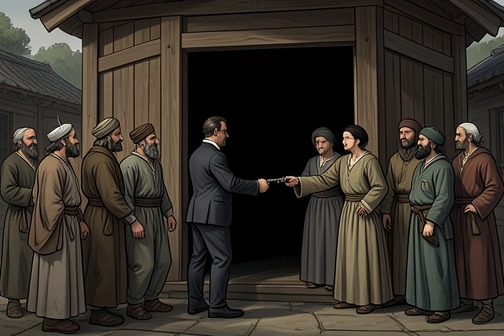
[Mary DeNoya-Bellieu-Lewis](entity:character-recall-character-mary-denoya-bellieu-cee9e58fee12)’s 1918 murder was part of a scheme to steal her headright, placing the killing years before the period often dated as the [Osage Reign of Terror](entity:event-recall-event-osage-reign-of-terror-d9a3aed038ee). Recovered through family history and a handwritten research trail, her case widens the record of violence beyond the crimes attributed to [William K. Hale](entity:character-recall-character-william-k-hale-4e2a35719096) and his circle.
## A Family Manuscript and a Missing History
The account of Mary’s murder enters the book through a spiral-bound manuscript discovered in the public library in [Pawhuska](entity:location-recall-location-pawhuska-37ec386b1006), among volumes on Osage history. Titled “The Murder of Mary DeNoya-Bellieu-Lewis,” it had been assembled by Anna Marie Jefferson, Mary’s great-great-grandniece. In an introductory note dated January 1998, Jefferson explained that she had first heard the story from her great-grandmother around 1975, then spent two decades gathering fragments from relatives, newspaper clippings, and other records. The manuscript preserved a family’s effort to keep the case from disappearing into the historical record.
Its rediscovery came during a later stage of the book’s research. The reporter had traveled from New York to Pawhuska in 2012 to investigate the nearly century-old murders, after finding that they were largely absent from the history he had encountered in school. His search led him to the [Osage Nation Museum](entity:location-recall-location-osage-nation-museum-1f58bb6e04c1) and to conversations with its director, [Kathryn Red Corn](entity:character-recall-character-kathryn-red-corn-f4cb96f8e297), who described how difficult it remained for Osage families to speak about losses from the [Reign of Terror](entity:expression-recall-expression-reign-of-terror-c2ed6171dd61). The family manuscript offered a route into a related history: a murder that official accounts had not folded into the familiar chronology.
Mary was born in 1861 and was an allotted member of the tribe. Her allotment income enabled a prosperous life. After two marriages ended in divorce, she was raising her ten-year-old adopted daughter in 1918, when she traveled with the child to [Liberty, Texas](entity:location-recall-location-liberty-texas-d516698df81f). Two white men accompanied them: [Thomas Middleton](entity:character-recall-character-thomas-middleton-68f36a289192), a friend, and Middleton’s companion. Using Mary’s money, they bought a houseboat and stayed on the Trinity River. On August 18, Mary vanished.
## Disappearance, Search, and Recovery
When Mary vanished, authorities failed to investigate. Her family therefore hired a private detective, who learned that Middleton had posed as her adopted son to cash several of her checks. In January 1919, after police detained Middleton and his companion, the detective questioned them, but neither disclosed what had happened. Middleton said he did not know where Mary had gone and insisted he was not afraid.
Two witnesses, however, reported seeing a car heading toward a snake-infested swamp a few miles from Mary’s houseboat on the day she disappeared. On January 18, investigators searched the dense vegetation, rolling up their trouser legs as they worked through the water. One lawman, struggling to free his feet from the mud, brought up a thick growth of a woman’s hair. Leg bones followed, then a human trunk and a skull that appeared to have been struck with a heavy metal object. The remains ended the search for Mary, but the discovery also made the violence unmistakable.
Middleton’s companion eventually confessed that he had beaten Mary over the head with a hammer. The plan, conceived by Middleton, was to kill her and then have a female associate impersonate her so the men could collect her headright payments. The scheme turned the legal inheritance attached to Mary’s Osage allotment into the motive for a calculated fraud: the perpetrators sought not only to take her life but to claim the income that continued to flow from it.
## Conviction and the Wider Pattern
In 1919, Middleton was convicted of murder and condemned to die. Mary’s family initially felt relief that the ordeal had reached a conclusion, but that feeling gave way to disbelief and anger when his sentence was commuted to life imprisonment. After serving only six and a half years, he was pardoned by the governor of [Texas](entity:location-recall-location-texas-f19b16f8e87c). Mary’s relatives believed that Middleton’s girlfriend had bribed authorities; to them, the outcome meant that the murderer had received little more than a slap on the hand.
The case’s significance extends beyond its prosecution and its failure to deliver lasting punishment. The book recovers it through a manuscript assembled by Mary’s great-great-grandniece, Anna Marie Jefferson, whose two decades of collecting family accounts, newspaper clippings, and records preserved a murder missing from the customary chronology. Historical accounts commonly placed the Osage Reign of Terror between the spring of 1921, when William K. Hale had [Anna Brown](entity:character-recall-character-anna-brown-76ad5cff9420) murdered, and Hale’s arrest in January 1926. Mary’s killing in 1918 shows that murders for [Osage headrights](entity:concept-recall-concept-f0fb68fe3515) began at least three years earlier. Read alongside later suspicious deaths, it also undermines the notion that the crimes were simply one conspiracy directed by Hale: he may have led the longest and bloodiest spree, but other killings for headrights fell outside the cases officially counted, investigated, or even classified as homicides.
## Legal Boundaries and the Record of Violence
Mary Lewis’s case entered the book through a family manuscript, but the wider history it helps expose was also shaped by disputed legal boundaries. Officials confronting the Osage murders had to decide whether a crime belonged in state or federal court. If a murder occurred on Indian territory, federal authorities could claim jurisdiction; after allotment, however, much of the surface land where killings occurred was no longer under tribal control. Justice Department officials concluded that cases such as Anna Brown’s could only be tried by the state, even as a federal prosecutor warned that trying William K. Hale there would be dangerous because of his influence over [Oklahoma](entity:location-recall-location-oklahoma-4e6205abe2e5)’s legal institutions.
The prosecution of [Henry Roan](entity:character-recall-character-henry-roan-38491fdf790c) offered a different route. Roan had been killed on an allotment that had not been sold to white people, and its Osage owner was under federal guardianship. Prosecutors therefore charged Hale and [John Ramsey](entity:character-recall-character-john-ramsey-6e9cdf445c59) in federal court. The [United States Supreme Court](entity:organization-recall-organization-19f5e1722f8f) later ruled that the place of Roan’s murder was indeed Indian land, returning the case to federal district court. These jurisdictional distinctions did not explain Mary’s murder, but they illuminate why the broader record of Osage killings was divided among investigations and court systems. Against that fragmented backdrop, a family’s effort to preserve Mary’s story becomes part of the evidence of how much violence could remain outside the cases officials pursued.
## Memory and the Limits of the Record
The recovery of Mary’s case also points to the human cost behind the historical gaps. During the reporter’s research, Kathryn Red Corn explained why accounts of the Reign of Terror remained difficult for Osage families to discuss: “So many Osage lost a mother or a father or a sister or a brother or a cousin. That pain never goes away.” Mary’s story survives not only as evidence of an unpunished murder, but as part of a family and community history whose losses were carried forward long after official investigations ended.
Event 26
Murder of William Stepson
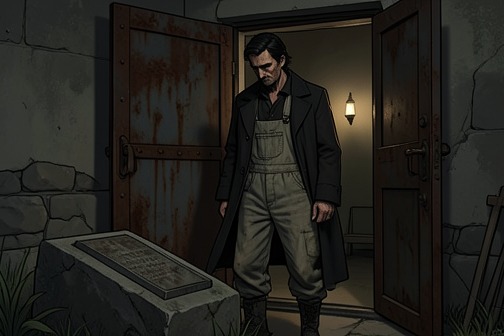
[William Stepson](entity:character-recall-character-william-stepson-9dc5c207f2b8)’s suspected poisoning in 1922 was more than an isolated death: investigators came to believe that [Kelsie Morrison](entity:character-recall-character-kelsie-morrison-209b2cf9552f) killed him to marry his widow, Tillie, and acquire control of her estate and children. The case’s significance deepens through what followed. Tillie also died of suspected poisoning, Morrison allegedly took much of her fortune, and their children later appeared in a note in which Morrison considered how to gain control of their money. No one was prosecuted for William’s murder, and the story shows how violence against one family could continue through inheritance, guardianship, and the threat to its surviving children.
## William Stepson’s Death and the Suspect
William Stepson was remembered as a steer-roping champion. Authorities never brought anyone to trial for his suspected murder, but they came to believe that Morrison was responsible. The account presents that conclusion as an investigative belief rather than a conviction: the absence of prosecution left the killing without a judicial resolution.
By 1922, Morrison had divorced his Osage wife. After William died, Morrison married Tillie, William’s widow, and became guardian of her two children. The sequence placed him in a position to benefit both from his marriage to Tillie and from control over the children’s future. An associate told the Bureau that Morrison had admitted killing William so that he could marry Tillie and take control of her valuable estate. The allegation supplies a specific financial and personal motive, but it remains an attributed admission, not a finding made in court.
## Tillie’s Death and the Inheritance
After marrying Morrison, Tillie became suspicious of him, particularly when she overheard him discussing the effects of strychnine. She confided to her lawyer that she wanted to prevent Morrison from inheriting her estate and to end his guardianship of her children. In July 1923, before she could make those changes, Tillie died of suspected poisoning.
Her death was not investigated. Morrison took much of her fortune, while letters he wrote indicated that he planned to sell a portion of the estate he had obtained to [H. G. Burt](entity:character-recall-character-h-g-burt-57835ec6680a), a banker who appeared to be involved in the killing of [W. W. Vaughan](entity:character-recall-character-w-w-vaughan-76ecea00e8f2). According to another associate, Morrison admitted killing Tillie as well. These accounts extended suspicion from William’s death to a second death in the same family, while the lack of investigation meant that Tillie’s suspected murder, like William’s, did not lead to prosecution.
## The Children and the Continuing Threat
The account follows the alleged plot past the deaths of William and Tillie. Their son was three years old when his parents died; his nine-year-old half sister was also at risk. In 1926, while imprisoned for killing [Anna Brown](entity:character-recall-character-anna-brown-76ad5cff9420), Morrison sent a note to William Hale asking how he might obtain possession or control of the children’s money after his release. Morrison referred to having the children adopted and considered taking them out of the state. Guards intercepted the note, and authorities feared he planned to kill both children.
The note made the threat legible in unusually concrete terms: the children’s future inheritance was not merely a matter of family administration but a possible motive for renewed violence. The child who had been left an orphan and his half sister remained vulnerable because adults who controlled their guardianship and estate could also threaten their lives. The surviving children thus became part of the consequence of the original killing, not an unrelated aftermath.
## Unresolved Justice and the Wider Pattern
William’s death was commonly counted among the murders of the [Reign of Terror](entity:expression-recall-expression-reign-of-terror-c2ed6171dd61), even though no one was prosecuted for it. The account’s broader discussion shows how difficult it could be to bring cases against powerful suspects: officials considered state courts unsafe for prosecuting Hale, while questions about whether crimes occurred on allotted land or Indian territory complicated jurisdiction. The federal case against Hale and Ramsey for [Henry Roan](entity:character-recall-character-henry-roan-38491fdf790c)’s murder proceeded on the basis that Roan had been killed on an unsold Osage allotment and was under federal guardianship; a later Supreme Court ruling returned that prosecution to federal district court. This legal context illustrates the uncertainty surrounding prosecutions, but the account does not establish jurisdiction as the reason William’s case went unprosecuted.
The case also unsettles the idea that the killings can be explained by a single mastermind. The book presents the suspected attack on the Stepson family as evidence of a broader culture of killing: Morrison was believed responsible, while the alleged motive centered on marriage, guardianship, and inheritance. William’s death, Tillie’s uninvestigated poisoning, and the threat to the children form a chain of violence whose consequences outlasted the first murder and whose central allegations were never tested in court.
Event 27
Death of Tillie Stepson
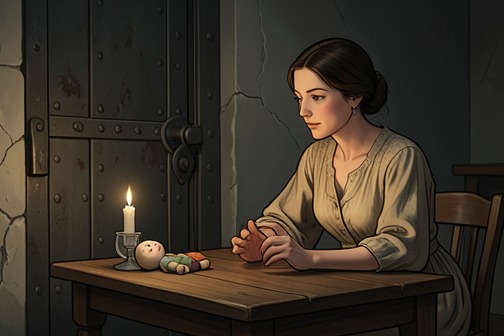
[Tillie Stepson](entity:character-recall-character-tillie-stepson-609b4f76f78a)’s suspected poisoning in July 1923 left her children under the control of [Kelsie Morrison](entity:character-recall-character-kelsie-morrison-209b2cf9552f), the man she had come to fear, and her estate in his hands. She died before she could revoke his guardianship or prevent him from inheriting; the death was never investigated, even as evidence recounted later implicated Morrison in her killing and extended the danger to the next generation.
## Marriage and Control of the Estate
Tillie’s death followed the killing of her husband, [William Stepson](entity:character-recall-character-william-stepson-9dc5c207f2b8), a steer-roping champion whose death in 1922 was attributed to suspected poisoning. Authorities never prosecuted anyone for that killing, but came to believe that Morrison was responsible. An associate told the Bureau that Morrison had admitted killing William so that he could marry Tillie and gain control of her valuable estate.
By then, Morrison had divorced his Osage wife. After William’s death, he married Tillie and became guardian of her two children. The marriage thus placed him in a position to control both the family’s property and the children’s interests—a position Tillie later tried to undo.
## Tillie’s Suspicions and Death
Tillie grew suspicious of Morrison, particularly after he was overheard discussing the effects of strychnine. She confided to her lawyer that she wanted to keep Morrison from inheriting her estate and to rescind his guardianship of her children. In July 1923, before she had carried out either change, she died of suspected poisoning.
The timing left her intended safeguards unrealized. Morrison took much of her fortune, while the possibility that he had poisoned her went without an official investigation. The account presents not a prosecuted case with a judicial finding, but a sequence of suspicion, intended legal action, sudden death, and loss of the estate.
## Later Evidence and Unanswered Accountability
Years later, [Marvin Stepson](entity:character-recall-character-marvin-stepson-30bf6e295b0a), William’s grandson, told the book’s narrator that Morrison had admitted to an associate that he killed Tillie. Morrison reportedly asked the associate why he did not likewise take an Indigenous woman and do the same. The account connects this reported admission to the earlier suspicions, but no investigation or prosecution followed Tillie’s death.
Morrison’s letters also indicated that he planned to sell part of the estate he had swindled to [H. G. Burt](entity:character-recall-character-h-g-burt-57835ec6680a), a banker who appeared to have been involved in the killing of [W. W. Vaughan](entity:character-recall-character-w-w-vaughan-76ecea00e8f2). The planned sale links Tillie’s stolen property to a wider network of suspected crimes, though the evidence does not establish that a sale was completed.
## The Children and the Continuing Threat
Tillie’s death did not end the danger to her family. Her son—Marvin’s father—was three years old when William and Tillie died; his nine-year-old half sister was also left vulnerable. In 1926, while imprisoned for killing [Anna Brown](entity:character-recall-character-anna-brown-76ad5cff9420), Morrison sent a note to [William K. Hale](entity:character-recall-character-william-k-hale-4e2a35719096) asking how he could gain control of the children’s money after his release. Guards intercepted it. Morrison wrote that he had the children adopted and considered taking them out of the state; authorities feared he intended to kill them.
The episode makes Tillie’s death part of a continuing struggle over inheritance and guardianship, rather than an isolated suspected poisoning. Her plans to protect her children were cut short, and the subsequent threat to them shows how control of an estate could outlast the deaths through which it was acquired. Marvin’s account, given decades later in an Osage courtroom, also restores the family consequences that an official tally of murders could leave in the background.
Event 28
Murder of Sybil Bolton
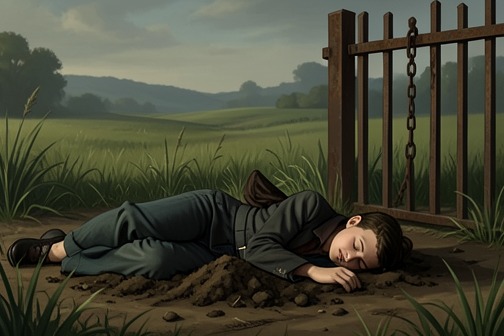
The [Murder of Sybil Bolton](entity:event-recall-event-murder-of-sybil-bolton-7739770114f7) became one of the unresolved deaths that exposed how the [Osage Reign of Terror](entity:event-recall-event-osage-reign-of-terror-d9a3aed038ee) could extend beyond the cases formally investigated by federal authorities. Bolton was twenty-one when she was found dead in [Pawhuska](entity:location-recall-location-pawhuska-37ec386b1006) on November 7, 1925. Her white stepfather, who was also her guardian, reported the death as suicide; the case was quickly closed without an autopsy.## Death and official account
A local reporter described Bolton as “one of the most beautiful girls ever reared in the city,” but the official account left basic questions unanswered. In 1992, her grandson [Dennis McAuliffe Jr.](entity:character-recall-character-dennis-mcauliffe-jr-955abefec5d2), an editor at the Washington Post, began examining the case after finding contradictions and lies in the version accepted at the time. His investigation indicated that much of Bolton’s headright money had been stolen and suggested that she had been killed outdoors on her lawn, with her sixteen-month-old baby beside her. Records also showed that the stepfather had four other Osage wards, all of whom died.
## Later investigation and unresolved attribution
In 1992, Bolton’s grandson Dennis McAuliffe Jr. revisited the official account and initially suspected his white grandfather, Harry. Harry was already dead, but his second wife urged McAuliffe to stop investigating, insisting, “Harry didn’t do it. He had nothing to do with it.” McAuliffe later came to believe she was probably right and instead suspected Bolton’s stepfather. The shift in suspicion did not settle the case: the evidence could not establish who killed Bolton.
McAuliffe described the limits of his inquiry as part of a larger historical failure: too many pages had been torn from the record, too many lies had accumulated, and too little had been documented when Bolton died. He wrote, “I did not prove who killed my grandmother.” Her death thus remains both a family loss and an example of how an official suicide ruling, made without an autopsy, left descendants to reconstruct a killing from contradictions and incomplete records.
## Guardianship and the limits of the record
Bolton’s case sits within a wider pattern visible in a handwritten [Office of Indian Affairs](entity:organization-recall-organization-office-of-indian-ca5d4f965b72) logbook cataloging Osage wards during the [Reign of Terror](entity:expression-recall-expression-reign-of-terror-c2ed6171dd61). When a ward died, the register commonly recorded the single word “Dead.” The figures were stark: one guardian had eleven wards, eight of whom died; another had thirteen, more than half listed as deceased; and a third had five, all recorded as dead. These totals did not establish how each person died or identify anyone responsible, and many of the deaths had never been investigated. They do, however, show why Bolton’s family could not treat an official ruling as a complete account: the surviving record itself was fragmentary, and the pattern of deaths under guardianship raised questions the authorities had often left unanswered.
## Historical memory and the limits of proof
The book places Bolton’s unresolved death within a wider struggle over who gets to establish what happened. Its narrator describes approaching the Osage murder cases through the historical record, then finding that hindsight exposed gaps the original investigators had not resolved. Descendants, meanwhile, continued private inquiries without the certainty a completed investigation might have offered: in many families, suspicion could fall on a dead relative, an old family friend, or a guardian, while the surviving evidence could not determine guilt. Bolton’s case exemplifies that bind. McAuliffe’s investigation sharpened suspicion but could not convert it into proof, leaving the family with a more informed account and an enduring uncertainty.
Event 29
United States v. Osage Wind

[United States v. Osage Wind](entity:event-recall-event-united-states-v-osage-w-5308f5bbc89b) was a federal lawsuit over whether a wind-energy company needed the [Osage Nation](entity:organization-recall-organization-osage-nation-e1f8bb010e26)’s permission to build turbine foundations above the [Osage underground reservation](entity:state-recall-state-5c130aae8498). The case set a new energy project against an older claim to mineral sovereignty: the court sided with [Enel](entity:organization-recall-organization-enel-6602373d2883), ruling that its construction did not amount to mineral development requiring a lease. The dispute made visible how control over the ground beneath the reservation remained contested even as the region’s energy economy changed.
## Background and Stakes
More than a century after oil was discovered in Osage territory, wind power had become a new force in the landscape. In June 2015, a reporter following [Kathryn Red Corn](entity:character-recall-character-kathryn-red-corn-f4cb96f8e297)’s directions crossed the prairie west of [Pawhuska](entity:location-recall-location-pawhuska-37ec386b1006) and saw a wind farm of towers, each 420 feet tall, with three rotating blades. The project covered more than eight thousand acres and was expected eventually to supply electricity to about forty-five thousand homes in [Oklahoma](entity:location-recall-location-oklahoma-4e6205abe2e5). Its scale made the change in energy source unmistakable, but for the Osage the central question was not simply what the turbines could generate. It was whether their foundations disturbed resources over which the Osage retained rights.
That question had a long history. The Osage had been compelled to surrender extensive ancestral territory and, after removal from [Kansas](entity:location-recall-location-dc1f7fb4994c), found a homeland in what became the [Osage Reservation](entity:location-recall-location-osage-reservation-6f9651a3e176). Under the [Osage Allotment Act of 1906](entity:event-recall-event-osage-allotment-act-of-6d3f7f5ed088), the Osage retained mineral rights even as land was allotted. Oil leases, auctioned about four times a year from 1912, typically covered 160-acre tracts; only part of the reservation’s underground resources had been opened to drilling. The wind-farm dispute therefore concerned more than a novel construction method. It tested how the retained mineral estate would be interpreted when energy development did not take the familiar form of an oil well.
## The Claim and the Company’s Position
The federal government, acting on behalf of the Osage Nation, sued Enel, the Italian energy company that owned the wind farm. The government argued that the company had excavated limestone and other minerals while building the turbine foundations. Under the terms of the Osage Allotment Act of 1906, the suit maintained, that activity required Osage approval for continued operations; without it, Enel was infringing the Osage’s sovereignty over their underground reservation.
Enel disputed that interpretation. Its position was that it was not in the mining business and therefore did not need to obtain a lease from the Osage. The company also maintained that the project did not disturb the mineral estate. At stake was a practical boundary with broader consequences: whether excavation incidental to building energy infrastructure counted as mineral development subject to the Osage’s retained rights, or whether the project could proceed without a lease because it was not selling or producing minerals.
## Prayer and Ruling
On July 10, 2015, at dawn, a chief and two dozen members of the Osage Nation gathered beneath the turbines to pray to [Wah’Kon-Tah](entity:concept-recall-concept-wah-kon-tah-69aa74e58776). The prayer took place in the presence of the very structures whose foundations were at issue. In the book’s account, the gathering gave the legal argument a visible community setting: the question of underground authority was not only being addressed in court but was also a matter of concern for Osage people facing a new industrial presence on their land.
On September 30, 2015, the court ruled for Enel. It reasoned that the defendants had not marketed or sold minerals, or otherwise engaged in mineral development, and were consequently not required to obtain a lease. The decision rejected the government’s interpretation of the act in this dispute. Although that interpretation would have benefited the Osage, the court found that the activity described in the case did not meet the standard for requiring a mineral lease.
## Energy Transition and Significance
The ruling arrived as oil production in the region was changing too. Environmental regulations issued in 2014 had made new drilling costly, and oilmen had largely stopped drilling wells that offered only marginal returns. A producer described the moment as the first in a hundred years without drilling in [Osage County](entity:location-recall-location-osage-county-7479182a5967). The wind farm thus represented both a new kind of development and a contrast with a declining oil industry: energy infrastructure remained, but the source and the legal argument over what counted as extracting the reservation’s resources had shifted.
Plans were already under way for a second wind farm in the county. The decision did not resolve every future dispute over the Osage underground reservation, but it gave Enel’s project a legal path to continue and left the Osage’s broader claim to control mineral resources facing a narrower judicial interpretation. The case’s importance lies in that tension. A landscape once transformed by oil was being remade by wind, while the question of who could authorize development beneath it persisted.