Gulag
LimonovThe Gulag is presented as more than a network of prisons and forced-labor camps: it is a system whose violence reaches into family memory, shapes the codes of ordinary prisoners, and becomes a contested account of Soviet history. For Eduard Limonov, it first appears as a secret heard from his father, then as a world of outlaw legends, and finally as a place whose routines he experiences for himself. The book sets that personal trajectory against the effort to tell the truth about the camps and the political limits imposed on that telling.
The camp system and its human cost
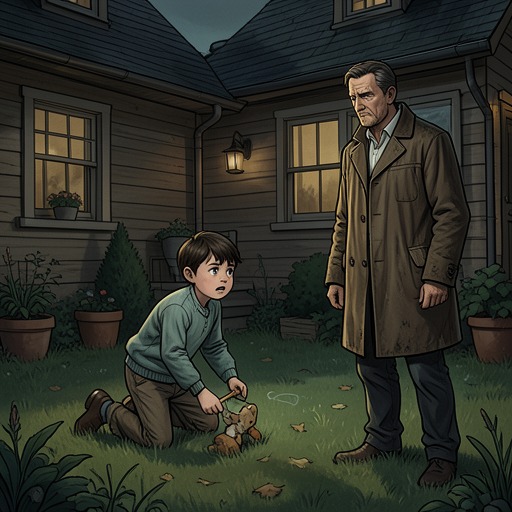
In a childhood recollection, Eduard listens from his bed as Venyamin Savenko tells Raya Zybin about transporting Ukrainian convicts. Instead of taking them to Siberia as usual, he had brought a group back in the other direction to be shot. Venyamin describes a condemned prisoner whose file marked him particularly dangerous, though the man himself was calm, polite, elegant in Russian, and disciplined enough to exercise in his cell or freight car. The narrator cannot verify the reported practice of moving executions between prisons to keep camp guards from becoming demoralized, and allows that Eduard may have misunderstood his father. But the men counted onto the truck were, the passage insists, going to their deaths.
That prisoner becomes an early model of composure under state violence. Eduard imagines that he too might one day go to prison and earn the respect of women, thugs, and men he regards as formidable. The camp enters his childhood not only as a machinery of punishment but as the setting for a heroic identity he hopes to inhabit. The irony is already present: a system designed to crush and dispose of people is transmuted, in a boy’s imagination, into a test through which a person might become impressive.
The camps also enter Eduard’s life through stories about criminal prisoners. After a beating leaves him too bruised to move, he is put in a cell with Gorkun, who tells him about Kolyma for two weeks. Eduard and his friends have little respect for political prisoners, whom they imagine as either pompous intellectuals or foolish people who do not know why they were locked up. Gangsters, by contrast, are heroes to them. Gorkun is not himself a thief in law, but he has encountered members of that criminal aristocracy in the camp system and retells their exploits as a mixture of courage and cruelty.
In these tales, criminal honor depends on obeying the clan’s rules and knowing how to kill and die. Gorkun can admire a card game in which a cellmate’s life is wagered, or an escape plan whose organizer intends to eat a companion if food runs out on the taiga. Eduard listens with rapt attention and studies Gorkun’s tattoos. Their images and placement mark rank in the criminal hierarchy; the right to wear them must be earned, while a pretender risks being skinned. The camp world thus has its own authority and punishments, distinct from the state’s, and the stories teach Eduard to read violence as a code of status as well as a source of terror.
Historical truth and political retreat
The book places those intimate and criminal memories beside the public reckoning that followed Joseph Stalin’s death. As prisoners returned and some were rehabilitated, they encountered informers and officials who had assumed they would never come back. The two sides often recognized one another and then looked away, leaving a strained silence where open conflict might have been expected. In 1956, Nikita Khrushchev’s secret report to the Twentieth Party Congress condemned Stalin’s cult of personality and implicitly acknowledged decades of rule by murderers.
A more direct shock followed in 1962, when Khrushchev personally authorized the publication of Aleksandr Solzhenitsyn’s One Day in the Life of Ivan Denisovich. Readers seized the issue of Novy mir that carried its meticulous account of an ordinary day for an ordinary inmate in a camp that was not even especially harsh. The story made the camp legible through routine rather than spectacle, and its publication encouraged the sense that once one person had spoken truthfully, the truth could no longer be contained. The book describes the work as a historical rupture, comparable in its consequences only to the later publication of The Gulag Archipelago.
The authorities understood the danger in allowing that account to continue. If the camps’ history became fully speakable, the challenge could extend beyond Stalin to Lenin, the political system, and the lies on which it rested. Solzhenitsyn had secretly gathered accounts from 227 former prisoners, writing them in tiny script, burying manuscripts, and arranging for microfilmed copies to reach the West. The Gulag Archipelago was published in France and the United States and read on Radio Liberty in early 1974. The narrative presents the Gulag not as a temporary illness confined to Stalin’s rule, but as central to the system’s purpose and history.
That opening closed into a softer form of Stalinism under Leonid Brezhnev. The nomenklatura system offered stability, patronage, graft, and privileges to a broad elite willing to play along, while repression remained moderate rather than disappearing. The camp’s history therefore persists alongside a social order capable of treating that history as awkward or safely past. Disclosure threatens not only a dead dictator’s reputation but the arrangement of everyday life that followed him.
Limonov’s distance from the dissident tradition
As a young rebel, Limonov mocks the dissidence that emerged in the 1960s. He puts Solzhenitsyn and Brezhnev, Joseph Brodsky and Kosygin, on the same side of a divide: important men who speak from positions of authority, whether official or dissident. He prefers the idea that Soviet society is chaotic, not fully totalitarian, and that clever people can exploit the disorder and enjoy themselves. This posture lets him reject the dissident camp as a crowded field in which he would only be second-rate.
The narrator sets that pose against the scale of the dead. Citing estimates that twenty million Russians were killed by the Germans during four years of war and twenty million by their own government during Stalin’s twenty-five-year rule, the passage notes that the figures are approximate and may overlap. The distinction that matters for Limonov’s formation is personal: the war profoundly marked his childhood and adolescence, while he tried to ignore the state’s own mass killing. He was the son of a subordinate Chekist officer, raised in a family spared the greatest convulsions of history and accustomed to assume that an arrest must have had a reason.
His attachment to Soviet victory, imperial power, and the fear his country inspired abroad coexists with a taste for revolt. When people discuss the Gulag, he sincerely suspects exaggeration and regards denunciations by intellectuals as fussier than the attitude of ordinary criminal prisoners. His admiration for camp gangsters and his contempt for dissident authorities are not the same as an understanding of political imprisonment. The narrative makes that gap part of his character: he wants the stature of the condemned man but initially resists the history that would explain what condemnation means.
From prison isolation to camp routine
Limonov’s later imprisonment gives the subject a more immediate, bodily form, while the book distinguishes different institutions rather than treating every prison as a labor camp. At Lefortovo Prison, near Moscow, he is held among the state’s most serious political enemies and high-level terrorists. At first he does not know what he and his companions are accused of; he has no lawyer or visitors and cannot tell whether anyone outside knows where he is. The prison is clean and not overcrowded, but its strict isolation controls contact and time. Television is available throughout the day, while outdoor exercise takes place in tiny roof enclosures separated by loudspeakers playing deafening music.
Many prisoners stop going out, especially in winter, when the exercise yard is dark and bitterly cold. Limonov instead insists on his daily half hour on the roof, running on his fenced square of concrete, doing push-ups and sit-ups, and boxing the icy air. Guards accustomed to drinking tea in peace after the wake-up call are irritated at having to reopen the route for a single prisoner, but they are impressed by his persistence. His education, politeness, and even temper earn him the nickname Professor. The discipline he once imagined as a route to distinction now becomes a practical defense against the apathy built into isolation.
At the prison in Saratov, the hardship is different. Cells meant for four may hold seven or eight, and when Limonov arrives every bed is taken. He lays his mattress on the floor without complaint, reasoning that the newest arrival should have the worst place. Rather than trade on his reputation as a political prisoner and celebrity, he learns the cell’s practical rules: he shares parcels, does chores without being asked, avoids unnecessary talk, and helps other inmates write letters or complete crosswords. He refuses cards and chess because he considers them a waste of time, but his preference for reading and writing does not prevent him from helping others. Within a week the cellmates regard him as a good man.
At Penal Colony 13 at Engels, he encounters work-camp life directly. The day begins with a 5:30 siren, though he wakes on his own at five and uses the quiet to observe his breathing. The moment belongs to him before the barracks erupt into movement. As a nonsmoker, he takes advantage of the other prisoners’ cigarette break to reach the toilets early. He notices that the garbage cans contain almost no organic matter: in camp, anything edible is eaten. Meals of kasha, thin soup, and black bread provide little nourishment, and the men eat hunched over their tin bowls, guarding their portions.
The labor can be deliberately futile. Torrential rain floods the colony’s buildings, and the administration demands dry ground for each of three daily roll calls, with television at stake. Prisoners spend hours emptying puddles with water glasses, though the water immediately returns. Limonov considers whether masonry and improved drainage would solve the problem, then recognizes the task as a camp tradition: work without purpose exhausts and demoralizes. At sixty, he is classed as a senior citizen and exempt from forced labor, but he still cannot return to his books or notepads until evening. Instead he is assigned cleaning, including four hours for a job that should take one, and completes the scrubbing repeatedly without daydreaming.
Significance
Across the book, the Gulag is at once a system of state violence, a suppressed historical record, and a source of competing identities. The child’s admiration for a condemned prisoner, the adolescent’s fascination with criminal codes, Limonov’s early dismissal of dissidents, and his later self-discipline under confinement are connected without being made equivalent. Criminal prestige cannot explain political repression; a clean isolation cell is not the same as a crowded work camp; and survival through personal discipline does not erase the institutions that structure daily life.
The narrative’s sharpest contrast is between the ordinary texture of camp existence and the enormity of the history it carries. A siren, a tin bowl, a television, a water glass, and a square of concrete make confinement tangible. Solzhenitsyn’s account of an ordinary inmate performs a similar act on the public record: it gives the camp an everyday form that readers can no longer dismiss as abstraction. The Gulag remains present both in those concrete routines and in the struggle over whether the society around them will remember what they mean.