Third-wave Russian emigration
LimonovThird-wave Russian emigration names the experience of a group who left the Soviet Union in the 1970s and found that political and geographical escape did not guarantee a new life. In the book’s account, mostly Jewish former poets, painters, and musicians arrive in New York to work as dishwashers, house painters, and movers, while their hopes of recognition and eventual return steadily collapse. Their exile becomes a condition of suspended belonging: they are out of Russia, but unable to stop living in its shadow.
From underground artists to precarious work
The émigrés Eduard Limonov recognizes on New York streets are marked, in his perception, by lassitude and misfortune. In Moscow or Leningrad, many had been members of the underground, sustaining their artistic lives in kitchens. In New York, they make their living in jobs far removed from the talent and identities they once hoped would be acknowledged. They try to believe that this is temporary and that recognition will come; at the same time, they know that it probably will not. The distance between the artist they had been and the worker they have become gives exile its particular sting.
The Winslow Hotel as a refuge
The Winslow Hotel gathers Russians who share this predicament. They stay together, speak only Russian, drink, complain, and talk about their country. Their language and company offer a kind of shelter, but do not make the hotel a route back to the lives they left. They dream of being allowed to return to Russia, yet the book presents that return as unavailable: they expect to die in New York, trapped and swindled. The hotel is thus both refuge and enclosure, preserving a community whose members cannot recover either their former place in Russia or the future they imagined in America.
Memory carried into exile
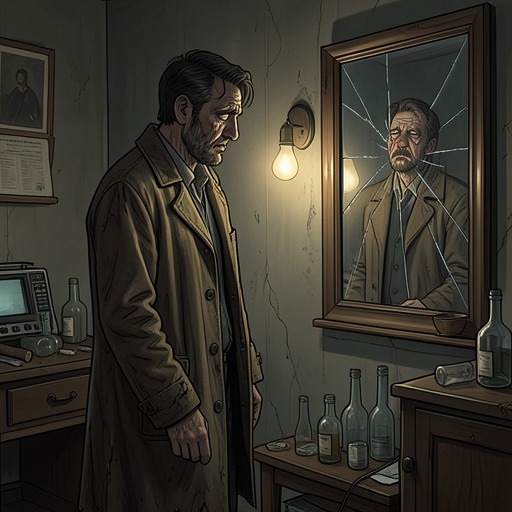
The scenes at the hotel show how Soviet experience persists in ordinary habits and fears. One man lives amid chewed bones and lumps of dog excrement, leading Eduard Limonov to suspect that he keeps a dog; in fact, he has no dog and is profoundly lonely, rereading the few letters his mother has sent. Another man types all day without publishing anything and fears that his neighbors are watching his room. Eduard Limonov recognizes this suspicion as a remnant of Soviet communal housing, where a shabby room was precious and neighbors might plot to obtain a small space to share among several people. Explaining that American life works differently does not dislodge the fear: the delusion is also the man’s last link to the grimy communal apartment he regrets leaving but cannot admit he misses. The episode makes displacement visible not as a single departure, but as a past that continues to organize perception in the new country.
Lenya Kosogor and the fraternity of losers
Lenya Kosogor offers a different, though still precarious, form of continuity. He spent ten years in Kolyma and takes pride in appearing in black and white in Aleksandr Solzhenitsyn’s The Gulag Archipelago; the émigrés call him the man Solzhenitsyn wrote about. He imagines that his own experience might also make him rich and famous as a writer, but he never writes the book. When he finds Eduard Limonov on a sidewalk, nearly unconscious and half dead from the cold, Lenya stays beside him and takes him to the welfare office, where he is allocated $278 a month. His practical care is a good deed, though the account also allows for a less generous undertone: satisfaction at seeing an arrogant young man who had avoided him brought low, and the possibility of inducting him into the fraternity of losers. Through Lenya’s help, the émigré condition becomes not only a shared story of lost prospects but a bond formed among people at the bottom.