The Nazbol movement as a Russian counterculture
LimonovThe Nazbol movement as a Russian counterculture was not simply a party with an unusual newspaper: it offered alienated young people a style, a gathering place, and a way to make rebellion visible. Organized around the National Bolshevik Party and Limonka, it drew its force from the collision of politics with punk, literature, and provincial frustration. The book presents it as a counterculture with real social roots, but also with sharp internal contradictions: its invitation to outsiders coexisted with authoritarian imagery and a militant fascination with danger.
Newspaper, style, and recruitment
Limonka first reached Zakhar Prilepin in a small town in the Ryazan region, arriving from Moscow on a train and passing from one young man to another. Its design alone marked a break with what its readers knew: gaudy pages, vulgar drawings, and provocative headlines. Although the newspaper belonged to a political party, its contents ranged into rock and roll, literature, and style. Its irreverence offered a recognizable posture of refusal rather than a careful program. For Prilepin and his friend, the paper seemed to come from a world absent from their own.
The book describes the conditions that made that encounter powerful. In provincial towns, young people faced a sinister routine, little prospect of a future, and despair if they were sensitive or ambitious. A single issue could gather a circle of tattooed youths who played guitar, drank beer, and lingered beneath posters of The Cure or Che Guevara. Soon there might be ten or twenty of them, poor, conspicuous, and familiar to the local police. Limonka became their shared watchword: a piece of print passed between friends that told them their discontent had a name and a constituency.
Eduard Limonov supplied the movement’s living example. To these readers, he was at once an author and a real-life hero, old enough to be their father but unlike the ordinary fathers they knew. His adventurous life appeared to embody the freedom they wanted, while his writing addressed young people who rejected an unremarkable future in a country they disliked. The book depicts this identification as personal as well as political: a reader could recognize himself in the rebel before he understood the movement’s doctrines.
A counterculture with provincial roots
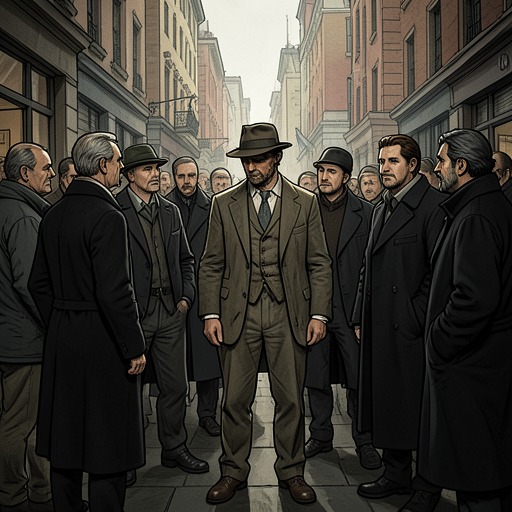
Prilepin calls Limonka and the Nazbols the Russian counterculture, and stresses how much that claim depended on who joined them. The party included brutal men, veterans, skinheads, and people who used Nazi gestures to provoke the respectable. It also attracted self-taught cartoonists, aspiring bass players, amateur video enthusiasts, and private poets too shy to approach the girls they admired. The list extends to Satanists from Irkutsk, Hell’s Angels from Kirov, and Sandinistas from Magadan. This assortment makes the movement’s countercultural character concrete: it offered a common address to people whose interests, abilities, and ambitions otherwise had little reason to meet.
Their economic position mattered. Many were poor and, when they found work, took jobs unloading crates, sweeping courtyards, plastering walls, or watching parking lots. Their anger was directed at a new class of comparatively young, wealthy men whose expensive vehicles splashed them with slush as they shouted into mobile phones. These youths had been children when communism collapsed. In retrospect, they associated the Soviet years with a childhood in which life seemed more intelligible, and they watched their modest but proud parents fall into poverty and lose their dignity. Their nostalgia did not amount to a straightforward political program; it formed part of a protest against the humiliation of the post-communist order.
The bunker and its competing worlds
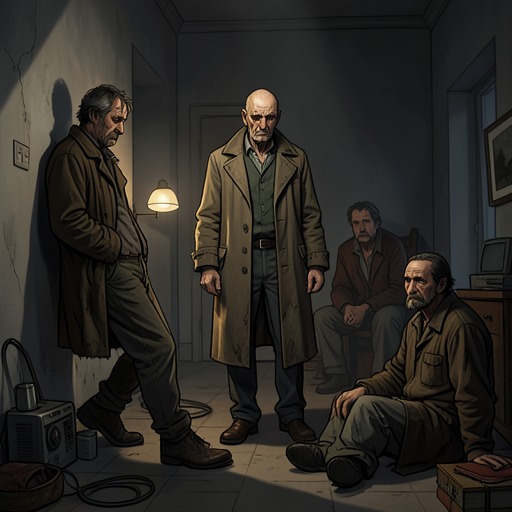
The movement’s Moscow bunker gave this scattered constituency a physical home. Zakhar Prilepin describes a basement combining an artists’ squat, a home for young delinquents, a martial arts dojo, and improvised festival accommodation. Damp had corroded the walls; posters and paintings showed Joseph Stalin, Bruce Lee, the Velvet Underground and Nico, and Limonov in a Red Army uniform. At a large table, members ate and laid out Limonka. A sound system served concerts, while young people from the provinces slept on frayed carpets among ashtrays, empty bottles, and dogs. The room’s eclectic decoration and disorder made the movement’s mixed cultural vocabulary part of everyday life.
Admission was broad in appearance but demanding in practice. Girls arrived with goth or punk styles; boys wore shaved heads, long hair, sideburns, or unexpectedly neat haircuts. Nobody was supposed to be dismissed for looking out of place. The essential test, as the account puts it, was not being afraid to take a punch or go to prison. The bunker therefore made openness and intimidation coexist: it welcomed people across aesthetic boundaries while binding membership to a shared readiness for violence and punishment.
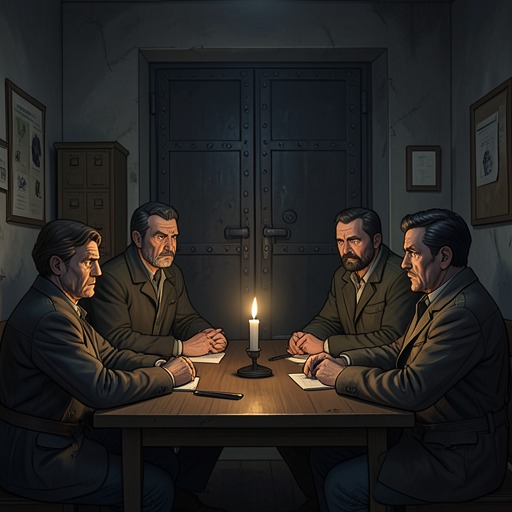
The two offices at the back of the main room embodied a division already forming inside the party. Dugin’s office was book-filled and comfortable, with carpets, an electric heater, and a samovar; Limonov’s was sparse, though he sometimes lived there. Limonov’s visitors included well-known artists, rockers, singers, and models, whose presence startled the grassroots members. The newspaper’s layout table could thus host both the provincial followers and fashionable Moscow guests. One publisher remembered evenings there as unusually alive, with young people who seemed original, enthusiastic, and free of cynicism.
Ideological division and political action
Dugin could captivate the bunker’s different audiences as a storyteller. He spoke of Japanese kamikazes, Mishima’s suicide, and the paramilitary Buddhist sect founded by Baron von Ungern-Sternberg. But the articles he submitted to Limonka were dry and abstract, and Limonov, who produced much of the paper himself, did not feel able to refuse them. Dugin regarded doctrine as the newspaper’s backbone and preferred a sober publication resembling the journals of the European extreme right. Limonka’s irreverent visual style and attention to popular culture pointed in another direction.
As the gap widened, Dugin’s disciples looked down on Limonov’s common recruits, while many of those recruits had little interest in fascist history. Prilepin particularly disliked references to the Freikorps. He was also uncomfortable with Limonov’s affectionate nickname for Dugin, Dr. Goebbels. As the quarrels worsened, Dugin left the party to establish a center for geostrategic studies. Prilepin welcomed the separation: the movement’s popular, rough-edged followers were no longer subordinate to the circle he saw as disdainful of them. The split revealed that the counterculture was not a unified ideology but a contested social space, claimed both by doctrinaire theorists and by youths attracted to music, style, and rebellion.
The book also shows the movement crossing from subcultural provocation into direct political confrontation. During the conflict around the White House, several thousand patriots gathered in support of the parliamentary rebellion against Yeltsin. Eduard Limonov joined them and spent the night moving between meetings as participants debated, drank, and prepared communiqués. Speaking to General Rutskoy, he argued that the West backed Yeltsin because it wanted Russia on its knees, and described the parliament as resisting dictatorship. His presence there linked the movement’s oppositional self-image to a struggle over who could claim democratic and national legitimacy. The episode does not resolve the tension between counterculture and authoritarian politics; it makes that tension part of the movement’s public life.
Loyalty, memory, and the limits of belonging
In Sankya, Prilepin gives a fictional form to the movement’s language of patriotism and its appeal to young militants. The novel’s hero describes actions such as tagging trains, unfurling banners on hard-to-reach monuments, and throwing tomatoes at a governor. A sympathetic former teacher can regard these stunts as courageous because disturbing the peace in Russia can bring prison sentences, even when similar acts elsewhere might earn only a fine. Yet the teacher worries when the young man speaks of the fatherland, empire, and a sacred cause. He imagines a future in which a middle class seeks comfort and protection from history; Prilepin’s hero wants something beyond that ordinary stability. The disagreement exposes a central uncertainty in the movement’s promise: whether it seeks a livable social order or a more intense form of struggle.
Prilepin’s account is also shaped by fidelity to the people who made the movement meaningful to him. He describes his provincial companions with tenderness and says that literary success, foreign editions, and book tours would matter less than remaining loyal to them. His attachment helps explain why the bunker and Limonka carry more significance than party machinery alone. They offered neglected youths a place where their anger, creativity, and friendship could become visible to one another. At the same time, the party’s mixture of subversive cultural energy, nationalist rhetoric, and fascination with force prevented that welcome from being politically innocent. The counterculture’s significance lies in holding both facts together: it gave the dispossessed a language and a home, while leaving unresolved what kind of power their rebellion meant to create.