Heroism and the making of a heroic self
LimonovHeroism and the making of a heroic self are central to Eduard Limonov’s interpretation of his life. He imagines a hero not as someone spared hardship, but as someone who enters it without surrendering and proves his character there. The book traces how that ideal begins in childhood, governs his fantasies about death and imprisonment, and reaches its most compelling yet unsettled expression in prison: a place he learns to experience as both ordeal and spiritual freedom.
Origins of the Heroic Ideal
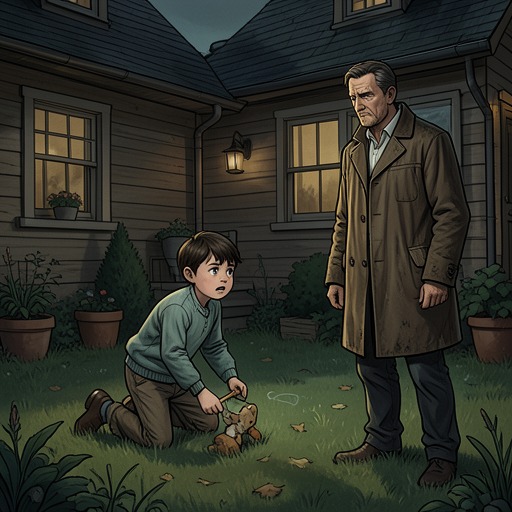
The heroic story takes shape early. As a child, Limonov reads The Count of Monte Cristo; at home, his father, a prison guard, tells his mother about a courageous young condemned man, calm and self-possessed in the face of death. The tale becomes a hero of Limonov’s adolescence. These two formative encounters join adventure to imprisonment: the hero is not defined by escape from danger, but by the manner in which he meets it.
That inheritance becomes a way of organizing a life. The narrator describes Limonov as someone who sees himself as the hero of a novel, for whom prison is a chapter that cannot be omitted. Limonov’s own retrospective account, on the night he thinks he may die, follows a similarly shaped arc: from childhood in Saltivka to a log cabin in the Altai, almost sixty years later. He regards the journey as long and obstructed, but insists that he did not give in. He wanted to live like a hero, believes he did so, and accepts that such a life demanded a price.
Death as Fact and Fantasy
In the Altai, the heroic image meets a kind of knowledge it cannot turn into adventure. Lying alone after the death of someone close to him, Limonov thinks of the many people he has known who are now dead. He suspects that, if counted, they would outnumber the living, but cannot make himself count them. The thought of his own death arrives with a new certainty: he has often imagined dying in combat or before a firing squad, defiant under a tyrant’s order, but recognizes that these chosen, dramatic endings are different from simply knowing that he will die.
That distinction exposes both the power and the limit of his self-fashioning. Heroic death has been an image he could compose in advance, with a role for himself to play to the last breath. The certainty in the cabin is not a scene he has chosen or mastered. The narrative sets his familiar fantasies beside this unadorned recognition, showing a man whose heroic imagination persists even when it can no longer make mortality feel like a voluntary ordeal.
The surrounding landscape gives the moment a further frame. Limonov recalls what the trapper Zolotarev had said: in Buddhist tradition, this is the center of the world, where the dead and the living communicate, and the place sought by Baron von Ungern-Sternberg. Under the full moon, he hears gongs, horns, and sepulchral chants, which recall the Bardo Thodol, introduced to him by Dugin. The passage does not resolve whether this is revelation or an experience shaped by memory and expectation. Instead, it places his thoughts of death inside the mythic and spiritual language through which he has long tried to understand himself.
Prison as a Test and a Discipline
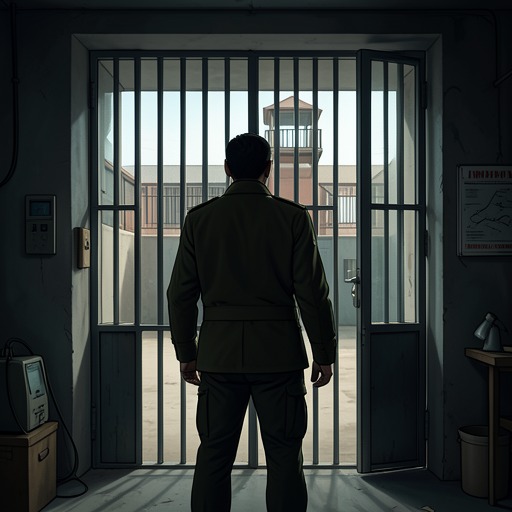
The prison chapter fulfils an expectation Limonov has carried since childhood. The narrator imagines his arrival as a sequence familiar from films: clothing and personal possessions, including keys, watch, and wallet, are taken; a pajama-like uniform is issued; a medical examination includes a cavity search; guards escort him through corridors, fences, and gates; and a heavy metal door closes behind him. At the end of the passage lies a cell of ninety square feet, where the prisoner’s true mettle will be tested. The detailed progression turns admission into a threshold, the beginning of a trial that Limonov’s own heroic narrative has prepared him to enter.
The narrator believes that Limonov took pleasure in these prison scenes, but presents that belief as an interpretation, not a certainty. What the later account makes concrete is the transformation of confinement through routine and attention. Limonov treats the three daily roll calls as religious services and meditation as prayer. The work camp, which might be called hell, becomes hospitable to him, like a monastery to a monk. The account links this change to a spiritual process that began in the Altai with Zolotarev: the repeated practices of prison become part of a movement toward what the narrator calls a truer, eternal liberation.
Contradiction, Recognition, and the End of the Chapter
The book does not let Limonov’s heroic self-image settle into uncomplicated praise. The narrator recalls Olga’s judgment that Limonov is one of the most decent men she has known and connects her meaning of decency with honesty, common sense, distrust of grand words, keeping one’s word, and attention to others. Yet the narrator finds it difficult to reconcile that image with Limonov shooting in the direction of Sarajevo or plotting with Colonel Alksnis. Olga, too, recognizes the difficulty. The tension matters: heroism and decency are not treated as interchangeable, and admiration does not erase actions that resist the heroic portrait.
Even so, the narrator sees prison as perhaps the high point of Limonov’s life, when he comes closest to being the hero and great man he has doggedly tried to become. Near the end of his imprisonment, a television crew films him at roll call and in the mess hall. He gives his full name and the articles under which he was sentenced, repeating the roll call because the director wants another take. In the dining room, he pours sauce over his food while trying to speak naturally for the cameras. Around him, inmates compete to appear beside him; he privately regrets agreeing to the television appearance and thinks it is a shame to leave this life behind.
He wants his freedom, to see Nastia and his party comrades, but fears that release will also end a distinctive form of freedom. In prison, his mind has made the camp feel like a monastery; the roll calls, meditation, and nights among snoring bunkmates have become the conditions under which he experiences his own power and spiritual transformation. The final reversal is not that he ceases to desire liberty, but that he worries liberty from prison may take away the deeper freedom he found there. His heroic story has made an ordeal into a sustaining discipline, while its ending leaves open whether the world beyond the prison can offer an equivalent chapter.