National Bolshevism
LimonovNational Bolshevism is the political formation that Eduard Limonov and Alexander Dugin developed into a party, a newspaper, and a recognizable countercultural movement in post-Soviet Russia. Its defining gesture was to bring communist and fascist traditions together, not to reconcile their histories but to treat both as sources of political force. The book follows that combination from an initially unstable intellectual alliance to a movement with symbols, publications, members, and a following of its own—and shows how the movement’s meaning remained contested throughout.
A Deliberate Collision of Traditions
Dugin’s influence did not give Limonov a clearer or more settled political doctrine. The narrator describes Limonov’s thinking as becoming more elaborated but also more confused: Dugin reverenced communism and fascism alike, and assembled a pantheon that placed Lenin beside Mussolini and Hitler, with artists, philosophers, revolutionaries, and religious figures drawn from sharply different traditions. The list’s indiscrimination was part of its force. The test was not political consistency so much as vital intensity, and even Charles Manson could be admitted to the same expansive company.
This intellectual openness had an organizational counterpart. Limonov and Dugin agreed that many figures in the opposition lacked the qualities required for action, while they understood themselves as complementary partners: one the man of thought, the other the man of action. The book presents this self-image with an ironic grandeur, but it also records its practical consequence. National Bolshevism was not only an argument about ideas; it was an attempt to turn an anti-establishment sensibility into a collective political force.
The movement’s name captured that collision, although its authorship never became secure. After the founders split, each claimed to have invented National Bolshevik Party; later, when both sought respectability, each was willing to assign the idea to the other. The uncertainty is revealing: the name became politically useful and controversial enough to be fought over, while its origins could be adjusted to suit changing reputations.
Party, Newspaper, and Emblems
The partnership quickly gave itself material form. Limonov devised the title Limonka, meaning Grenade, for the newspaper. A painter friend, known for landscapes of Umbria and Tuscany, drew the flag at a kitchen table: a white circle on a red field containing a black hammer and sickle. Its resemblance to Nazi imagery was unmistakable, but the swastika was replaced by a communist emblem. The flag did not conceal the ideological provocation; it made the conjunction visible.
By the time the founders had settled on a name, a newspaper title, and a flag, their membership consisted of one Ukrainian student, Taras Rabko. They still needed money. Limonov returned to Paris hoping to raise it, but his attempts failed. His involvement in the wars in the Balkans had alienated Parisian friends and publishers, and the public controversy over the joining of extreme-right and extreme-left politics made him a conspicuous symbol of what was being called brown-red politics. He increasingly saw himself as a fighter and professional revolutionary rather than a writer, yet literature remained his only dependable source of income. His political ambitions therefore depended, paradoxically, on the royalties from the work he was trying to leave behind.
In the fall of 1994, he used his modest royalties to publish the first issue of Limonka. Limonov later imagined the founding as a decisive moment in Russian history, attended by a tiny, extraordinary circle. The account is more materially modest: Natasha, writing under the pseudonym Margot Führer; a couple of Siberian punks; some of Dugin’s students; and Rabko, handling logistics. Rabko and Limonov drove an old Moldavian car to Tver to collect five thousand copies. They sold the paper by the roadside and carried copies to Moscow train stations for trains bound for provincial cities. Their distribution was improvised and their expectations limited, but the newspaper gave the new formation a public voice and a means of reaching beyond its founders’ immediate circle.
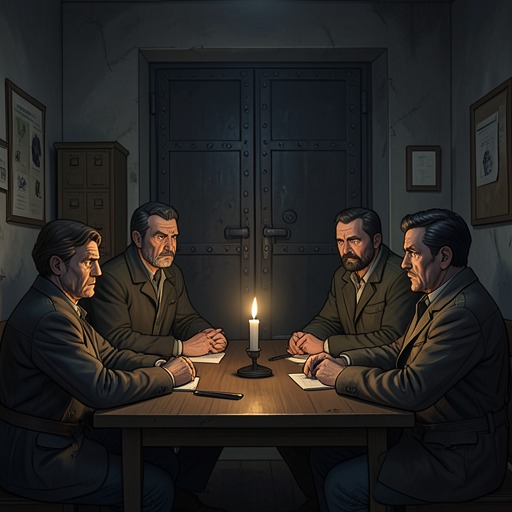
After the group was expelled from its first office, its members moved into a damp, rat-infested basement. They cleared rubble, plastered the walls, and repaired leaks; the space became the party headquarters, known as the bunker. This makeshift setting contrasts with the founders’ grand historical language. The organization’s beginnings were at once consciously epic in Limonov’s retrospective telling and physically precarious in the conditions its members had to repair themselves.
Two Factions and Different Constituencies
The disagreement between Limonov and Dugin extended beyond doctrine to the people the party should attract and the newspaper should address. Dugin believed that his abstract, solemn theoretical articles formed Limonka’s intellectual backbone. He preferred the appearance and tone of the gray, confidential journals associated with Europe’s extreme right. Limonov, who largely put out the paper, did not dare reject those submissions, but the newspaper’s actual readership and style were moving in another direction.
The two circles grew further apart. Dugin’s followers looked down on the ordinary recruits gathered by Limonov: young people drawn to rock music and brawling, with little interest in the grand history of fascism. Some, including Zakhar Prilepin, disliked the newspaper’s references to paramilitary formations such as the Freikorps. Prilepin also disliked Limonov’s affectionate nickname for Dugin, Dr. Goebbels. As their quarrels sharpened, Dugin left the party to establish a center for geostrategic studies, leaving Limonov’s more popular, less doctrinal constituency behind.
The movement’s social base therefore did not simply reproduce Dugin’s intellectual fascism. Prilepin, a committed member for fifteen years by the time the narrator describes him, was a provincial writer and veteran whose novel about a young man becoming a National Bolshevik drew on his own experience and that of his contemporaries. The narrator portrays him as tender and attentive to ordinary life, sharply unlike the fascist brute or decadent aesthete. That portrait does not erase the movement’s symbols or affiliations; instead, it shows the gap between ideological aesthetics and the varied lives of the people who joined.
Membership, Dissent, and Public Meaning
At a later convention, the party claimed seven thousand members across Russia, although only several hundred delegates could attend. They came from different regions, some sleeping at the bunker and others in a workers’ hostel. Finding a venue was difficult: places that initially agreed to host the meeting withdrew after reconsideration, apparently under police pressure. Organizers feared a bomb scare, harassment, or an outright ban, but the convention opened. For Limonov, the delegates represented the result of years spent taking the paper to railway stations: not an abstraction, but people who had made the journey to meet one another.
The recruits were far from Dugin’s imagined heroic types. The book describes many as awkward provincial adolescents, short of money and afraid of ridicule. Limonov gave them a shared style, ideal, and sense of purpose; their attachment to him could be intense. Girls joined as well, including Liza, who watched him with evident affection. The contrast between this vulnerable constituency and the movement’s aggressive political imagery is central to the book’s account: National Bolshevism could offer recognition and belonging to people who felt marginal, even as its public symbols evoked authoritarian movements.
The party’s political meaning was also unsettled by the support its militants received from democratic dissidents. Anna Politkovskaya defended forty National Bolshevik Party members sentenced after occupying and vandalizing the presidential administration’s offices and shouting for Vladimir Putin to leave. She described them as courageous young people who offered hope for the country’s moral future. Yelena Bonner likewise supported the militants, while expressing reservations about the party name’s associations. These defenses did not make the party’s ideology democratic; they complicated the narrator’s initial view of Limonov as simply a fascist leading skinheads, and showed how opposition to the government could create unexpected points of contact between groups otherwise separated by political labels.
That tension became more visible as economic and political power concentrated after the Soviet system’s collapse. Price liberalization brought inflation of 2,600 percent, and citizens’ privatization vouchers, valued at ten thousand rubles when issued, had lost so much value by arrival that they could buy little more than a bottle of vodka. Some were sold to would-be oligarchs including Boris Berezovsky, Vladimir Gusinsky, and Mikhail Khodorkovsky. Later, the oligarchs joined forces to support Boris Yeltsin’s reelection, using their media influence to warn of chaos under an alternative. In this context, National Bolshevism’s challenge to the new order took shape amid disillusionment with both market reform and political transition; the book does not reduce the movement to that context, but makes clear why its appeal cannot be understood apart from it.
Persistence and Reinterpretation
The narrator’s own understanding changes as he encounters evidence that refuses to fit an easy label. Years after first seeing Limonov, he is surprised by the support that Politkovskaya and Bonner gave to National Bolshevik militants, and by the formation of The Other Russia under Garry Kasparov, Mikhail Kasyanov, and Limonov. Their alliance joined figures with very different political histories. It suggested that Limonov’s position in Russia had changed even if the narrator could not say that Limonov himself had changed in the same way.
The party also remained part of Limonov’s later everyday life. When the narrator visits his modest apartment, a member named Mitya escorts him from a subway station and walks with him through the building to the ninth floor. Mitya is no longer the image of a young street militant: he is around thirty, married, has a daughter, and works in a well-paid internet-related occupation. He describes the party’s condition as calm. His continuing involvement appears less like a career in a growing political organization than a way of keeping faith with ideals from his youth, much as someone might continue playing in an amateur band. National Bolshevism thus persists in two registers at once: as an organized and contested political identity, and as a form of personal belonging that can outlast the expectations of its most ambitious founders.