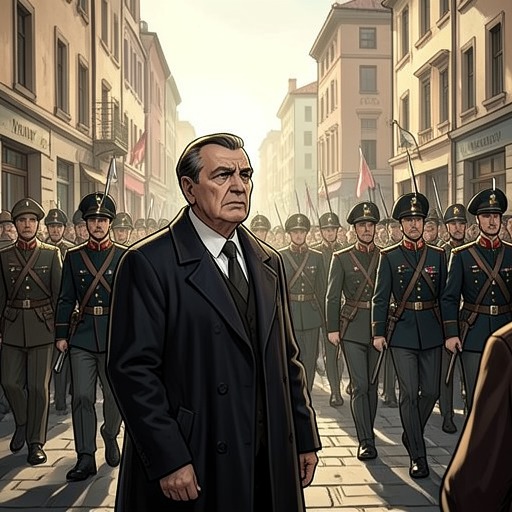
Admiral Roger Backhouse
MunichAdmiral Roger Backhouse is the First Sea Lord whose account of naval unpreparedness helps move Neville Chamberlain from deliberation to ordering mobilisation. He is characterised through the contrast between the Navy’s practical deficiencies and the forceful case he makes for preparing to fight.
Presence and Position
Backhouse arrives at 10 Downing Street with Air Marshal Newall, following a burst of photographers’ flashes. Legat leads the senior officers through the building and hears Backhouse ask whether Duff Cooper is coming. Viscount Gort answers that the Prime Minister thinks Cooper leaks to Winston Churchill. The brief exchange places Backhouse among the senior figures moving through the crisis, while also hinting at the political suspicions surrounding the meeting.
The Navy’s Readiness
In the Cabinet Room, Backhouse stands out physically: he is a head taller than anyone else, with a bald, grizzled skull and a deeply weathered face. His report is specific rather than reassuring. The Navy lacks some escort vessels and minesweepers; capital ships still need fuel and armament, and some crews are on leave. He says mobilisation must be announced as quickly as possible, setting out how much preparation remains before the fleet can be ready.
Making the Case for Mobilisation
The discussion turns on whether a show of preparedness might deter Hitler or instead push him into war. Backhouse argues that Chamberlain’s peace efforts must not be mistaken for weakness, invoking the lesson of 1914, when Germany believed Britain was not serious. Legat reads the appeal as shrewd flattery: Chamberlain’s vanity may be reached by praising the courage of his visits and the sincerity of his efforts. After a pause, Chamberlain nods and orders mobilisation.
Action and Narrative Role
Backhouse’s intervention links the strategic question of naval readiness to the political question of how Britain’s intentions will be read abroad. He does not claim that mobilisation will guarantee peace; the conversation acknowledges that it could provoke war. Once Chamberlain has made the decision, Backhouse stubs out his cigarette, gathers his papers into his briefcase, and says he must return to the Admiralty. The others rise with him, relieved to leave the meeting. His role is brief but consequential: he supplies both the material grounds for urgency and the argument that preparation may be necessary to make diplomacy credible.