Vojtek Mastny
MunichVojtek Mastny, the Czech Minister in Berlin, arrives in Munich with Hubert Masarík expecting to observe the conference, but the Gestapo confine both men to a hotel room and deny them entry. Mastny’s restrained appeal to Hugh Legat for intervention exposes the gap between the conference’s formal diplomacy and the exclusion of the country whose territory is at stake.
Identity and Arrival
Mastny is identified as the Czech Minister in Berlin and as a member of the Czechoslovak delegation. He and Masarík have come from Prague; they arrived less than an hour before Legat finds them. The abruptness of their arrival leaves little space between their journey to the conference and their detention.
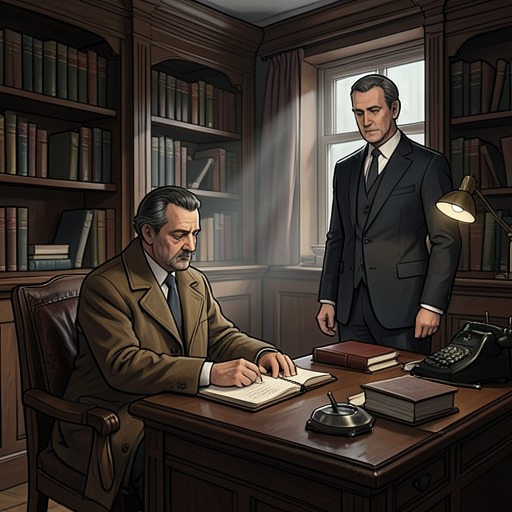
When Legat enters the room, Mastny is described as a professorial figure in his sixties, still wearing his overcoat and holding his hat between his knees. He stands to greet Legat, but his dejected appearance contrasts with the purpose of the visit: the delegation has come as observers, yet is being kept apart from the proceedings.
Detention and Exclusion
Masarík tells Legat that he and Mastny were met at the airport and taken not to the conference but to the hotel, where they were held. A Gestapo officer confirms that they are not permitted to participate and must wait in their room for further instructions. The officer says the order comes from Adolf Hitler himself. In this encounter, Mastny and his colleague are not simply absent from the conference; their exclusion is being actively enforced.
Their stated role as observers makes the restriction especially pointed. They have travelled to witness negotiations concerning Czechoslovakia, but cannot enter the conference or represent their presence there. Mastny’s predicament gives personal form to the delegation’s political marginalization.
Appeal and Character
Masarík grows indignant, but Mastny places a hand on his younger colleague’s arm and urges him to remain calm. He explains that he is more accustomed to life in Germany and sees no value in shouting. The gesture is a small act of control amid the confrontation: rather than escalating the exchange with the Gestapo officer, Mastny turns to the British representative who may be able to help.
Recognizing Legat as Neville Chamberlain’s private secretary, Mastny asks him to speak to the Prime Minister and see whether the situation can be resolved. His appeal is measured and practical, directed through the available diplomatic channel. The scene establishes him not through a speech at the conference but through his conduct when denied access to it.
Narrative Significance
Mastny’s brief appearance brings the consequences of the conference’s arrangements into immediate view. While officials negotiate Czechoslovakia’s future, its representatives are held in a hotel room under Gestapo guard. His quiet composure and direct request for assistance sharpen the contrast between diplomatic procedure and the coercion that determines who may take part.
The passage leaves the outcome of his appeal unresolved. Within the scene, Mastny’s presence makes the Czechoslovak delegation’s exclusion concrete: a minister has arrived to observe, is prevented from doing so, and must ask a British official to intervene on his behalf.