Colonel Hans Oster
MunichColonel Hans Oster, deputy head of military intelligence and a leading figure in the German opposition, is the conspirator who gives the resistance’s urgency an operational shape. As the prospect of war with Czechoslovakia closes in, he gathers the group at a house in Lichterfelde and advances a plan to arrest Adolf Hitler before mobilisation can begin. His authority is practical rather than absolute: he leads a factional circle only as far as its members will accept, and the coup depends on military support that cannot openly take the first step.
Identity and Position
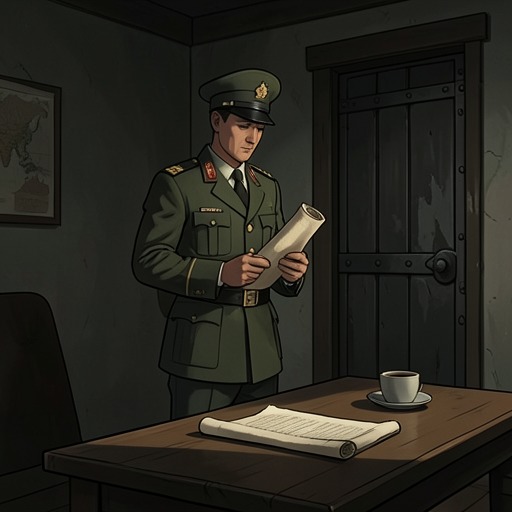
Oster serves with the Abwehr and is described as a charming cavalryman. Within the opposition, he is its leader in a qualified sense: the group is so divided in temperament and outlook that it can scarcely tolerate a single commander. His standing rests less on formal command over all its members than on his ability to convene them, assess the immediate danger, and translate their shared alarm into action.
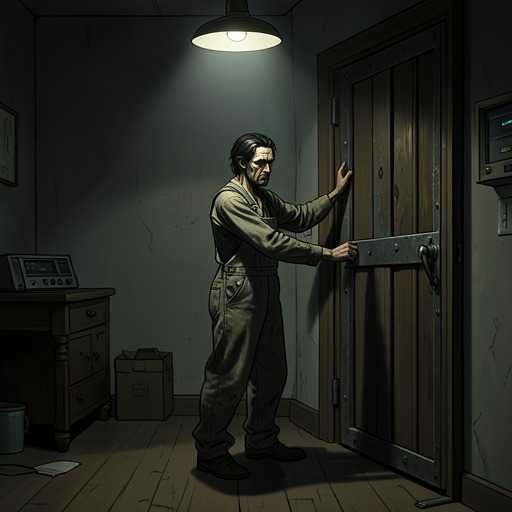
That role is visible in the choice of meeting place. Oster asks the conspirators to meet at number nine Goethe Strasse in Lichterfelde, a new location, and the gathering is set for a busy evening. The move brings the group into a cramped back room where Oster can lay out a decision that, until then, has been discussed as an urgent possibility rather than a settled operation.
The Coup Plan
At the meeting, General Ludwig Beck reveals that he resigned as Chief of the General Staff nearly six weeks earlier in protest against the plan to wage war on Czechoslovakia. Beck had kept his resignation secret because he had promised Hitler not to make it public. Though no longer in office, he remains in contact with senior military colleagues and reports strong opposition in the high command. If Hitler orders mobilisation the following day, Beck believes the Army may disobey and move against the regime. Oster immediately treats this information as a change in the situation: the conspirators must be ready to act decisively, because they may not get another chance.
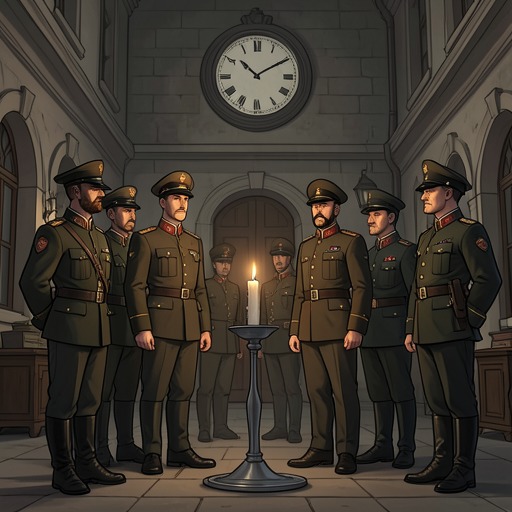
When Erich Kordt asks how the coup would work, Oster’s answer is arrest. He has spent weeks analysing the operation and argues that it would require only a small force if it had surprise on its side and the Army undertook to protect the plotters from an SS rescue attempt. Oster and Captain Friedrich Heinz estimate that about fifty men would be enough for the initial action. Heinz confirms that they already have experienced fighters prepared to move the next day. Oster’s plan therefore depends on two linked advantages: a rapid arrest before Hitler can respond, and the Army’s readiness to prevent the SS from reversing it.
The Army’s oath to Hitler is the central constraint. Beck explains that the Wehrmacht cannot make the first move against the Führer without violating its oath of loyalty. It could, however, enter the Chancellery to restore order if a disturbance had already begun. Oster’s scheme is built around that distinction: others must initiate the action, allowing the Army to intervene under the guise of maintaining order. It is a narrow legal and military opening, not a general promise of support, and the plot depends on exploiting it at precisely the right moment.
Decisions and Dependencies
The conspirators still have to decide what to do with Hitler if the arrest is attempted. Oster refuses to let the argument about the future form of government displace the immediate objective: preventing Hitler from issuing the mobilisation order the following afternoon. In his reasoning, questions about monarchy or republic belong to a later stage; first, the conspirators must stop the order. If Hitler surrenders into their custody, he can be taken alive. If he appears likely to escape, Oster considers shooting him unavoidable. Paul von Hartmann is the first to assent, and the others follow, with Beck agreeing only reluctantly. Oster’s relief when the decision is settled marks a transition from debate to intended action: the group resolves to strike the next day.
The plan’s vulnerability becomes apparent when mobilisation is postponed for twenty-four hours. Later, in a meeting with the same opposition circle, Oster explains that everything had depended on Brauchitsch, who was still deciding what to do when Hitler issued the postponement. The delay does not settle whether the Army would have acted; it interrupts the moment on which the conspirators had based their expectation. Oster’s carefully timed operation has been prepared, but its essential military support remains uncertain.
A Changed Objective
The postponement leaves the opposition facing a different problem. While Party officials celebrate in the corridor, Hans Bernd Gisevius fears that without the Army the group is merely a powerless collection of civilians, left to watch the destruction of their country. Oster is present as the conspirators reassess their position, but the immediate proposal to prevent an agreement at Munich comes from Hartmann. The target has shifted: rather than relying on an uncertain Army response to arrest Hitler, the group considers whether the agreement can be stopped before it is signed.
Oster’s importance lies in the precision and limits of the plan he helps formulate. He has identified a force of about fifty men, a moment of surprise, a possible shield against an SS rescue, and a way for the Army to act without formally initiating a breach of its oath. Yet every element depends on a rapidly changing political and military situation. When the mobilisation order is postponed and Brauchitsch has not committed himself, operational readiness cannot guarantee a coup. The narrative presents Oster not as the commander of a settled uprising, but as the organizer of an attempt whose narrow opening can be altered by a single decision at the top.