Neville Chamberlain
MunichNeville Chamberlain’s decisive significance in these scenes lies in the tension between public preparedness and private determination to prevent another war. With Adolf Hitler threatening to invade Czechoslovakia, Chamberlain faces a narrowing timetable: mobilise and risk provoking a conflict, or continue negotiating while the threat becomes more immediate. The book presents him not simply as a negotiator, but as a leader weighing the credibility of deterrence against its potentially catastrophic cost.
The Prime Minister in a tightening crisis
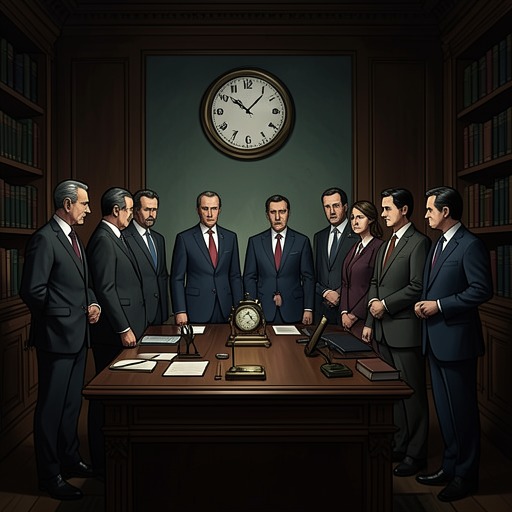
Chamberlain’s government is preparing for events to move quickly. The Prime Minister is due to broadcast to the nation at eight, after which a full Cabinet meeting may be needed; the Chiefs of Staff are expected, and his private secretary is asked to arrange the broadcast and record the military briefing. The sequence gives the crisis a practical, administrative dimension: alongside diplomacy, the government must prepare to inform the public and coordinate its response.
At the Cabinet meeting, Chamberlain sets out how far the negotiations have deteriorated. Britain and the Czechoslovak Government had hoped for an orderly transfer of the Sudeten territory to Germany, subject to a plebiscite. But Adolf Hitler, Chamberlain reports, will not wait even a week and intends to invade on Saturday. Chamberlain also recounts Sir Horace Wilson’s warning that Britain would be obliged to support France if France fulfilled its treaty obligations to Czechoslovakia. In reporting Hitler’s response, he conveys a leader presenting himself as ready for war rather than deterred by the prospect of British and French intervention.
Deterrence and the danger of escalation
The debate over partial mobilisation brings Chamberlain’s strategic dilemma into sharp focus. When told that mobilisation would need to begin that day to be operational by 1 October, he immediately identifies its cost: Britain would mobilise before Germany. The military case for a limited measure is that it might demonstrate Britain was not bluffing and make Hitler reconsider. Chamberlain, however, sees a different danger. He believes Hitler cannot tolerate losing face, and warns that a show of readiness might push him into war rather than restrain him.
This is not a simple choice between firmness and weakness. Chamberlain is urged to ensure that Hitler does not mistake his visits and peace efforts for a lack of resolve; the argument invokes the lesson of 1914, when Germany had misjudged whether Britain would act. Chamberlain’s position holds two risks in view at once: an opponent may interpret restraint as permission, while a coercive signal may accelerate the very conflict it is meant to prevent. His judgment is shaped by the uncertainty of how Hitler will read each move.
Negotiation as an alternative to war
Even as the threat becomes urgent, Chamberlain continues to offer a route to agreement. In a proposed message to Adolf Hitler, he says that the essentials can be obtained without war or delay and offers to travel to Berlin immediately. The proposed discussions would include representatives of the Government of Czechoslovakia, France and Italy, and Chamberlain expresses confidence that agreement could be reached within a week. His appeal makes negotiation concrete: he is not merely asking for peace, but proposing a meeting, naming participants and setting a short timetable.
The proposed message also places responsibility for the consequences on Hitler. Chamberlain appeals to him not to begin a world war, potentially ending civilisation, over a delay of a few days in settling the territorial dispute. The appeal and the mobilisation debate are complementary parts of his response: diplomacy seeks to preserve time for agreement, while military readiness is discussed as a signal that Britain may fight if agreement fails.
Public leadership and private conviction
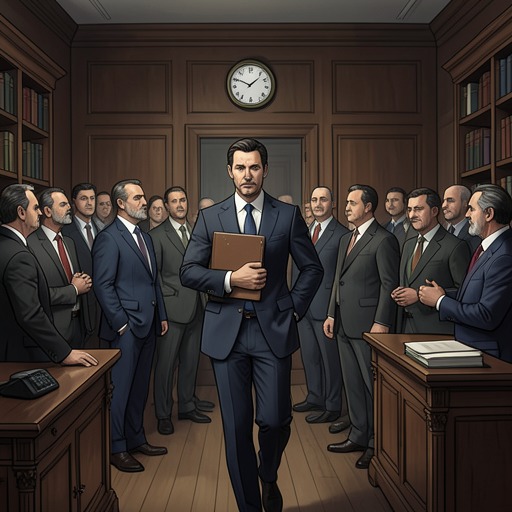
At eight o’clock, the broadcast begins from 10 Downing Street. Its introduction announces that Chamberlain will speak to listeners across the Empire, the Americas and many foreign countries. The moment marks the movement of the crisis from Cabinet deliberation to public address: the Prime Minister’s voice is about to reach far beyond the room where officials have been weighing the danger. The available scene establishes the broadcast’s scale and timing, though it does not provide the substance of the speech itself.
In private, Chamberlain’s determination to avoid war is expressed in starkly personal terms. He tells Hugh Legat that he would gladly face a firing squad if that could prevent a conflict. He links this feeling to the First World War: too old to fight in it, he had watched its suffering while feeling powerless. He recalls that three-quarters of a million men from Britain were killed, and extends the cost beyond the dead to their parents, wives, children and friends. The war memorials and French cemeteries he had visited became reminders of a promise to do anything, and sacrifice anything, to prevent another catastrophe.
That memory illuminates both the force and the vulnerability of his policy. His desire for peace is not presented as an abstract preference: it is tied to remembered loss and a sense of responsibility to those who suffered. Yet the scenes do not resolve the conflict between that commitment and the need to make Britain’s warnings credible. Chamberlain’s defining position here is the effort to hold both obligations together as the clock runs down.
The crisis pauses, but remains unresolved
A later briefing recounts Hitler’s insistence that the Sudeten dispute be settled by Saturday, either through a guarantee that the Czechs begin evacuating the disputed territory or by German invasion. Wilson reports that Hitler repeatedly looked at his watch, as if measuring the remaining hours before the pause in mobilisation expired, and concludes that the threat is not a bluff. Chamberlain listens as this account is presented to officials gathered for a briefing, where the immediate choice is framed as agreement that day or war.
A message relayed by Sir Nevile Henderson supplies a temporary reprieve: Benito Mussolini has promised that Italy will stand by Germany in a conflict, while asking Adolf Hitler to postpone mobilisation for twenty-four hours so the situation can be reconsidered. Hitler agrees. The delay does not settle the dispute, but alters its immediate timetable. Chamberlain’s crisis therefore remains suspended between deadline and negotiation: each pause creates a little more room for diplomacy without removing the threat that has made the negotiations urgent.