Tariq
ShantaramTariq, the eleven-year-old nephew of Abdel Khader Khan, enters Lin’s life as a child placed temporarily in his care and leaves it as someone Lin loves like a son. His stay lasts not the proposed forty-eight hours but three months, during which he learns English, joins the slum community, and forms attachments that make his return to his uncle painful. His story turns an arrangement for education into an account of chosen family: Tariq is not merely taught by Lin but helps reveal what care asks of him.
Identity and Introduction
Tariq is the fourth son of Abdel Khader Khan’s youngest sister, Farishta. His uncle describes him as eleven, healthy and sturdy, though not tall for his age. He speaks Hindi, Pashto, Urdu, and Marathi fluently and has acquired some English. He has also completed two years at a Koranic school. Abdel Khader Khan sees the next stage of his education as a combination of practical and formal learning: Tariq is to experience the hard life of the poorest people and to study with an English teacher, then take his place at college.
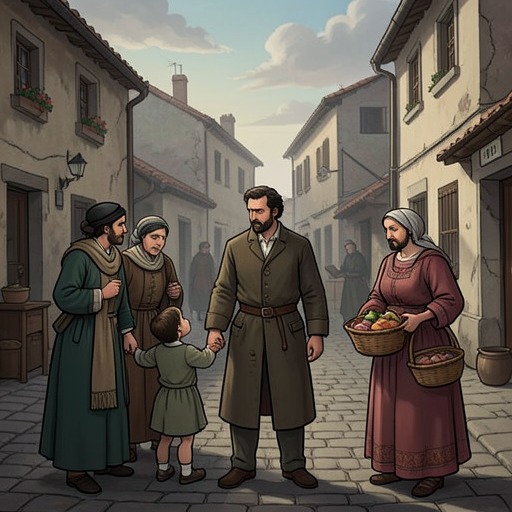
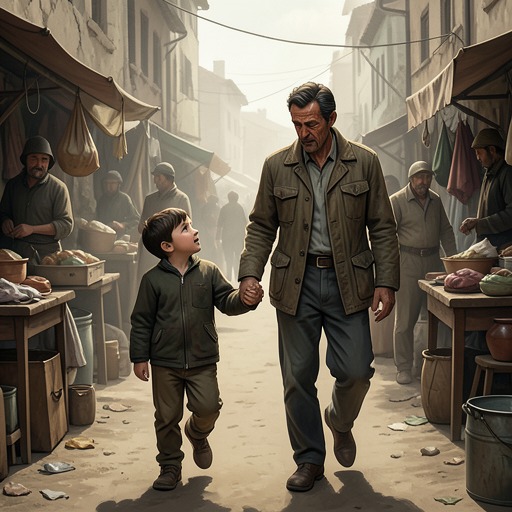
When Lin first sees him, Tariq appears smaller than his age, dressed in a clean, pressed kurta-pyjama and leather sandals, with a tied calico bundle clutched in his arms. He looks miserable and distrustful. After Abdel Khader Khan speaks to him in Urdu, Tariq approaches Lin by circling around him to stand near his uncle. He offers Lin a hand and greets him in halting English. The size of the child’s hand in Lin’s, and the protective feeling it awakens, establishes a connection that contrasts with Tariq’s evident reluctance to leave his familiar surroundings.
From Reluctant Guest to Member of the Slum
Abdel Khader Khan gives Lin permission to bring Tariq back after forty-eight hours if the arrangement proves impossible. He expects the boy to be no trouble, but also makes clear that Lin will not carry the responsibility alone. Qasim Ali Hussein, the head man of the slum and Abdel Khader Khan’s friend, will help arrange for families to share the care, including places for Tariq to sleep. The plan therefore joins private instruction to neighborhood support rather than treating the child’s stay as Lin’s task alone.
Tariq does not settle without difficulty. At one point, after conflict with Lin, he runs away. Lin’s anger gives way to concern; he stops, apologizes, and asks Tariq not to run off because the possibility frightens and worries him. Tariq’s first genuine smile follows the apology. Lin recognizes in it a resemblance to Prabaker Kharre’s smile, a small likeness that makes the boy feel newly connected to the people around him. The episode marks an early change in their relationship: responsibility becomes mutual trust, and Lin acknowledges that his own behavior can frighten the child.
The trial period expands into three months. During that time, Lin organizes English classes for Tariq, who soon becomes an assistant when other children join. The change is concrete: the boy who arrived with only a few English words begins helping others learn them. Tariq also takes part in the neighborhood’s shared work. When the first monsoon flood comes, he struggles alongside the residents to dig a drainage channel through rocky ground, using sticks and their bare hands. His place in the community is made through participation as well as education.
Courage, Attachment, and Community
Tariq’s strongest test comes during the attack by a pack of wild dogs. Lin falls, and Tariq slips from his grasp. The boy gets back to his feet, takes a piece of wood, and strikes the pack leader, helping hold the animals off. When the dogs press in again, Tariq and Lin fight side by side, with the boy defending them despite his small size. Lin’s experience of the moment changes the meaning of his guardianship: he is not only protecting a child but recognizing the child’s courage and feeling a father’s love for him.
After the attack, Abdullah Taheri becomes another important presence in Tariq’s life. He visits twice a week to teach him self-defense with sticks, scarves, and bare hands. Lin often sees them practicing on a narrow strip of sandy beach near the slum. Abdel Khader Khan later explains that Abdullah had been assigned to stay close to Lin and Tariq, and that he had already been protecting them from the first night, when he helped during the dogs’ attack. The care surrounding Tariq thus extends beyond Lin: his uncle’s arrangements, the neighborhood’s help, and Abdullah’s training all contribute to the boy’s safety and growing confidence.
Tariq also forms ties that make him a recognizable member of the community. Qasim Ali Hussein visits often and takes him on rounds of the slum. Jeetendra and Radha shower him with affection. Johnny Cigar and Prabaker Kharre tease him kindly and include him in their weekly cricket game. After the dog attack, Abdullah’s regular visits add instruction and companionship. These relationships do not replace Tariq’s family; they show how the slum’s everyday network of attention and shared activity supports a child living away from home.
Learning, Conflict, and the End of His Stay
Tariq’s character emerges in his dealings with other children as well as in the crisis with the dogs. In his first fight with a slum boy, a much larger child knocks him down. Tariq answers with an unwavering stare that makes the other boy feel ashamed; the boy breaks down, and Tariq responds not by pursuing the conflict but by embracing him. Their friendship is sealed in that gesture. The episode presents Tariq as capable of standing his ground and of turning a confrontation toward reconciliation.
His attentiveness also appears in a quieter encounter. One afternoon, while Lin is trying to write, Tariq peeps around the flimsy door of Lin’s hut. Lin responds irritably, but Tariq’s concern is whether Lin wants to be alone. The question, recalled by Lin when Tariq is about to leave, reverses the usual direction of care: the child notices the adult’s loneliness. Tariq’s education is therefore not represented as a one-way transfer of knowledge. He learns from Lin, but also observes and responds to him.
At the end of the three months, Abdel Khader Khan brings Tariq back and explains that the boy has completed his English learning with Lin and is prepared to enter college after his Koranic schooling. Lin had initially doubted he could manage even three days of Tariq’s company; now he feels the months have passed too quickly and resents the suddenness of the separation. He returns the boy to his uncle despite wanting him to stay. Tariq is solemn during their farewell, and Lin shakes his hand last, carrying memories of the lessons, the flood, the fight, and the boy’s concern about loneliness.
Change and Narrative Significance
Tariq’s departure leaves Lin feeling diminished as he walks back to the slum alone. His absence is more than a practical change in the household: Lin misses the child, and the feeling opens into grief for his own daughter, family, and friends. Tariq’s place in Lin’s life therefore connects the temporary work of caring for a child with Lin’s larger experience of family and loss. Abdel Khader Khan gives this bond a moral dimension through a Pashto saying: a person becomes a man by freely giving love to a child, and becomes good by earning the child’s freely given love in return. Lin’s affection for Tariq, and Tariq’s reciprocal attachment, make that idea part of the action rather than an abstract lesson.
Tariq remains well after returning to his uncle, and he misses Lin too. Their separation does not cancel what the three months have established. His arc is one of growing belonging: from a frightened boy holding a bundle and standing close to his uncle, he becomes an English-class assistant, a participant in collective work, a friend among the slum’s children and adults, and a brave companion in danger. For Lin, the decisive change is that the child he agreed to shelter becomes someone whose absence exposes the depth of his own need to love and be loved.