Vikram Patel
ShantaramVikram Patel first appears as a theatrical, confident presence in Lin’s Bombay circle, dressed like a western gunslinger and speaking with irrepressible energy. As Lin’s friend, he later proves dependable in a crisis: he arranges Lin’s release from prison, helps secure the freedom of two other inmates, and insists that compassion is part of what holds India together. His romance with Lettie brings another side of him into view. The stunt performer who once leapt from moving vehicles gives up that risky work at her urging, while his distinctive cowboy style gradually softens. He remains exuberant, but his loyalty, affection, and willingness to change become as defining as his flamboyance.
Identity and First Impression
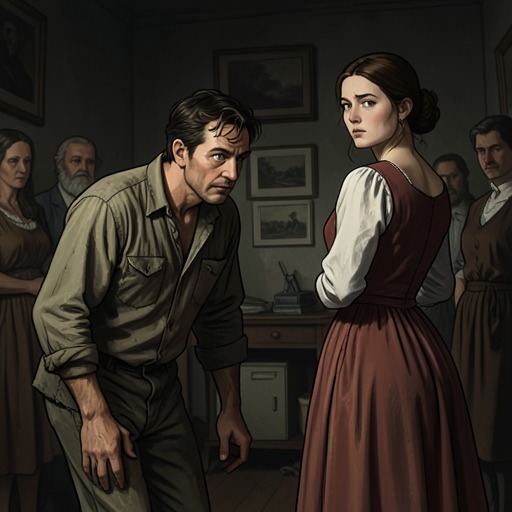
When Karla introduces Vikram to Lin and Lettie, she explains that he has recently returned from a long holiday in Denmark and is one of the few people in their circle whom they have not yet met. Vikram is of average height and build, but his appearance is anything but unremarkable. Thick, curly black hair frames a handsome face, and his bright, animated eyes, long nose, and carefully trimmed moustache give him a striking look. He wears black cowboy boots, jeans, a black shirt and leather vest, with a flat Spanish flamenco hat hanging behind him from a cord. Silver details—a bolo tie, a coin belt and the hatband—complete the outfit. His inspiration is the cinema of Sergio Leone, especially Once Upon a Time in the West and The Good, the Bad and the Ugly. He does not merely admire the films: he adopts their visual world with enough assurance to make the costume his own.
That deliberate self-presentation makes Vikram easy to recognize, but it does not reduce him to a pose. Lin is drawn to the openness with which Vikram wears his obsession. Karla jokes that he wears his heart on his sleeve, a teasing description with a trace of scorn in it; Lin, however, finds that conspicuous sincerity appealing. The novel later tests the image of the western hero against Vikram’s conduct. He proves capable of standing with Lin when enemies threaten him, so the cowboy costume anticipates courage without being its only evidence.
Vikram’s talk is as expansive as his clothes. He tells the group about a telephone-based social club in Copenhagen, where people at numbered tables could call one another and strike up conversations without initially knowing who was on the other end. He contrasts the club’s relaxed atmosphere with what he considers the immaturity of many Indian men around women. Kavita Singh punctures his confidence by pointing out that he has criticized his own sister for wearing jeans and a tight sweater, even though he had bought her the sweater himself. Vikram protests, then admits through his explanation that he had objected when she wore it out. The group laughs at the contradiction, and Vikram laughs hardest. His willingness to join in the mockery keeps his self-assurance from turning into simple self-importance: he can be called out and still remain part of the joke.
Friendship and the Prison Rescue
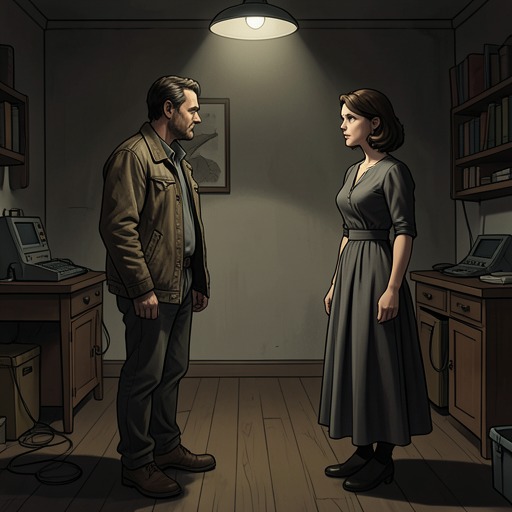
Vikram’s loyalty becomes concrete when Lin is summoned from the prison dormitory to an official’s office. Lin has been badly treated and is in a desperate condition. Vikram is waiting there with a prison official and a plain-clothes police officer, carrying a shirt for his friend. He reacts with alarm at Lin’s appearance and tells him that a very good friend sent him, promising to get him out. The person who arranged the intervention is not identified in this scene, but Vikram takes responsibility for carrying it through.
The official names a price: ten thousand dollars, in American currency, to keep the matter private. Vikram recognizes that the authorities have leverage because enough people know about Lin’s case. Rather than abandon the effort or prolong negotiations, he agrees to have the money within half an hour and tells them to prepare Lin to leave. Lin then asks that two men from his dormitory be released as well. They had tried to help him and received six additional months, but had completed their sentences. The official agrees, treating their release as a minor matter. Vikram’s intervention therefore becomes more than a rescue of his friend: Lin uses the opening to secure freedom for the two men, and Vikram does not obstruct the request.
Afterward, Vikram explains the release in terms of the Indian heart. He argues that the police could have taken the money and still sent Lin back to Australia, but chose to let him go because they had seen the good he had done among the people of the slum. As he speaks of the many languages and enormous population held together by fellow-feeling, he begins to cry. Lin’s own reflections support the point: his freedom and the return of his false passport coexist with the cruelty he endured in prison. Vikram does not erase that cruelty; instead, his account sets it beside the humane decisions that made release possible. The scene reveals an idealism grounded not in a claim that institutions are just, but in the belief that individual acts of recognition and mercy can still matter within them.
Lettie and the Proposal
Vikram’s romance with Lettie shows his imaginative energy redirected toward a personal commitment. He devises an elaborate proposal and draws Didier into helping him. Didier, in turn, persuades Lin to come along because Lettie is unlikely to participate unless Lin helps convince her. At Marine Lines Station, Vikram waits on the platform with friends. When Lettie agrees to take part in the surprise, he blindfolds her and guides her toward the train. Helpers on the carriage roof lift her up, with her arms held so she will not stand and risk hurting herself as the train moves.
The surprise unfolds across the roofs of the train. A large banner bearing Vikram’s declaration of love comes into view, followed by another message as the musicians play. Lettie and Vikram meet each other’s gaze; as the train continues, both are overcome with emotion, and they embrace and kiss. Lin turns away to celebrate with the musicians, while the scene places their new relationship amid the city’s recurring cycle of dreams made, lost and begun again. The proposal is not presented as a quiet or conventional gesture. Vikram makes a public spectacle of his feelings, and Lettie accepts the exuberance that comes with it.
After she accepts, Vikram and Lettie disappear for a week. Their return spreads a feeling of optimism through the Leopold’s crowd. Vikram is exhausted and deliriously happy, and Lin and Abdullah tease him after finishing their training. Didier, delighted that the romantic scheme has succeeded, celebrates his own part in it and solicits drinks from their acquaintances. Vikram’s happiness becomes a shared event: his friends turn the couple’s private decision into a moment of collective affection.
Work, Risk, and Change
Vikram’s romantic devotion also alters his working life. He had been a successful stunt performer, but the work worried Lettie because it involved actions such as jumping from moving trucks and crashing through windows. She persuaded him to stop. His later account of what he does is less specific: he has become an executive vice-president in the media company Lettie started with Kavita, Karla, Jeet and Lin. The shift is significant because it changes the form, rather than extinguishing, his energy. The man once associated with physical stunts now has a role in the company’s development.
The change is visible in his clothes as well. When he returns to Lin after an absence, Vikram still wears black, but the cowboy look has become more restrained; Lin attributes the moderation to Lettie’s influence. His beloved hat remains, a small but unmistakable survival from the earlier style. Later, the gunslinger clothes have mostly disappeared under Lettie’s persuasion and Vikram’s own maturing taste. The silver belt and black boots remain, while he has reluctantly given up the hat after spending more time in corporate boardrooms than among stunt performers. It hangs from a hook in Lin’s apartment, where Lin treasures it. The hat’s change of setting quietly preserves the friendship: an object once worn as part of Vikram’s self-invention becomes something Lin keeps close.
The couple also makes a material commitment to their shared future. They buy a new apartment in Colaba, near the market, only months before Lin sees them together again. The purchase exhausts their savings and requires them to borrow from Vikram’s parents, but they regard it as evidence of faith in one another and in the future of their growing film business. Their excitement persists despite the financial strain. Vikram’s movement into business is therefore not simply a change of costume or job title; it accompanies a home and a future built with Lettie.
Friendship and Narrative Role
Vikram’s connection with Lin continues through separation and return. After Lin comes back to Bombay and meets him again at Leopold’s, Vikram greets him with an exuberant embrace and immediately notices the cuts on his face. He asks why Lin did not announce his return, then turns to news of Lettie and her work with Karla and Karla’s new boyfriend. His innocent assumption that Lin already knows about the relationship causes Didier to react angrily; Vikram quickly apologizes when he realizes he has disclosed something Lin had not been told. The moment displays both his closeness to the group and his occasional lack of tact. He is warm rather than calculating, but that openness can make him speak before he understands the consequences.
Later, Vikram often meets Lin and the Zodiac Georges near his apartment by Colaba Market. Lin’s passport work and other commitments keep him away from Leopold’s more often, so these meetings help preserve his ties to the circle. Vikram shares news from the bar, including Didier’s recurring romances and Karla’s growing popularity, while the Georges report what is happening on the streets. The gatherings are ordinary and companionable: friends sit on sacks of lentils, drink chai, and bring Lin back into the exchange of neighborhood news.
By the time Lin meets Vikram and Lettie at a later gathering with people from Lisa Carter’s film circle and Kavita Singh’s press group, they seem happier and healthier than Lin has known them. Their new apartment and expanding business mark the future they have chosen together. Vikram greets Lin warmly, and although the cowboy outfit has nearly vanished, its most treasured remnant now belongs to Lin. The character’s trajectory thus joins spectacle to steadiness: Vikram remains recognizable in his enthusiasm and affection, while love, work and friendship give that energy new forms. His importance lies not only in the rescue or the proposal, but in the way he keeps showing up—at the prison office, the station, the market-side meetings and the table where his friends gather.