General Bob Alvarado
StrangersGeneral Bob Alvarado, the commanding officer of Thunder Hill, becomes an important dissenter within the government’s effort to conceal the July 6 events. He does not begin by simply rejecting secrecy: he first works covertly to connect witnesses and undermine the cover-up from within. But when Colonel Falkirk’s belief in alien possession becomes a lethal threat, Alvarado makes his opposition explicit and helps the witnesses face the crisis at Thunder Hill.
Position and the cover-up
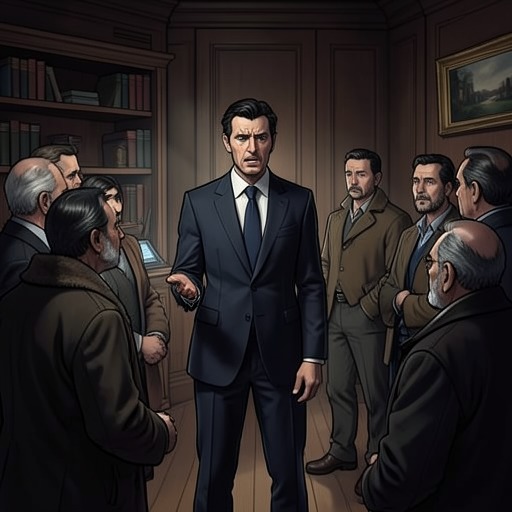
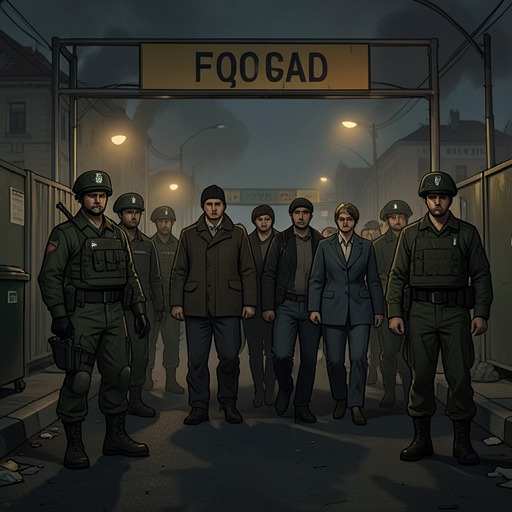
Alvarado belongs to a government response that is not unified in its aims or judgment. The cover-up draws in the FBI, the CIA, and a DERO company, among other agencies; the sheer number of participants makes coordination difficult and responsibility diffuse. Meanwhile, the Salcoe family, who had stayed at the Tranquility Motel on the night of the encounter, are being held incommunicado in Monterey while their memories are subjected to another round of repression and alteration. That operation shows how far the government has gone to control what witnesses remember—and how the supposed solution depends on keeping people isolated and silent.
The effort is already failing. The Salcoes’ memory blocks have deteriorated, and the original conditioning of the Tranquility witnesses has not held as promised. At a later conference call, FBI Director Emil Foxworth reports that an intruder broke into the operation involving the Salcoes and escaped. The intruder is identified as Parker Faine, a friend of Dom Corvaisis. Foster Polnichev and two political appointees conclude that maintaining the cover-up is impossible. This institutional fracture provides the setting for Alvarado’s more personal decision: rather than wait for a consensus that may never come, he works in secret to move information toward the witnesses.
Covertly helping the witnesses
Alvarado explains that he handled postcards with gloves and left no fingerprints. His plan was to let Jack Twist find them, then give him time to act; afterward, Alvarado intended to make anonymous calls from a pay phone in Elko and give other witnesses Jack’s unlisted number. The calls would tell them that Jack had answers to their mental problems, drawing them toward one another without openly exposing the source of the information. Alvarado also describes using a disguise so that nobody would recognize him as himself or suspect that he was not Jack. The precautions reveal the double nature of his position: he is a senior military officer inside the system of secrecy, yet he is trying to create a channel the system cannot easily trace back to him.
That plan becomes unnecessary before it is completed. Someone else has already sent notes and Polaroid photographs to Corvaisis and more photographs to the Blocks, setting a new crisis in motion. Alvarado recognizes that whoever sent them must be inside Thunder Hill. When he challenges Miles Bennell about the pictures, Bennell admits that he sent them too. Their exchange is less a contest over credit than a recognition that both men have reached the same conclusion: quietly sabotaging the cover-up is too slow. Bennell says they should have broken their secrecy oaths and gone public, even at the risk of Falkirk’s anger and prosecution by the government.
Opposition to Falkirk
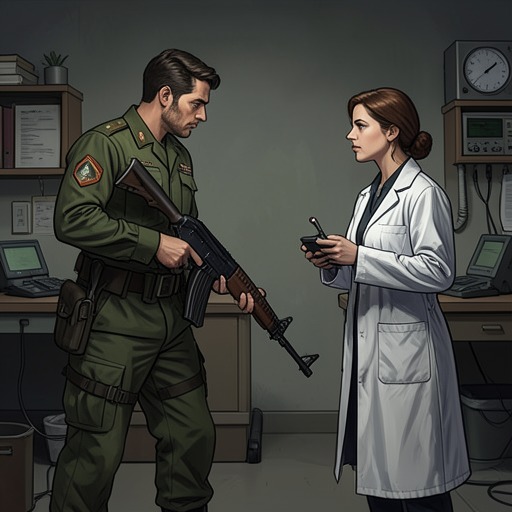
Alvarado opens up to Bennell because he needs an ally against Falkirk. Bennell sees that Alvarado does not believe the colonel has suddenly become reasonable or intends to bring the witnesses back to Thunder Hill for study. Alvarado confirms his fear: Falkirk means to kill the witnesses, and may kill everyone at Thunder Hill as well. Falkirk believes that those around him—including Alvarado and Bennell—have been taken over by alien beings and are no longer human. The same fear shapes his proposed response to the encounter: not investigation or disclosure, but the destruction of those he suspects.
The contrast between the two men is sharpened by their roles. Alvarado remains a military commander, but he recognizes that Falkirk’s certainty has become dangerous rather than protective. His intervention against the cover-up is not presented as an effortless public break with authority; he first uses concealment, gloves, a disguise, postcards, and planned anonymous calls. Yet by speaking plainly to Bennell, he turns private suspicion into a basis for cooperation. The danger is no longer only that the government will suppress the witnesses’ memories. It is that Falkirk will treat his own colleagues as evidence of the threat he fears.
The crisis at Thunder Hill
When Alvarado meets the witnesses at the alien spacecraft, he introduces himself to Dom Corvaisis and regrets what has been done to them. He says the discovery should not belong to a small group and that, if he had his way, the world would hear about it the next day. The statement places him on the side of disclosure, though events do not allow him to make that hope a settled outcome.
Alvarado immediately turns to the security crisis. He asks Dom whether his newly demonstrated abilities might let him enter the electronic security system and keep both the blast doors and the smaller entrance closed. Bennell warns that if Alvarado keeps Falkirk out, Falkirk will interpret the unexplained failure of VIGILANT as proof that everyone is infected. Alvarado does not dismiss that danger: he explains to the witnesses that Falkirk believes they have been possessed and are no longer human. His request therefore involves a deliberate risk. Containing Falkirk may protect those inside, but it will also confirm the colonel’s suspicions and accelerate the confrontation.
That confrontation becomes an attempt at mass destruction when Falkirk reveals two backpack nuclear weapons: one outside the door and another in the main chamber downstairs. Bennell understands why Falkirk brought so few men—he intends to sacrifice as few as possible—and tells Alvarado that Falkirk has obtained tactical nuclear weapons. Alvarado’s face turns gray at the news. When he says that backpack nukes cannot be disarmed, the statement makes the danger stark: the group faces a countdown, not a threat that can be handled by ordinary security procedures. Dom and Brendan Cronin run to deal with the separate bombs. Alvarado’s part in the final crisis is not a solitary act of command but a shift toward shared action: he has helped make cooperation possible, and now the survival of everyone present depends on what the witnesses can do together.
Character significance
Alvarado’s arc traces a passage from concealment toward disclosure without suggesting that a single official can simply undo a sprawling operation. He first tries to redirect information through anonymous means, aware that both the witnesses and the source of their clues are vulnerable. His later willingness to confide in Bennell reflects a more urgent judgment: Falkirk is not merely enforcing secrecy but preparing to destroy the people he suspects. At the spacecraft, Alvarado voices the principle that the discovery belongs to the world, then accepts the immediate danger of resisting the man who controls Thunder Hill’s security.
His role also exposes the conflict within the institutions surrounding the witnesses. FBI and CIA memory operations, military command, scientific assessment, and the witnesses’ own extraordinary abilities do not combine into one coherent government response. Alvarado’s choices matter precisely because authority is divided: he can assist the witnesses, but he cannot by himself settle the truth or stop Falkirk’s actions. His movement from anonymous postcards to open cooperation turns that division into a fragile alliance—and makes the prospect of disclosure inseparable from the struggle to keep the people who know the truth alive.