Jack Twist
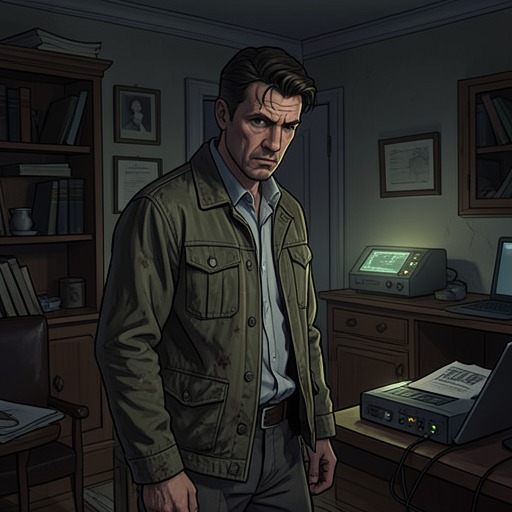
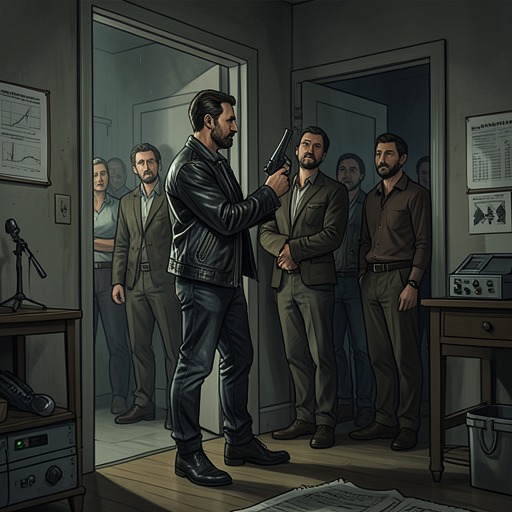
StrangersJack Twist is a former United States Army Ranger, prisoner of war, and professional thief whose tactical skill first serves revenge and eventually helps a group of witnesses resist a government cover-up. For years he explains crime as repayment for what society did to him and Jenny Twist. Her death breaks that account: the robberies no longer feel like justice, and the money becomes a burden rather than a prize. At Tranquility, Jack finds a new purpose in using the same ingenuity that made him a successful criminal to protect other people and expose what happened.
Identity and Background
Before becoming a thief, Jack served as an officer in the elite United States Army Rangers and was captured in an undeclared war in Central America. He had helped save the lives of more than a thousand Indigenous people there, but was taken to a dictator’s prison and left to rot. Jack and his closest friend, Oscar Weston, endured eleven and a half months of physical and psychological torture, humiliation, degradation, controlled starvation, and death threats. Of the four Rangers imprisoned together, one died and one went mad; Jack and Oscar retained both life and sanity. The contrast between his service and his abandonment feeds his lasting contempt for the society that claimed to value duty and justice.
Jack’s skills are practical and extensive: as a Ranger he was trained in weapons, explosives, martial arts, and survival. He turns that training toward crime after returning home to Jenny, whose condition becomes the other defining fact of his life. He is not merely capable of planning a robbery; he is the person expected to improvise when a plan meets the unexpected. His companions look to him for the idea that will get them through. That capacity for cool calculation later makes him an asset to the Tranquility witnesses, even as the story tests the moral story he has built around it.
Jenny, Revenge, and the Criminal Career
Jack’s commitment to Jenny is expressed through a long, repeated routine of care. For seven years he visits her two nights each week and spends five or six hours with her on Sundays, sometimes returning on other afternoons. When he kisses her cheek and holds her hand, it remains slack and unresponsive, but warm. He never tires of looking at her. The visits do not change her condition, yet their constancy gives shape to his life and to the choices he makes outside the hospital.
Jack’s stated objectives after returning from captivity are to kill Norman Hazzurt without drawing suspicion and to obtain enough money to move Jenny to a private sanitarium. He concludes that stealing is the only way to acquire so much cash quickly. The larger grievance is broader than one man: he believes the society he served has failed him, and he recasts breaking its laws as retaliation. In his own account, the respectable world’s language of honesty and social conscience conceals self-interest; unlike those people, he says, he openly admits that he looks out for himself. That bitterness lets him imagine himself as both outlaw and avenger.
His robbery of a major Fratellanza cash way station gives the self-image its most spectacular form. The warehouse handles narcotics money gathered from couriers across half of New Jersey: cash arrives in suitcases, flight bags, boxes, and coolers; mob accountants calculate the weekly profits; then the money is sent to financial centers including Miami, Las Vegas, Los Angeles, and New York. Jack, Mort Gersh, and Tommy Sung place themselves between those accountants and the investment advisers. The haul is more than three million dollars. Jack organizes the jobs he joins, and when the escape from the first bay begins, incoming gunfire rattles against the truck as he drives down the concrete ramp. The successful robbery should have sustained his familiar exhilaration. Instead, its success brings no kick.
The change is not sudden enough to erase his old habits. Three weeks after the warehouse robbery, Jack is already preparing to rob a Guardmaster armored truck, waiting in deep darkness in a white ski suit on a snowy knoll. At the New Haven County heist site, Chad Zepp lies in another drift across the roadway. Jack’s approach shows the same technical intelligence as his earlier work: he fires a high-velocity tear-gas shell into the truck’s grille, sending vapor into the cab through its ventilation system. The operation is executed with such precision that the narrative reduces its rhythm to a single word: “Clockwork.” Yet after the carefully planned job, Jack feels neither triumph nor excitement. The competence remains; the reward it once supplied has disappeared.
Grief, Guilt, and Giving the Money Away
Five days after the Fratellanza theft, Jack visits Jenny. He lowers the bed rail, kisses her cheek, and holds her hand in both of his. She does not stir. Later, when she makes a soft gurgling sound and takes two deep breaths, he briefly expects a miracle: that her eyes will open with awareness after years of coma. Instead he finds her face slack and checks for a pulse. Jenny is dead. The moment turns hope into an ordinary, irreversible loss, and it changes the meaning of the money he has been stealing for her.
Jack’s robbery career had already begun to lose its pleasure. His recurring nightmare, which started six weeks earlier, follows him through unfamiliar rooms and shifting corridors and onto a deserted highway in a moon-washed landscape. A faceless man wearing what Jack thinks may be a motorcycle helmet pursues him on foot. Each time, panic builds until it wakes him. Alongside the nightmare, the failure of the jewelry-store job to produce its usual high leaves him questioning whether he has enough courage to keep living without a purpose. The dream’s pursuit and the empty highway give form to a fear that his practiced escapes cannot settle.
On the drive from Connecticut after the Guardmaster robbery, the money in his trunk begins to weigh on him as guilt. Jenny has been dead for only seventeen days. Jack had treated his crimes as retribution for injuries done to himself and his wife, but he now recognizes that this account does not make the stolen money just. He can no longer regard himself as a romantic bandit with a righteous mission; he sees only a thief, and understands that he has been deluding himself for eight years. The insight does not undo his past or promise complete atonement. It does, however, make it impossible for him to keep treating the proceeds as a reward he deserves.
In New York City, Jack gives away the remaining Guardmaster money, including another hundred thousand dollars distributed anonymously around Manhattan. He does not mistake redistribution for repayment or imagine that one night’s generosity can clear his record. Rather, he no longer wants the money and cannot bring himself simply to discard it. When an elderly recipient calls him friend and speaks of the suffering the gift will relieve, Jack echoes the word. In the handshake that follows, he finds a sense of belonging and fellowship he had thought lost. The act does not restore Jenny or erase guilt; it replaces private vengeance, briefly, with a relationship to other people grounded in what they need.
The Tranquility Witnesses
Jack’s false identities are part of his trade. He has sophisticated sets of identification in eight names and uses aliases when planning and carrying out robberies. At a Fifth Avenue Citibank branch, he visits a safe-deposit box under the name Mr. Farnham. A postcard bearing only a photograph of the Tranquility Motel exposes how vulnerable that system has become: Jack realizes that several identities have been linked. The box is registered as Farnham, his Tranquility registration was Thornton Wainwright, and his Fifth Avenue apartment connects him to Phillipe Delon. The postcard has no written message, but its image tells him enough: someone has joined identities he worked to keep separate.
When Jack reaches the Tranquility group, he does not pretend to know more than the other witnesses. He identifies himself as Thornton Wainwright, explains that it is not his real name, and insists that the motel is not a safe place to discuss what they have discovered. He has been listening to their conversations and warns that if he can hear them, their opponents can too. The warning matters because it shifts his criminal habit of surveillance into a protective role: he recognizes that the group’s words, not only its movements, are exposed.
Jack tells the group that this is the first time in eight years he has felt on the right side of an issue. He asks questions, fills the gaps in his knowledge of their separate ordeals, and assembles their discoveries into a broader picture. Then he guides a discussion of strategy and assigns tasks for the following day. His new sense of purpose is not abstract: it is built through listening, coordination, and a willingness to put himself on the first team. He volunteers to retrieve his Cherokee from the hills and asks who will go with him.
His care for the group extends beyond tactical work. After returning from Elko with Jorja Monatella and Brendan Cronin, Jack sleeps on the floor in the Blocks’ living room so Marcie Monatella will not be alone in the morning while Faye Block and Ernie Block are occupied. He resists moving the sleeping girl because doing so could wake the others, who need whatever rest they can get. At the later departure, he embraces Jorja for an especially long time and kisses Marcie goodbye as if she were his own child. In a group that has become more than half-convinced some will not survive, these gestures make his fellowship concrete: he stays with the child, shares the farewell, and accepts the risk alongside the others.
Thunder Hill and a Changed Purpose
Jack’s strategic skill becomes central as the witnesses prepare to evade the people watching Tranquility. He surveys the Blocks’ apartment through its north-, west-, south-, and east-facing windows, looking for surveillance teams and relying on a device that can pinpoint their location. He then devises a plan to move most of the group overland into Elko by a roundabout route, splitting them up there and sending Ernie, Faye, and Ginger Weiss toward Boston, where they can tell the Hannabys and Ginger’s colleagues at Boston Memorial what happened in Nevada two summers earlier. Jack, Dom Corvaisis, and Ned Sarver will instead go inside Thunder Hill, where they may be arrested. Their chance of returning in the same condition, he tells Dom, depends on the others making the story public.
At the perimeter, Jack studies the snow on the chain-link fence and distinguishes the bare sections from links covered in windblown snow. He identifies a route between the fence and the alarm grid, looking for a sturdy tree twenty or thirty feet beyond the grid that can help them cross the open meadow. He brings SLICKS, an attaché-sized computer used to penetrate electronic locks, for the formidable single door beside Thunder Hill’s blast doors. Jack gets the group through the perimeter, across the grounds, and past the first door. He does not claim to have done everything himself: when Dom gets them inside, Jack credits him for that decisive step.
The alien vessel found at Thunder Hill also reframes Jack’s grief without removing it. As he looks toward what contact has made possible, Ginger realizes that he is not simply wishing Jenny had lived to see the vessel. He is imagining that she might have lived through the events and been healed by the power Brendan Cronin and Dom acquired after contact—her damaged brain repaired, her coma ended, and her returned to her husband. That possibility arrives too late for Jenny, who died on Christmas Day, and Jack’s longing remains inseparable from the loss. His final significance lies in this tension: he has found a cause beyond himself, but the person for whom he once stole cannot share the future that cause may open.