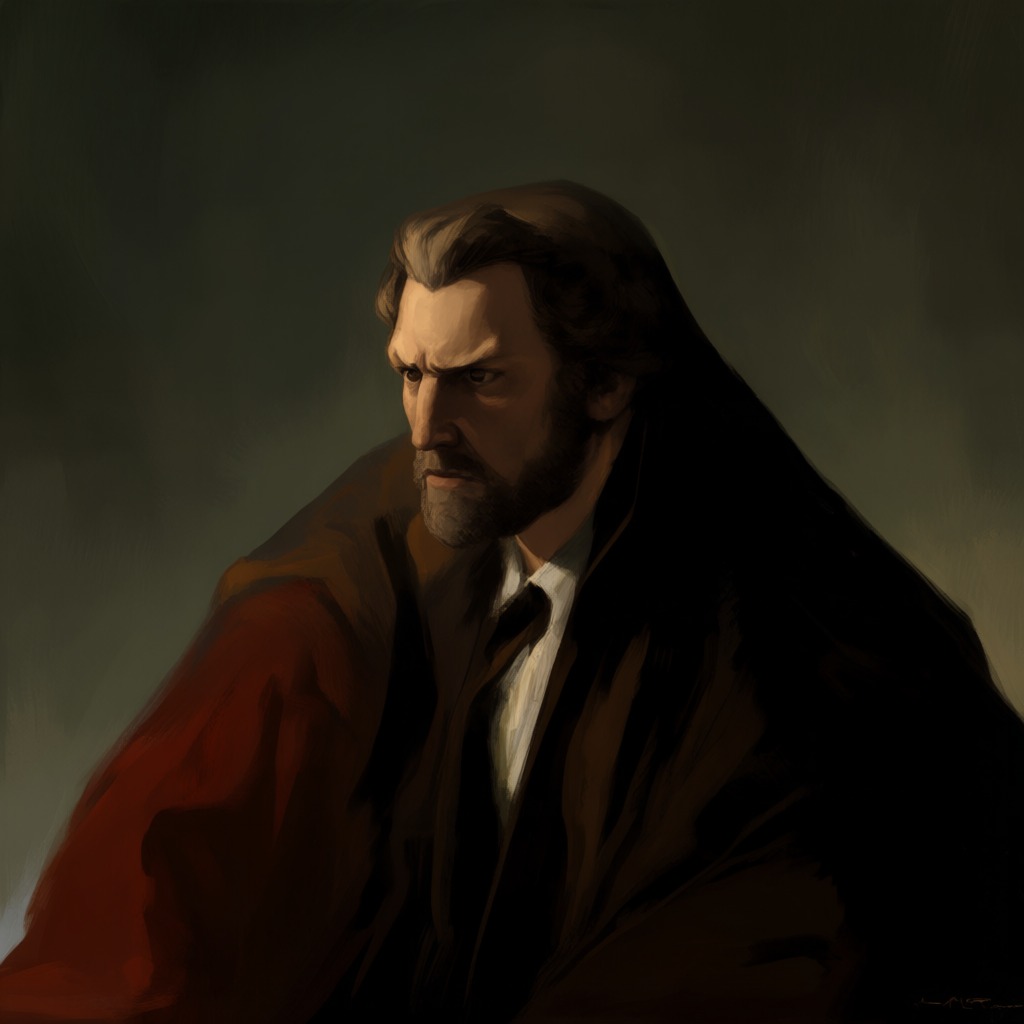
Mace Tyrell
Mace Tyrell, Lord of Highgarden, Warden of the South, Defender of the Marches, and High Marshal of the Reach, is the head of one of the Seven Kingdoms' most powerful houses. A man of considerable ambition but limited strategic acumen, he is driven above all by the desire to advance his family's position, particularly through the marriages of his daughter, Margaery Tyrell. His political maneuvering shapes much of the southern conflict in the wake of King Robert Baratheon's death.
Rise to Power and the War of the Five Kings
At the onset of the War of the Five Kings, Mace Tyrell declared for Renly Baratheon, giving him the hand of his daughter Margaery. After Renly's assassination, Highgarden swiftly made alliance with House Lannister, and Margaery was betrothed to King Joffrey Baratheon. This alliance brought the immense military and economic power of the Reach to the side of the Iron Throne, a crucial factor in the Lannister victory at the Battle of the Blackwater. Following Joffrey's death, Mace secured a new betrothal between Margaery and the new boy king, Tommen Baratheon, ensuring the Tyrells' continued influence at court.
Role as King's Hand and Council Conflicts
After the arrest of Queen Regent Cersei Lannister, Mace Tyrell was named King's Hand to Tommen, an office he had long coveted. He took to the role with a sense of self-importance, even having an oaken throne carved in the shape of a hand for his use in council meetings. As Hand, he was a central figure on the small council, but his primary focus remained the defense of his daughter Margaery, who was also imprisoned by the Faith of the Seven on charges of adultery and high treason. He repeatedly pressed for the charges against her to be dropped, arguing that the trial was a "mummer's farce" and that King Tommen should simply declare her innocent. His insistence on prioritizing Margaery's trial over other pressing matters, such as the landing of the Golden Company in the south, created friction with the Lord Regent, Ser Kevan Lannister.
Military Ambitions and Limitations
Mace Tyrell's military judgment was often questioned by his peers. When news arrived that Jon Connington and a Targaryen pretender had landed in the south and were moving on Storm's End, Mace dismissed them as mere adventurers, stating, "He cannot take Storm's End. Not if he were Aegon the Conqueror." He was confident that his son, Loras Tyrell, would retake the Shields from the ironmen and that the snows would deal with Stannis Baratheon. Ser Kevan Lannister, however, saw the threat as far more grave, noting that Connington was older, harder, and more dangerous than the young man he had once known. Mace's complacency in the face of this new threat stood in stark contrast to the urgency felt by others on the council.
Relationship with the Lannisters and the Small Council
Mace Tyrell's relationship with the Lannisters was one of mutual need and deep-seated mistrust. He brought two armies to King's Landing, giving him immense leverage, but Ser Kevan was wary of his influence. Kevan noted that Mace was already outnumbering the Lannister loyalists on the small council and that he had his own candidate for lord treasurer, his uncle Garth the Gross. Mace was openly contemptuous of Cersei Lannister's champion, Ser Robert Strong, questioning his identity and whether he was even a knight. He also expressed disdain for the Dornish match for Princess Myrcella, suggesting a better one could be found, likely for his own crippled son Willas. Despite these tensions, Kevan recognized that he could not afford an open quarrel with the powerful Lord of Highgarden, especially with the realm in turmoil.
Narrative Role and Evaluation
Mace Tyrell is portrayed as a pompous, self-important, and strategically obtuse figure, a foil to the more cunning and ruthless players in the game of thrones. His primary function is to represent the immense power of the Reach, a force that must be courted and managed by the Lannisters. His constant focus on his daughter's status and his underestimation of external threats like the Golden Company highlight the short-sightedness that plagues the Lannister-Tyrell regime. While he is a powerful lord, his personal vanity and lack of strategic foresight make him a tool for others rather than a master of his own destiny, a fact that Ser Kevan Lannister and others are acutely aware of.