Michael Moore
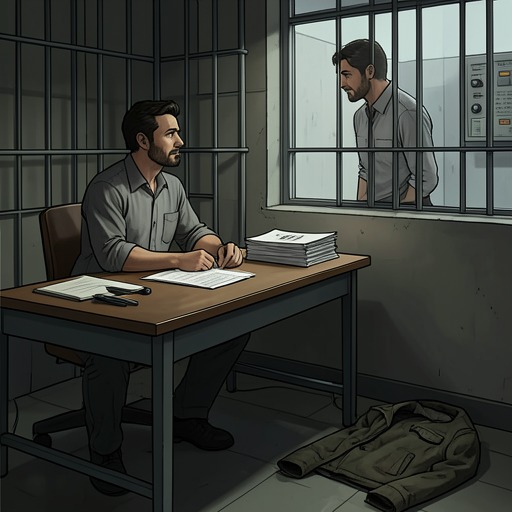
DopesickJudge Michael Moore is a drug-court judge in Russell County, Virginia, whose account traces a changing local response to opioid addiction. His court’s growing openness to medication-assisted treatment, its attention to practical needs such as work, and his own efforts to support participants in the community offer a counterpoint to approaches that treat addiction only as a matter for punishment. The book also shows the limits of that progress: treatment remains difficult to reach, and the epidemic’s consequences continue across generations.
Role and local context
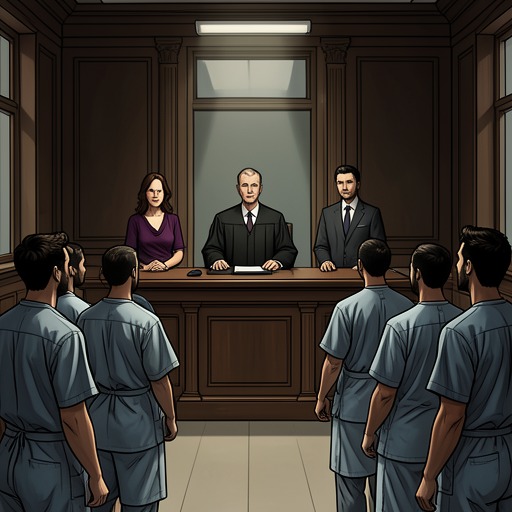
Drug courts bring criminal justice and treatment into the same process. In the book’s account of the broader system, participants face intensive monitoring and swift consequences for failed drug tests or new offenses; most courts dismiss charges after participants complete a program lasting twelve to eighteen months. Graduates are described as substantially less likely than regular probationers to return to crime or drug use. Against that background, Moore’s court is notable for drawing attention beyond the people already charged with crimes. In Russell County, strangers approached him at Food City to ask whether he could place their addicted children in the program, even when those children had not been arrested.
Moore’s work unfolds in a rural region where access to treatment is uneven and medication-assisted treatment remains controversial. The book notes that only a handful of Virginia’s rural drug-court judges allowed participants to use it. In nearby Bristol, a billboard advertised a Suboxone provider whose appointments could last as little as thirty minutes, while the local court system also faced widespread illegal diversion of the medication. The contrast underscores the difficult terrain in which Moore’s decisions were made: treatment could be promoted as a route to recovery, restricted by court policy, or encountered through a hurried and sometimes problematic service system.
A court’s changing approach to treatment
A year after the author’s first interview with Moore, the judge’s hair had turned from salt-and-pepper to white, and the account records a significant change in the court’s treatment options. The top prosecutor in Russell County had approved the drug court’s first participant taking Vivitrol. She had been dependent on pills for thirty years and acknowledged that she could not stop misusing buprenorphine. Moore praised the prosecutor’s decision as a sign that the criminal justice system was becoming more responsive to the realities of addiction.
Medication-assisted treatment was no longer confined to that first case. By then, half the probationers on Moore’s regular circuit-court docket were taking Suboxone, and he said the court was seeing positive results. His position was personal as well as institutional: he said that if his own children were addicted, he would want them to have the option of medication-assisted treatment. The book’s emphasis is not that medication alone resolves addiction, but that a court can make room for treatment rather than insist that recovery follow a single model.
Moore also connected the court’s present work to a longer history that he felt officials had been slow to acknowledge. When the governor declared opioids an epidemic the previous fall, Moore responded that the epidemic had been present since 2002. One of the participants in his drug court had been born dependent on drugs. That detail brings the crisis into the span of a single life and complicates any account that treats it as a sudden emergency or a problem limited to adult offenders.
Beyond the courtroom
Moore’s approach extended into ordinary community life. On Thursday nights, he helped serve dinner to participants in a twelve-step program at a local church. He also enlisted community contacts—from fast-food managers to local contractors—to hire people in drug court. These acts addressed practical barriers to stability: a participant’s prospects depended not only on court supervision or treatment, but also on access to work and relationships beyond the justice system.
The book gives a brief glimpse of Moore’s earlier life through his bailiff, Neil Smith, who remembered Moore as an adolescent boarding the same Russell County school bus, his face obscured by an armload of books. The image is Smith’s recollection, not an account of Moore’s own perspective, but it places the judge within the local community whose institutions he would later work to influence.
His efforts took place alongside other attempts to bridge the gaps between health care and law enforcement. In Roanoke, the Hope Initiative was designed to connect people with trained volunteers who could help them find treatment and navigate housing, mental-health, and employment resources. Yet in its first month, twenty-two people approached the program and none entered residential treatment; only a handful obtained outpatient medication-assisted treatment. Separately, hospital workers and local advocates were trying to create smoother transfers from overdose care to treatment, but faced shortages of providers, detox services, and beds. These examples do not describe Moore’s court, but they show why a court’s willingness to permit treatment could not by itself remove the obstacles people encountered elsewhere.
Hope, uncertainty, and significance
Moore’s account is marked by hope that is neither easy nor secure. In one conversation, he asked the reporter three times what the reporting had revealed that he could feel hopeful about. He chuckled while saying that reading the book might help people know what to do, though the scene suggests that his humor sat close to distress. The answer offered to him was that solutions depended on community: on local health and outreach work, on efforts to prevent hepatitis C, and on collaborations able to connect people to care.
A further example was the Bristol Recovery Center, which had turned a donated former nursing home into a 240-bed facility for people in recovery, veterans, young adults leaving foster care, and people released from jail. Its director, Bob Garrett, had spent three years building partnerships with courts, police, churches, and social-service agencies. The center planned to help residents find work and eventually pay to live there. The account presents this work as an emerging local effort, not as a program run by Moore; its relevance lies in the wider network of care that he was asked to consider.
Moore’s significance in the book rests on a combination of institutional authority and community participation. He could help determine whether a court participant was permitted to use medication, but he also served dinners and asked local employers to offer work. His court’s changing practice suggests a more flexible understanding of recovery, while the treatment shortages and the child born dependent on drugs reveal how much remains beyond any one judge’s control. The portrait ends not with a solved crisis, but with Moore searching for grounds to hope and with community cooperation presented as a necessary condition for progress.