Dennis Painter
DopesickDennis Painter’s story follows a close friendship into a shared heroin use, then traces the uneven aftermath of Jesse Bolstridge’s death: repeated treatment, relapse, jail, and Dennis’s struggle to live with what happened. A Shenandoah County native, Dennis is both a participant in the region’s heroin economy and a witness to its human cost. His account connects an intimate loss to a pattern larger than any one friendship, in which treatment and punishment repeatedly fail to end the cycle.
Friendship and the Road to Heroin
Dennis and Jesse had known each other since they were toddlers. Dennis remembered photographs of them at three years old, playing together in a sandbox; he also recalled preschool pictures taken at Grasshopper Green. Their friendship continued into adolescence, and by sixteen they were partying together. Jesse began trading his ADHD medication for painkillers, a change that preceded their later use of heroin.
The two friends made regular trips to Baltimore to buy drugs. Dennis’s first trip there, in 2012, came after he was advised to look for blinking blue lights in neighborhoods where police surveillance was present. The lights, intended to help police monitor high-crime areas, also served as an informal signal to drug seekers arriving from elsewhere. Dennis described a market in which buyers could find sellers quickly and, if one dealer was arrested, others were ready to replace that person.
Dennis usually made the trip with Jesse. Sometimes they stopped at the city health department’s syringe-exchange van for clean needles. On one trip without Jesse, Dennis traveled with friends of friends, was robbed, and was left behind by the people in the carpool. His girlfriend had to collect him late that night, with their toddler twins asleep in the back seat. The episode shows the risks built into the journeys as well as their domestic consequences: drug-seeking trips were undertaken alongside the ordinary responsibilities of parenthood.
As heroin became easier to obtain, Jesse’s preferred drug shifted from crushed prescription pills to intravenous heroin. Dennis said heroin was cheaper and stronger, and suddenly more accessible. Their parents paid for them to attend residential treatment at separate out-of-state facilities, but after returning home and reuniting, both resumed using soon afterward. Jesse’s first heroin use, his mother told the reporter, involved drugs Dennis had bought from a Washington, D.C., subdealer. The friendship was therefore not merely a setting for Jesse’s addiction: it was also part of the route by which heroin reached him.
Grief, Guilt, and Repeated Treatment
After Jesse died, Dennis’s father made extensive efforts to get him into treatment again. Those efforts did not stop the cycle of rehabilitation, relapse, and jail. Dennis named his new baby after Jesse, intending the name to serve as a reminder, but that gesture did not end his drug use. An abstinence-only treatment center in Nashville became his seventh attempt to get clean, yet it too failed to prevent a return to using.
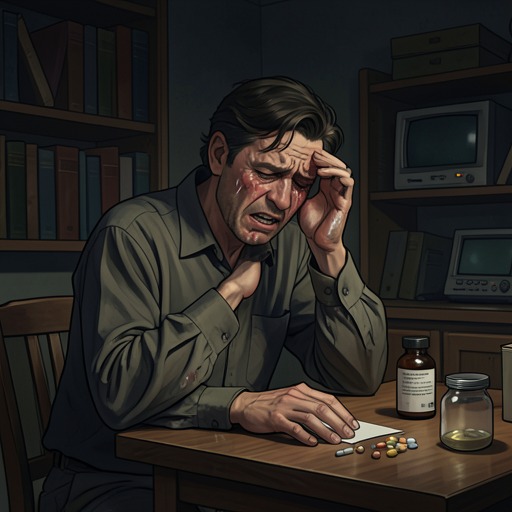
Dennis told the reporter that he had not moved through the stages of grief after Jesse’s death. He also disclosed repeated suicide attempts and said he had continued getting high since the loss. The account presents these statements as part of an unresolved bereavement, not as a completed passage from grief to recovery. Treatment provided successive opportunities to stop, but the evidence does not show a lasting break in the pattern.
His guilt centered on the day Jesse died and on Dennis’s role in obtaining drugs. When asked to describe what he had seen in the bathroom, he declined to give Jesse’s mother a detailed account, believing she did not need that image. He had once visited Jesse’s grave but stopped because the visits were too difficult. He wanted to write a letter to express what he had kept inside, and believed that if he had not gone to get the drugs that day, Jesse might still be alive. The childhood photographs and memories of spending Thanksgiving at Jesse’s house made the loss inseparable from a friendship that had begun long before either young man used drugs.
A Drug Market That Kept Moving
The end of the Jones and Shaw trafficking ring did not end Dennis’s access to heroin. He and his friends returned to the established route to Baltimore, while heroin was also available closer to home: in Winchester, a bag could be bought for twenty dollars, compared with thirty dollars from a runner in Woodstock. The change in price and distance captures a continuing feature of the crisis in the region. Arrests and the closure of one supply network altered where drugs were bought, but did not eliminate demand or the next available source.
The book places those trips within the economic pressures of rural communities. Dennis described the Baltimore route as an avenue for people with few remaining opportunities in small-town working-class life. A person unable to find factory work could instead take the risk of driving to the city to buy and sell heroin. The account gives the scale of the possible returns: an investment of four thousand dollars, or fifty grams of heroin, could bring sixty thousand dollars in a week. For those unwilling to travel as far, Martinsburg, West Virginia, was described as a nearby alternative, about twenty minutes away. These figures and routes do not establish Dennis’s own earnings; they show the powerful incentives sustaining the market he and his peers continued to encounter.
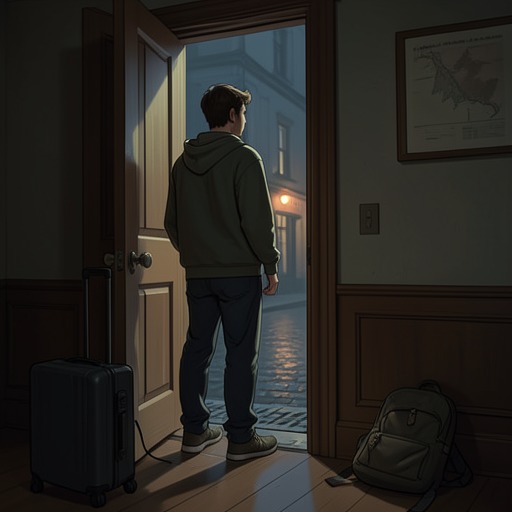
Dennis hoped that moving might help. After the trafficking ring’s end, he considered relocating to a larger city with a stronger sober-living culture and better jobs. Earlier moves from Strasburg to Middletown and then Winchester had not protected him: he found people who used drugs in each place. His experience undercuts the idea that a change of address alone can resolve addiction when drug use and supply remain accessible across communities.
Reentry and the Unfinished Aftermath
The cycle continued after treatment and after the death that had prompted renewed efforts to help him. Dennis was later returned to jail for violating probation. A sheriff’s department Facebook post documented the arrest; in the accompanying booking image, he wore an orange jumpsuit and appeared to weigh 140 pounds, down from his usual 185. The image records a marked physical change, while the probation violation places him once again within the criminal-justice system rather than in sustained recovery.
At the same time, his children’s care depended on support beyond Dennis himself. Their mother attended community college to become a paralegal, the children went to a federally funded day-care facility, and Dennis’s father paid for their housing. The account does not treat these arrangements as a resolution; they show the family labor and outside assistance continuing around Dennis’s instability. One of the low-level dealers connected with the ring that sold the heroin that killed Jesse later appeared at the mother’s drive-through workplace, a small but telling collision between daily life and the supply network.
Dennis’s narrative thus resists a clean ending. Naming a child after Jesse, entering treatment again, moving to another town, and facing jail each mark an effort or a change, but none by itself stopped the recurrence. His experience also echoes the book’s wider account of families trying to keep loved ones alive amid gaps between health care and criminal justice. The friendship at its center began with childhood photographs; its aftermath is measured in treatment attempts, changing routes to heroin, family support, and the unresolved guilt Dennis carried after Jesse’s death.