Bobby Baylis
DopesickBobby Baylis was Janine Underwood’s son, a young man whose recovery seemed to be taking hold after prison and treatment before a single return to heroin proved fatal. His death in 2015 became more than a family loss: it brought Janine into the Hope Initiative and shaped how she tried to reach people caught between addiction, treatment, and the criminal justice system. Bobby’s story moves through cycles of dependence and recovery, but its sharpest reversal comes when the promise of a renewed life is interrupted only months after his release.
Identity and the beginning of addiction
Bobby was twenty-eight when he died. His addiction began after a snowboarding accident led to ACL surgery and a prescription for OxyContin. Over the following seven years, Janine watched him seesaw between rehabilitation and jail. The book places his history within a wider transition from prescription opioids to heroin, but preserves the specific, painful delay in his family’s understanding: Janine initially thought he was using pills and did not yet grasp the connection between pills and heroin.
That gap became tangible when Janine found hypodermic needles hidden in Bobby’s closet. He had wrapped them in his baby blanket, which lay among childhood keepsakes, including soccer trophies and Boy Scout patches. The arrangement joined evidence of his adult drug use to objects from an earlier life. Janine, who worked in health care, later described how little she understood about what was happening or how to secure treatment for her son. Her experience exposes the difference between working within health care and being able to navigate its systems as a frightened parent.
Prison, recovery, and the fatal return
Bobby’s three-year prison sentence included drug treatment. During that period he also became a certified journeyman in heating and air-conditioning. After returning to Roanoke on probation, he was doing well at a new job and living in his mother’s basement. Janine believed he had finally become clean; she saw renewed promise in him, and his vocational training and employment gave that hope concrete foundations.
Three months after leaving prison, Bobby visited old friends from Hidden Valley. He took a single dose of fentanyl-laced heroin and died. Janine found him in the basement. The circumstances sharpen the reversal: treatment and incarceration had coincided with sobriety, training, and a return to work, but a brief reunion with people from his past preceded an overdose. His recovery was real, yet it had not secured him against the risks awaiting him outside prison.
The aftermath also carried an element of abandonment. When Janine found her son, the evidence of drug use had been cleaned up and the friends who had been with him were gone. The book does not turn that detail into a full account of what happened among them; it shows instead what Janine was left to confront. Bobby’s death left her grieving not only the loss of her son but the sudden collapse of the life she had thought he was rebuilding.
A mother’s work after his death
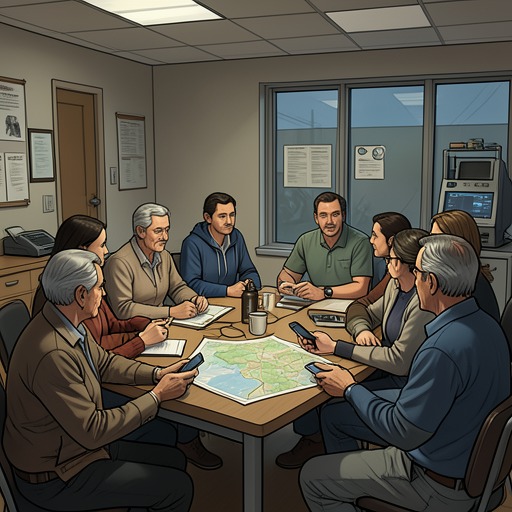
In the fall of 2015, about six months after Bobby died, Janine attended the first Hope Initiative meeting. Although she was the executive director of the Bradley Free Clinic, she came because she was Bobby’s mother. She became the initiative’s first volunteer angel, helping connect people seeking help with treatment and support. At a later point, she held a portrait of Bobby, an image that keeps his presence within the account of the work she undertook after his death.
Janine brought to the initiative intimate knowledge of the treatment landscape’s obstacles: privacy rules, barriers to arranging care, and the lack of clear guidance for parents who discover their child is injecting heroin. In one case, she drew on Bobby’s connection to a fellow user to encourage that person to stay in treatment. The appeal was not abstract. Bobby’s life had placed Janine in a position where grief could offer a point of recognition, even as she knew that trust could not guarantee someone would remain in care.
Her involvement did not mean she began as an advocate for every treatment approach. Janine was initially opposed to harm reduction and medication-assisted treatment, though she tried to keep an open mind. At the clinic, police refrained from intervening when people used drugs in the parking lot, recognizing that enforcement could discourage them from coming. Janine’s work thus asked her to act amid approaches she found difficult to accept, while keeping the immediate aim of bringing people within reach of help.
Memory and the limits of the safety net
Bobby’s story gives personal weight to the gaps the Hope Initiative sought to bridge. The book describes families struggling in isolation, with shame making it harder to speak openly and with treatment and criminal justice operating as separate systems. Janine’s own experience—from finding needles to losing Bobby after his release—shows how little the existence of a clinic or a health-care job can do on its own to make timely, sustained treatment accessible.
Those difficulties also sat within Virginia’s broader policy landscape. The state legislature had repeatedly rejected Medicaid expansion under the Affordable Care Act, a decision that left hundreds of thousands of low-income residents without the coverage expansion would have provided. The account does not establish Bobby’s individual insurance circumstances, but it presents coverage and treatment access as part of the wider environment in which families sought help. His death is therefore both particular—the loss of Janine’s son—and connected to a crisis in which relapse, overdose risk, and fragmented care repeatedly tested the possibility of recovery.
Janine’s later work did not undo Bobby’s death or offer certainty that another person would accept help. It did carry his memory into the practical work of answering calls, accompanying families, and trying to secure treatment before an opening closed. Bobby’s arc ends in overdose, but his place in the book continues through the mother who entered the Hope Initiative because she knew, from the inside, how a promising recovery could still fail to protect a life.