Joey Gilbert
DopesickJoey Gilbert’s story traces how personality, friendship, and the desire to recover could persist alongside repeated exposure to addiction and a treatment system full of obstacles. A graduate of Hidden Valley High School, she was remembered for her artistic talents, humor, and exacting sense of style; she also became one of the young people whose life connected the school’s early circle of opioid users to the wider losses that followed. Her death at twenty-seven came after friends and volunteers had helped her pursue treatment, underscoring how a stated wish to get well could coexist with relapse risk and gaps in care.
Identity and Early Life
Joey graduated from Hidden Valley High School in 2007, the same year as Tess Henry. She excelled in art and music and took pleasure in personal style: for a period of three years, she went to Goodwill nearly every day, following a rule that her clothes and accessories had to match the color she had chosen. Her interests ranged from Freddie Mercury to eye makeup, dance moves, and the Prince song “When Doves Cry.” Her best friend, Emma Hurley, remembered her as funny and full of energy, a lively presence in a circle later defined by repeated loss.
A boyfriend introduced Joey to pills while she was in high school, and she began using heroin soon afterward. She belonged to the group of Hidden Valley users that included Scott Roth and John Robert “Bobby” Baylis. In the decade that followed, Emma lost three close friends and ten acquaintances to opioid overdoses. Joey’s history thus unfolded within a peer network in which pills and heroin were not abstract dangers but substances encountered through relationships, parties, and friends.
Friendship, Use, and Relapse
Joey and Tess Henry remained in contact as their lives became unstable. They couch-surfed together in southeast Roanoke and exchanged messages about withdrawal, Xanax, and crystal meth. Their correspondence also recorded the practical improvisations of ongoing drug use: they once arranged to trade Xanax for crystal meth. Patricia, Tess’s mother, later saw these exchanges while covertly following Tess’s online activity, making Joey visible in the story not only as a friend but as part of the network through which the two young women shared information and risk.
Joey’s friendship with Emma also changed under the pressure of relapse. In 2013, Emma agreed to share an apartment with Joey after Joey presented herself as no longer using heroin. Emma later discovered that Joey was still using; eventually, she used heroin in Emma’s presence. They fell out over six missing dollars and did not speak for six months. The rupture was small in its immediate cause but took place against a much larger strain: Emma described the recurring contrast between a sober Joey and a relapsing Joey as overwhelming. Their separation shows how addiction could undermine trust even in a close friendship, without erasing the affection and history behind it.
Treatment and Obstacles to Recovery
Joey had previously done well for a time with Vivitrol, a monthly naltrexone injection. When she turned twenty-six, she lost coverage under her father’s insurance, and the shot was beyond what her family could afford without insurance. She later moved to buprenorphine treatment with David Hartman, a Roanoke psychiatrist whose long waiting list had also delayed Tess’s access to care. Joey’s treatment involved weekly drug testing, and Danny Gilbert, her father, held and dispensed her medication each day. The prescription, visits, and lab work averaged about seven hundred dollars a month.
Those arrangements offered some structure but did not remove the barriers around her. Joey had faced waiting lists for rehabilitation and a requirement to be drug-free before entering treatment. Continued drug use with people such as Tess kept relapse close, even as she sought help. Her experience also illustrates how recovery could be affected by insurance eligibility: the treatment that had helped her was no longer financially accessible after a change in coverage.
Joey came to the Hope Initiative with her mother in early 2017. During a short stay in an abstinence-only rescue mission program, she tried to stop using abruptly but left in less than a day because she felt too sick to continue. She told Jamie Waldrop that she hoped to taper with Suboxone, and she spoke of wanting eventually to help other people get off drugs. That aspiration was not presented as a completed recovery, but as a goal she was still trying to reach.
Support, Final Crisis, and Death
Joey’s circumstances worsened even as people continued trying to connect her with care. She allowed an abusive drug dealer and his girlfriend to stay with her in exchange for drugs, while her father did not know how precarious her situation had become. Ashamed of how far she felt she had fallen, she was helped by Jamie Waldrop and Cheri Hartman, volunteers with the Hope Initiative, who worked together to find her a residential-treatment bed. After several efforts to intervene, including a visit at the emergency room, they persuaded her to move away from the dealer. While Jamie helped her pack, they found some of Tess’s clothes, a reminder of the friendship and shared instability that had linked their lives.
Cheri Hartman persuaded her husband, psychiatrist David Hartman, to take Joey on again as a Suboxone patient. Joey’s divorced parents shared the costs of her prescription, appointments, and lab work, and she applied for charity care through a hospital-run clinic. These steps re-established a path into treatment, but they could not ensure that she would remain safe while navigating the period before sustained care took hold.
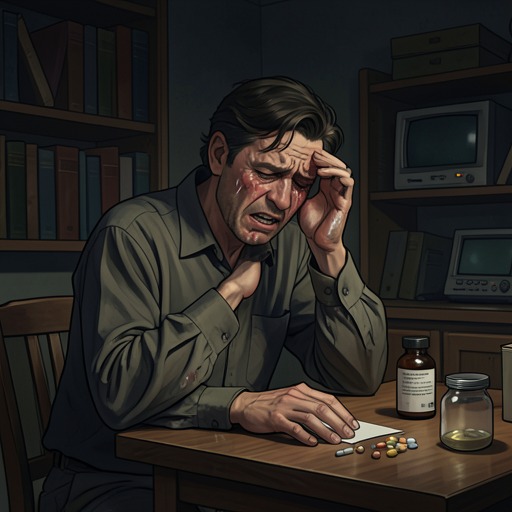
Joey died of an illicit methadone overdose on March 26, 2017, at age twenty-seven. She had lain inside a Roanoke County house for almost eight hours before anyone called 911; police were investigating, and people she had been using with had cleared the scene after she passed out, fearing prosecution. Her death was the nineteenth lethal overdose in Roanoke County’s suburbs that year. Her mother’s obituary remembered her struggle and imagined her at peace, while the account of her final hours leaves the reader with the distance between the support Joey sought and the help that reached her in time. Across her story, the intention to recover recurs, but so do exclusion, cost, delay, and the danger of being left without timely assistance.