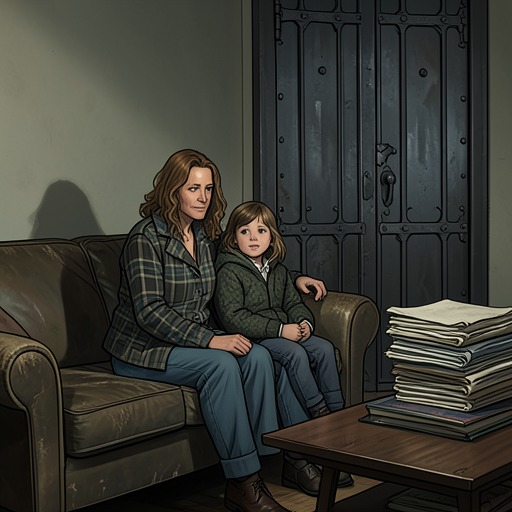
Alan Henry
DopesickAlan Henry was a doctor and the father of Tess Henry, whose struggle with opioid addiction repeatedly brought the family into conflict over treatment, support, and personal responsibility. He sought a structured residential program for Tess, but their disagreements about what help should look like persisted through her addiction and after her death.
Family and Treatment Decisions
In June 2015, nearly seven months pregnant, Tess left jail and spent a month living with her mother, Patricia, while trying to make a relationship with the baby’s father work. The attempt was disastrous. Her family then found a private treatment center two hours away that would accept her during the final month of pregnancy. Private insurance covered most of the $20,000 cost; Tess’s father paid the $6,500 deductible from the remainder of her college-savings fund. The Life Center of Galax was among the few Virginia facilities accepting patients receiving medication-assisted treatment. Tess was taking Subutex, a buprenorphine medication then recommended for some pregnant patients.
By early 2016, Alan urged Tess to enter a twelve-month residential program at the faith-based Roanoke rescue mission. The proposal collided with the conditions of her treatment and her beliefs: the mission barred medication-assisted treatment and stimulants, including cigarettes, while Tess was taking buprenorphine, smoked heavily, and identified as an atheist. His preferred plan therefore offered structure but did not accommodate the medication she was using or her stated convictions.
Helping, Enabling, and Estrangement
Alan described the boundary between helping Tess and enabling her as persistently unclear. He said that he and Tess’s siblings tended toward a tough-love approach, while other relatives, in his view, could be manipulated by her. The family’s disagreement was not simply over whether Tess needed help, but over which forms of help might support recovery and which might prolong the crisis.
Tess’s older sister, who favored Alcoholics Anonymous, urged her to follow the Twelve Steps and suggested that she could choose any higher power. When Tess later asked for money to obtain buprenorphine, her sister suspected she might use it to buy heroin and offered instead to take her to a meeting. Tess rejected the suggestion and said the two were no longer sisters; they stopped speaking. The exchange illustrates how treatment beliefs and mistrust could turn an attempted intervention into a rupture.
Tess’s Death and the Family’s Disagreement
After Tess died, Alan recalled the many ways he and other relatives had tried to help, including paying for rent, rehabilitation, and food, though he said those efforts had been concentrated in the earlier years of her addiction. He also described Tess as repeatedly making poor choices when faced with options. His account conveyed frustration alongside the record of substantial family assistance, rather than resolving the question of what support could have changed.
Tess was found dead in a Dumpster at a Las Vegas apartment complex on Christmas Eve; police were investigating. Alan speculated that she might have fallen into conflict with someone to whom she owed money, possibly a drug dealer or a pimp. Patricia rejected that theory as an unjust accusation made without knowing what had happened. The competing responses left the cause of Tess’s death unresolved in the family’s account and renewed the disagreements over blame, protection, and the limits of what relatives could do.