Janine Underwood
DopesickJanine Underwood is the executive director of the Bradley Free Clinic and the mother of Bobby Baylis, whose death from fentanyl-laced heroin led her to become the first volunteer angel in Roanoke’s Hope Initiative. Her work joined two kinds of knowledge often kept apart: the professional perspective of someone running a clinic for the working poor, and the hard-earned understanding of a parent who had tried to navigate addiction treatment for her own child. At Hope, she turned that experience into direct help for families and people seeking care, while confronting how little a volunteer program could do against a treatment system full of gaps.
Family Loss and the Treatment Maze
Underwood had spent seven years watching Bobby move between rehabilitation and jail after he became addicted to OxyContin prescribed following ACL surgery for a snowboarding injury. During a three-year prison sentence, he participated in drug treatment and trained as a journeyman in heating and air-conditioning. After his release, he returned to Roanoke on probation, found work, and lived in his mother’s basement. Underwood believed he was doing well. Three months after leaving prison, however, a visit with old friends led to a dose of fentanyl-laced heroin, and she found him dead in the basement.
The details of Bobby’s path left Underwood able to describe treatment obstacles with unusual specificity. She had discovered hypodermic needles hidden in his closet, wrapped in his baby blanket among childhood keepsakes. At the time, she did not understand the connection between pills and heroin, and she recalled having few instructions about what to do when a parent realizes a child is injecting drugs. Even her work in health care had not prepared her to navigate the privacy rules and other barriers that stood between a family and effective treatment. Her experience exposed a central contradiction: families were expected to find their way through a complicated system precisely when addiction made it difficult for them to know where to turn.
Becoming a Hope Initiative Volunteer
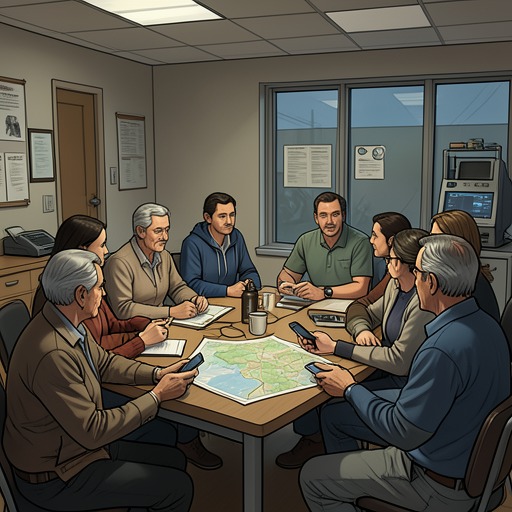
Underwood attended the first Hope Initiative meeting in fall 2015 not simply as the head of a nonprofit medical clinic, but as a mother whose son was among four people who died from fentanyl-laced heroin that June. The proposed program, based at the Bradley Free Clinic in Old Southwest, would pair people seeking help with trained volunteers, known as angels. Those volunteers would mentor participants and connect them with treatment as well as housing, mental health, and employment resources. The effort was intended to bridge the distance between health care and criminal justice rather than leave families to cross it alone.
Underwood became the initiative’s first angel, telling the police chief leading the effort that she was in. In the early months, she allowed participants to call or text her personal cellphone. Some contacts were grieving parents looking for another mother who understood their loss; others were people seeking help or simply someone willing to listen. Her readiness to answer made the program personal and accessible, but it also meant that a volunteer could become an informal crisis service without the staffing or professional support such a role required.
The limits became painfully clear when a young user named Matthew told Underwood that he was suicidal. They spoke repeatedly over several days, but he died by suicide the day before he was due to come to the clinic. Underwood said the experience left her feeling that she was becoming a crisis center and that she was in over her head. The following week, a woman brought to the clinic by police showed signs of an overdose inside; staff called emergency services, and several doses of Naloxone were needed to revive her. She did not return despite Underwood’s follow-up messages. Each encounter demanded immediate attention, while the next step toward sustained treatment remained uncertain.
Work Under Pressure
The program’s early numbers captured the gulf between making contact and securing care. Twenty-two people came to Hope in its first month. Some continued to call and text and showed repeated interest in treatment, but none entered residential care, and only a handful obtained outpatient medication-assisted treatment. Underwood worked in a setting where people sometimes used drugs in the clinic parking lot; police chose not to intervene because they understood that arrest could discourage people from coming for help. She was not initially persuaded by harm-reduction approaches or medication-assisted treatment, but she tried to remain open-minded as the obstacles became harder to dismiss.
One particularly demanding case involved John, a ten-year heroin user who had been a friend and fellow user of Bobby. After trying to detox at home, John’s family took him to a hospital while he was seriously ill. Underwood spent eight hours in the emergency room with him and his relatives, comforting him as he struggled through withdrawal. She had arranged a rare direct admission from the hospital to detox, avoiding a wait for a bed, but the handoff did not end the danger of losing him from care. On the third day, John was already asking his father to take him home.
When John was due to leave detox, a Hope volunteer working with his father arranged a place for him at an out-of-state treatment center. Underwood helped make the transfer possible: she persuaded the detox center to keep him for another day and arranged an off-site meeting between John and his family because the facility would not allow the meeting on its premises. The family misrepresented the meeting as outpatient counseling so that John would attend; a retired police officer hired by his father was prepared to escort him to treatment if necessary. Underwood later acknowledged that she appealed to John through his connection to Bobby. The episode showed how much coordination and personal intervention could be required to convert a hospital visit into a chance at longer-term treatment.
The Scale of the Crisis
Underwood’s work unfolded amid sharply increasing overdose calls: during the first six months of 2016, Roanoke city and county recorded 85 fentanyl-overdose calls, compared with 38 in the same period the year before. Local clinicians and Hope Initiative organizers tried to build a smoother transition from emergency care to medication-assisted treatment and counseling, but they faced shortages of treatment providers and detox beds, as well as bureaucratic, financial, and legal barriers. A grant application intended to improve that handoff was unsuccessful. The need for a coordinated response was evident, but the means to provide one remained incomplete.
Underwood’s own exhaustion became part of the story of those limits. After passing out from stress-related vertigo at work on a Saturday, she needed emergency medical assistance. The program’s carefully maintained spreadsheet of participants could record contact and interest, but it could not create residential beds, expand access to medication, or ensure that someone would stay in treatment. Underwood had entered the work hoping to help people move through the system; she learned that the system could fail at multiple points even when a volunteer was prepared to make calls, accompany a family, or keep answering a phone.
Public Silence and Continuing Commitment
By early fall 2017, fourteen months after Bobby’s death, Underwood was increasingly despairing that repeated overdoses and deaths had not produced greater public awareness. Bobby’s old friends continued to visit Hope. Some had used drugs for nearly a decade and were exhausted by their lives, yet frightened of giving them up. One visitor broke down after realizing that Underwood was Bobby’s mother; his own mother had driven him to the clinic but waited outside in her car, ashamed. Underwood encountered not only the isolation of people with addiction, but also the shame that kept their families at a distance from one another.
She also tried to bring the crisis into public institutions. Speaking to the local school board and county officials, she described what was happening in Hidden Valley and asked for support for risk-prevention work. She had once sought the Hidden Valley school zone because she thought its affluence made it a better place to raise children; instead, the community’s prosperity had not prevented addiction, and shame and inaction had helped keep the problem out of view. After Underwood spoke, the room fell silent. The school board declined to support the program, and the county provided its customary $2,000.
Underwood’s significance lies in the distance between her willingness to help and the resources available to make help last. Bobby’s death brought her into the Hope Initiative, but her clinic experience and the cases she encountered made the epidemic’s institutional failures concrete: a person might reach a hospital, a volunteer, or a detox facility and still face a missing bed, a treatment delay, or a disrupted handoff. Her service did not resolve those failures. It made their human cost visible through the repeated work of listening, calling, accompanying families, and trying again.