Steve Loyd
DopesickSteve Loyd is a physician, addiction-treatment advocate, and person in long-term recovery whose life joined the clinical and personal dimensions of the opioid crisis. His account of addiction was not a distant case study: before seeking help, he had manipulated access to pain medication, and his recovery depended on years of treatment and monitoring. He later helped lead the collaboration that opened Overmountain Recovery in Gray, Tennessee, where his experience became both a public argument for treatment and a way to answer the fears of a skeptical community.
Identity and Background
Loyd was a physician with local roots who became a co-leader of the working group that developed Overmountain Recovery. His history as a physician who had been addicted to opioids shaped how he presented the proposed clinic to people in his hometown. Rather than speak about addiction only in general terms, he could describe the choices and consequences in his own life, including the professional and personal safeguards that supported his recovery.
Loyd’s recovery began after his father confronted him about his addiction in 2004 and required him to get help. He entered ninety days of inpatient rehabilitation, followed by five years of random drug screening, support services, and intensive monitoring. That course differed sharply from the short residential programs familiar from popular culture. Loyd argued that twenty-eight days was not a scientifically adequate treatment period: he said recovery could require at least ninety days before judgment and insight began to return, and sometimes two years before those capacities were fully functioning.
Addiction, Treatment, and Accountability
Before treatment, Loyd doctor-shopped among his colleagues, took medication from relatives’ medicine cabinets, and feigned an ankle injury so that orthopedic surgery would leave him with painkillers. His father’s intervention brought those behaviors to an end, but Loyd’s account did not present recovery as a single completed act. He described a sustained structure of accountability, with clear consequences for relapse and ongoing professional oversight.
A central condition of that structure was the possibility that his medical license could be revoked if he relapsed or made a critical medical error while treating a patient. Even after becoming Tennessee’s assistant commissioner for Substance Abuse Services, Loyd continued to check in daily through a cellphone app for the possibility of a random drug screen. He was tested at least four times a year. The scar on his left ankle remained a physical reminder of how far his addiction had taken him, while the daily check-in connected that past to the responsibilities of his present life.
Loyd believed that the five-year treatment model commonly used for addicted physicians and airline pilots was an ideal, though difficult to extend to everyone. His own treatment had cost him $40,000 up front; limited insurance coverage later became available, but he estimated that the cost would be nearly twice as much by the time of his 2017 account. He cited recovery rates of 70 to 90 percent for these highly monitored professional programs, contrasting their length and support with the limited options available to most people. He noted that only one in ten Americans with substance-use disorders received any treatment at all, a shortfall that strengthened the case for outpatient medication treatment and diversion from jail into care.
Building Overmountain Recovery
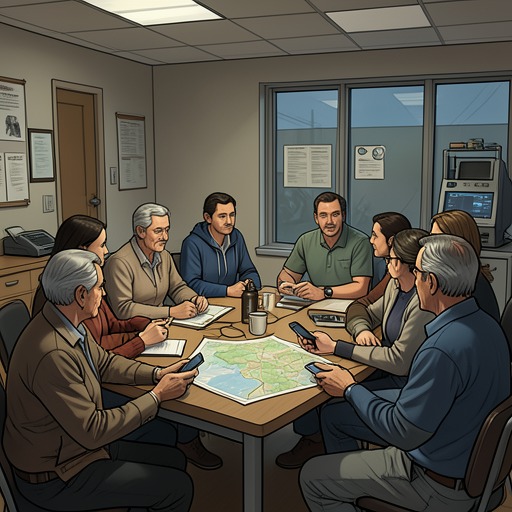
Loyd and public health professor Robert Pack led a coalition that brought together a university, a regional nonprofit hospital corporation, and the state mental health agency. The working group had secured $2.5 million in grants, funded eight projects, developed twenty-five research proposals, and opened a Center for Prescription Drug Abuse focused on research. Overmountain Recovery was its next major effort: a rural treatment clinic intended to provide more than medication, combining treatment with group and individual counseling, yoga and other alternative therapies, and job-training support.
The clinic was planned for Gray, Tennessee, a middle-class community of farmers and suburban residents near Daniel Boone High School. It was designed to offer a treatment option where the nearest existing methadone facility had been about sixty miles away over a mountain. The clinic would primarily provide methadone, a less costly medication that could be administered as a daily liquid dose under a nurse’s observation, while also eventually offering Suboxone. Its name invoked the Overmountain Men, local farmers and frontiersmen associated with the Battle of Kings Mountain, and paired that regional history with the clinic’s purpose: recovery.
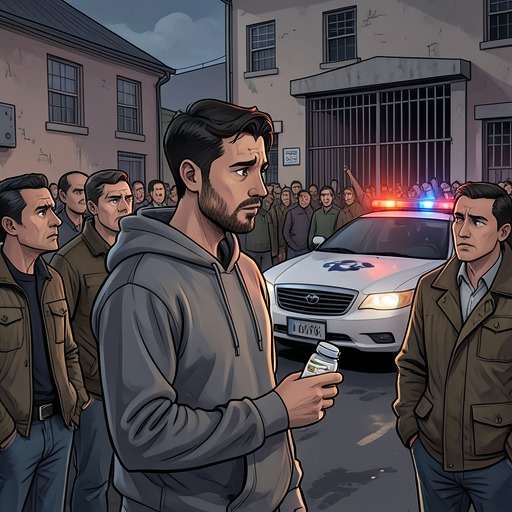
The proposal met sustained opposition. Citizens to Maintain Gray, a group led by a respected local farmer, worried that patients receiving methadone would be unsafe drivers. Some opponents accepted the need for treatment in principle but did not want the clinic in their own community; some privately acknowledged to Loyd and Pack that their sons were affected by addiction. The working group responded by listening to residents and bringing in police chiefs and treatment providers from other communities, along with studies intended to address safety concerns. In a town of 1,222 people, more than 300 spoke publicly against the project, and some called Pack and Loyd drug lords. After more than a year of public opposition, the clinic opened in September 2017 and won near-unanimous approval from the city zoning board and the state.
Treatment Access and Criminal Justice
Loyd argued that medication should remain available to people in recovery, including those who relapsed, and that drug courts should not bar participants from medication prescribed for opioid addiction. He maintained that such exclusions violated the Americans with Disabilities Act and compared denying addiction medication to withholding insulin from a person with diabetes. His position challenged the assumption that using medication meant a person was not truly in recovery, and emphasized the difference between close monitoring and denying effective care.
That argument also illuminated the unequal treatment of people caught in the crisis. The book records a repeated public claim that the epidemic could not be solved by arresting people, while noting that the sentiment was often applied to white opioid users but not to Black people such as Ronnie Jones, who was imprisoned for armed heroin distribution. Loyd’s advocacy for treatment took place within this wider tension between public health and punishment: he supported monitoring and accountability, but rejected a system that used those tools to exclude people from medication and care.
Forgiveness and Narrative Significance
Loyd’s work joined recovery to a language of persistence. When a woman questioned the repeated reversal of overdoses, he answered with the biblical phrase, “Seventy times seven,” invoking forgiveness without placing a limit on how many times someone might need help. The moment condensed his approach: relapse and repeated crisis did not, in his view, erase a person’s claim to treatment.
The account positions Loyd as both a practitioner and an advocate whose authority came partly from having experienced addiction himself. He helped translate that experience into a clinic, a regional research and service partnership, and a defense of medication-based treatment. Overmountain Recovery’s opening did not remove the barriers to care: the book describes long waits, high costs, limited treatment availability, and persistent resistance. But Loyd’s role in the project demonstrated how local collaboration could overcome some institutional rigidity, while his own continuing monitoring showed that recovery was represented not as a finish line but as a sustained practice.