Bryan Stevenson
DopesickBryan Stevenson is a lawyer and the founder associated in the book with the Equal Justice Initiative, whose analysis challenges the assumption that drug addiction is best answered by punishment. In conversations about Ronnie Jones and the opioid crisis, Stevenson links criminal justice to public health: incarceration can perpetuate exclusion, while diversion, housing, employment support, and treatment can address conditions that help sustain drug-related harm. His significance lies not in a personal plot arc, which the book does not provide, but in the alternative framework he brings to its account of addiction and reentry.
Identity and Intellectual Context
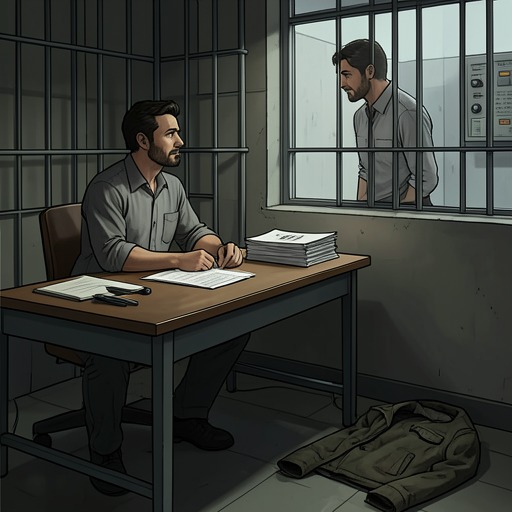
The book introduces Stevenson through his writing and his legal work. During a prison interview with Ronnie Jones, the narrator mentions having listened to the audiobook of Michelle Alexander’s The New Jim Crow, a critique of mass incarceration and its racial consequences. Jones says he has read the book twice. He has also read Stevenson’s Just Mercy, a memoir of Stevenson’s legal work on behalf of people facing racial bias and economic inequality in the criminal justice system, including people wrongly accused in death-penalty cases. Jones says the book moved him to tears.
That exchange places Stevenson’s work within the world Jones is describing from prison. Jones is serving his third prison term; the book sets his experience against a system in which a felony record can impede a return to the mainstream economy and contribute to a cycle of incarceration and joblessness. The narrator contrasts the punitive outlook represented by Bill Metcalf, the agent whose work helped send Jones to prison, with the structural critique associated with Alexander and Stevenson. In that account, mandatory minimums, three-strikes laws, abolished parole, and stop-and-frisk policing are not simply neutral tools of enforcement: they belong to a broader history of policies shaped by fear and racial inequality.
Reentry, Diversion, and the Conditions of Change
Stevenson’s argument becomes concrete in the book’s counterfactual about Jones’s return to the community. Rather than leave reentry to an overburdened system, the narrator considers what might have happened if workers from the Equal Justice Initiative had helped Jones move to a city such as Seattle, where jobs and harm-reduction services were more plentiful. In the model described, police could divert addicted people accused of low-level drug or prostitution offenses before booking them, then help connect them with housing, case management, and employment services.
The proposal has two connected aims. It recognizes that people leaving prison need legitimate work and practical support, and it addresses the demand for drug dealing by making alternatives more attainable. The passage does not say that Stevenson or the Initiative intervened in Jones’s case; rather, it uses their approach to ask what a different reentry system could look like. The distinction matters: the example is a policy alternative, not a reported rescue or a claim that the barriers Jones faced were resolved.
Stevenson also presents the question in terms of public investment. He argues that reducing the prison population by a quarter could save $20 billion, and that investing half those savings in treatment could improve the likelihood of success for people leaving prison. The figures give his argument a practical dimension: treatment is not presented only as a moral preference, but as an alternative use of resources otherwise directed toward incarceration. In the book’s wider comparison, the contrast is between a system that returns people to the same obstacles and one that makes housing, work, and care part of reentry.
Addiction as a Public-Health Problem
Stevenson traces the dominance of punishment to a political choice made in the 1970s, when the United States chose to address drug addiction and dependence as a crime problem rather than a health problem. He explains that criminalizing a new community was politically popular, while fear and anger helped make that approach persuasive. As the image of addicts as criminals became embedded in public thinking, Stevenson argues, people grew indifferent to alternatives that might have eased barriers to treatment.
Portugal supplies his example of a different policy direction. In 2001, the country decriminalized all drugs, including cocaine and heroin, and added assistance with housing, food, and employment. The book reports that Portugal subsequently had the European Union’s lowest drug-use rate and significantly lower rates of drug-related HIV and overdose deaths. Resources once spent prosecuting and imprisoning people with drug addictions were redirected toward treatment. Stevenson’s comparison does not reduce policy to a single statistic: it emphasizes the accompanying material support and the decision to transfer resources from punishment to care.
This argument resonates with the book’s account of racial disparities in opioid exposure and enforcement. The text reports that doctors prescribed painkillers to people of color at lower rates than to white patients because they were less trusted not to misuse them; by 2014, young white people were dying of overdose at three times their 2002 rate, while the death rate for people of color was relatively unchanged. At the same time, people of color were disproportionately represented among drug offenders in prison. Stevenson’s framework helps explain why a call to stop relying on arrest cannot be treated as universal if it is applied more readily to predominantly white opioid users than to Black and Hispanic people prosecuted for drug distribution. The book uses that disparity to expose the unequal reach of both medical suspicion and criminal punishment.
Political Responsibility and the Possibility of Hope
Stevenson extends the argument from criminal justice to political accountability. He urges voters to judge politicians at every level by the literal health of their communities. The book situates that appeal amid broad support for federal health-care financing and a narrower majority supporting single-payer care, while noting that such reforms may remain politically difficult until more voters define themselves in opposition to the wealthy class exercising influence in Washington. Stevenson also calls for greater efforts to engage nonwhite voters, including Hispanic, Black, and Asian American communities; the passage gives registration figures of 74, 69, and 57 percent, respectively.
His concern is not only whether policymakers possess resources or expertise, but whether leaders respond with urgency. He compares the energy shown in responses to HIV, smoking, and Zika with the lack of a similarly determined public stance on addiction. In the book’s account, hopelessness can become self-reinforcing: when people no longer expect a response, they may stop trying to demand one. Stevenson’s insistence that the crisis is unacceptable therefore joins policy design to political imagination. Treatment, employment, and housing are necessary interventions, but their availability depends on a public willing to regard addiction as a health issue and to hold leaders accountable for community well-being.