Jamie Waldrop
DopesickJamie Waldrop’s significance in the Roanoke story lies in the way she transformed a family’s private crisis into sustained work on behalf of other families and people seeking treatment. A civic leader and surgeon’s wife, she was also the mother of two sons who became addicted first to pills and then to heroin. Her experience gave her a close view of how treatment, recovery, relapse risk, family resources, and public systems collided—and helped make her a source of support well beyond her own household.
Identity and Family Crisis
Waldrop’s family entered the epidemic through two sons whose lives were affected by opioid use and other drugs. She did not initially understand how severe their addiction had become. In separate incidents at home, she found her older son incapacitated after taking Xanax with painkillers, and her younger son, Christopher Waldrop, in a drug-related crisis. The discoveries made the scale of the problem impossible to treat as a distant concern or a matter that could be managed simply by keeping it private.
The family tried multiple forms of care. Outpatient Suboxone programs did not work for them, according to the family; residential rehabs and aftercare sober-house programs were also part of the effort, and two of those programs eventually did help. Across treatment alone, the Waldrops spent more than $300,000. That amount did not include drug-related legal expenses or losses tied to stolen checks and credit-card bills. Gift cards were traded to dealers for drugs; a $200 card, Waldrop explained, might bring only $120 worth of pills. The expenses show how addiction could draw a family into repeated treatment costs while also generating financial harm at home.
Christopher’s course included periods of sobriety as well as renewed risk. After four months without using, he left an aftercare program in Asheville against his counselor’s advice and returned home. Waldrop suspected that he was close to relapsing, or might already have done so. On the following Mother’s Day, with her husband out of the country and uncertain what to do, she called Drenna Banks and asked her to come over. Christopher described being tired of the rules and wanting to drink again. The episode captures a recurring pressure in Waldrop’s life: a return from treatment did not resolve the family’s uncertainty about what might happen next.
From Isolation to Mutual Support
Waldrop and Banks first met at a Families Anonymous meeting in a Lutheran church on the outskirts of Hidden Valley. Both had sons affected by opioid addiction, and their sons had been friends and used drugs together. They had briefly crossed paths through friends at North Cross, the private school Christopher attended. The meeting connected two families who had initially responded to the crisis by withdrawing from others.
Before finding one another, both women had experienced the isolation common among parents facing a child’s addiction. Waldrop avoided friends because ordinary questions about how her children were doing had become difficult to answer. At the meeting, she and Banks recognized that their family situations were strikingly alike. Their friendship offered a way to speak openly about experiences that shame had made hard to disclose, and it developed into practical support rather than remaining only an exchange of sympathy.
Waldrop’s support also extended to young people in her sons’ social circle. While Christopher was away at rehabilitation and not allowed to come home, she made a point of sitting beside one of his high-school friends at a service. The gesture placed her in a familiar supporting role at a time when her own son was absent. The book’s account presents this as part of a wider pattern: family connections formed through addiction and loss could draw parents into caring for people beyond their immediate households.
Recovery, Relapse Risk, and Ongoing Relationships
The overlap among families in the Hidden Valley circle became increasingly visible. Waldrop’s sons had known Bobby Baylis, Janine Underwood’s son, who later shared a court-ordered halfway house with Spencer Mumpower. Waldrop’s older son had also dated Tess Henry. These connections placed her within a network where treatment, court involvement, friendship, and family support were not separate stories; the same people and relationships appeared across them.
Waldrop later reached out to Tess through Facebook while the Hope Initiative was still months from opening. She offered to help and suggested she might know of a program suited to Tess. Tess wanted Waldrop to find a long-term rehabilitation program. Waldrop was concerned that once withdrawal became severe, Tess might seek release and return to using before treatment could be arranged. Her concern was not abstract: the timing of help mattered, because the period when someone was willing to enter treatment could close quickly.
That urgency also shaped her practical approach to transitions between services. When John was due to leave detox, a Hope volunteer working with his father arranged for him to fly to an out-of-state treatment center, while Janine Underwood had to make the transfer happen. Janine persuaded the detox center to keep him one more day and arranged an off-site family intervention because the center would not permit the meeting on its grounds. Waldrop’s work with the Hope Initiative took place in this kind of narrow interval, when a referral alone was not enough and family members had to coordinate the next step before the opportunity disappeared.
The Hope Initiative and Treatment Access
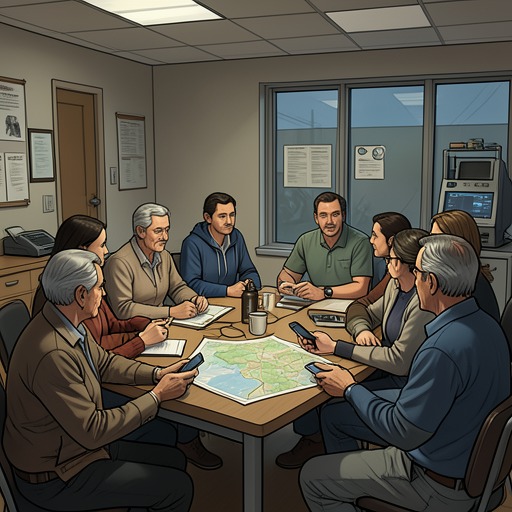
In 2016, psychologist Cheri Hartman joined Waldrop, Janine Underwood, and local police officers in an effort to divert Roanoke residents who used drugs from jail into treatment. The initiative confronted obstacles that were both administrative and cultural. Cheri Hartman and her husband, psychiatrist David Hartman, encountered bureaucratic delays, political indifference, and stigma toward buprenorphine as a treatment for opioid-use disorder. Waldrop’s own family had tried outpatient Suboxone programs without success, but her experience did not lead her to dismiss medication-based care; her public work instead focused on making treatment reachable.
At the Hope Initiative’s first meeting, participants concentrated so heavily on barriers that Waldrop worried the project might fail before it began. She privately contacted Police Chief Campanello in Massachusetts and asked him to speak with the working group by conference call. She even proposed the point she wanted him to make: waiting to solve every obstacle before starting would leave people without help while deaths continued. By the end of 2015, overdose deaths had continued to rise nationally, and HIV cases associated with sharing contaminated heroin needles were increasing in rural southwestern Virginia. Against that background, Waldrop argued for beginning the work despite unresolved problems.
The initiative’s efforts were not limited to planning. Waldrop contacted Tess directly, and she helped with efforts to connect people with care, including the planning for an airport transfer after a hospital stay. She and others understood that transportation could determine whether a treatment plan became an actual admission: without a car waiting to take Tess from the hospital to the airport, Waldrop believed she would not go. These details show the initiative’s practical scale, from conversations about treatment options to the logistics required to get someone to a program.
Narrative Role and Significance
Waldrop’s story brings the family experience of addiction into contact with the institutional divide between criminal justice and health care. Parents and volunteers tried to keep people alive and guide them toward care while stigma and procedural barriers could leave treatment out of reach. Her work did not erase those gaps, and the evidence does not establish that every attempt succeeded. Instead, it shows how she repeatedly acted within them: sharing the knowledge acquired through her sons’ treatment, connecting families, advocating for an initiative, and attending to the concrete steps between crisis and care.
Her trajectory also complicates the notion that a family’s resources guarantee a straightforward route through addiction. The Waldrops could pay for extensive treatment, yet the costs were substantial, some programs did not work, and Christopher’s return from rehab still brought uncertainty about relapse. Waldrop’s subsequent work made that knowledge useful to others. The movement from concealment toward mutual aid—from avoiding friends’ questions to calling Banks, supporting young people in her sons’ circle, and building pathways into treatment—makes her a central family advocate in a story about an epidemic sustained not only by drug supply, but also by the difficulty of securing continuous, acceptable care.