Hisi
KalevalaHisi is presented less through a personal history than through the threats and wild creatures connected to its name. Its reach extends from a hunting ground where a moose is summoned to the serpent-field that Ilmarinen must plow; in the account of that ordeal, Hisi is also identified as the source of the snakes’ venom. Together these appearances make Hisi a force associated with wilderness that heroes must confront or master.
Identity and Domain
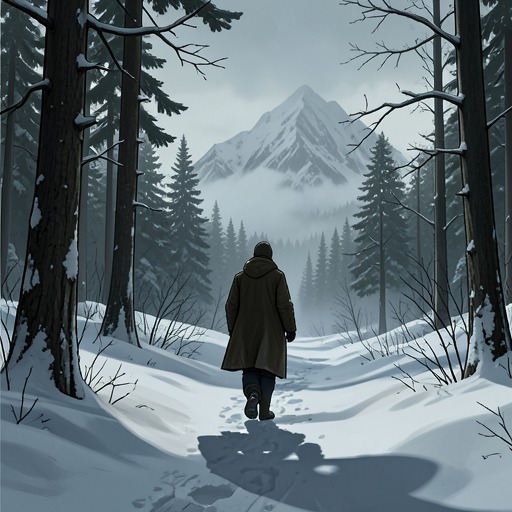
Hisi is called evil in the descriptions of its realm. That realm is placed in the high mountain country of Tapio, where the hunters pursue the wild moose. The landscape is not merely a backdrop: it locates the danger in remote country and gives the pursuit a supernatural dimension. Hisi’s name also marks the serpent-field as a perilous place, linking the threat of venom to the same hostile domain.
The evidence does not give Hisi a physical appearance, origin story, or sustained personal voice. Instead, it makes the figure legible through effects: a wild animal is called into the hunt, and the snakes’ poison is traced to Hisi. The result is a character whose presence is felt through agency and attribution rather than through a narrated biography.
The Moose Hunt
During the pursuit of the wild moose, Lemminkainen’s measures are heard by Hisi. Hisi responds by calling the moose, turning the animal’s appearance into an act of supernatural opposition rather than an ordinary encounter in the forest. The sequence places Hisi in conflict with the hunters without describing a direct confrontation between Hisi and Lemminkainen.
The pursuit moves through the realms of Lempo and evil Hisi, into Tapio’s highest mountain region, as the hunters start the herds and drive the quarry onward. Hisi’s intervention thus belongs to a landscape shared with other named powers and beings, not to an isolated lair. The moose hunt is one instance of the poem’s larger pattern in which a hero’s task depends on navigating a natural world that can answer, resist, or be summoned by supernatural agents.
The Serpent-Field and Ukko
Hisi’s other clear association is the serpent-field that Ilmarinen must plow as a condition of winning the maiden. The task is defined by its danger: the field is filled with hissing vipers, and the hero must plow it without touching either beam or handles. Hisi is therefore connected to a trial in which success depends on facing a threatening natural force under exacting conditions.
When Ilmarinen stills the snakes, their origins are divided between two powers. They are described as creatures made by Ukko, while their venom comes from Hisi. This distinction gives Hisi a specific, limited place in the poem’s supernatural order: it is associated with the harmful poison, but Ukko is named as the greater master. The snakes are told to keep their heads beneath the heather and return toward Mana’s kingdom; should they raise their poison-heads, Ukko will strike them with iron-pointed arrows. Hisi’s influence is real, but the episode places it beneath a higher divine authority.
Narrative Role
Across the hunt and the wooing trial, Hisi is linked to dangers that interrupt or complicate human aims. Its intervention in the moose pursuit makes the wilderness an active opponent; its association with venom gives the serpent-field its lethal potential. Yet neither episode makes Hisi the sole power governing events. The hunters move through country also associated with Lempo and Tapio, and the snakes’ creation and restraint are attributed to Ukko.
This indirect characterization gives Hisi a compact but distinct role. The poem does not develop a personal arc for the figure; instead, it uses Hisi to name the hostile agency behind particular natural threats. The contrast between Hisi’s venom and Ukko’s greater authority is especially important: danger has a supernatural source, but it can still be addressed through a hierarchy of powers and, in Ilmarinen’s trial, through the hero’s successful action.