Wirokannas
KalevalaWirokannas is the gray-bearded ruler of the wilderness who presides over the final recognition of Mariatta’s child. Carrying holy water, he initially refuses to baptize the infant until the child’s worthiness has been tested; after calling Wainamoinen to judge him, Wirokannas gives the child his blessing and the rights of royal heirship. His change of decision makes him the figure who turns a contested birth into an acknowledged succession.
Identity and Appearance
Wirokannas appears in the episode as an old man, marked by his gray beard and identified as the ruler of the wilderness. The poem gives no further account of his origins, family, or earlier deeds in this scene. His authority is conveyed instead through his titles and actions: he arrives with a cup of holy water, speaks on the question of baptism, summons Wainamoinen, and ultimately confers the child’s blessing and heirship.
The combination of wilderness rule and baptismal authority gives Wirokannas a distinctive position in the episode. He is associated with a domain outside ordinary settlement, yet he takes part in a public act that determines whether the child may be received and blessed. The scene does not explain how his jurisdiction works or define a formal office. It presents his authority through the sequence of ritual acts and decisions he performs.
The Baptismal Encounter
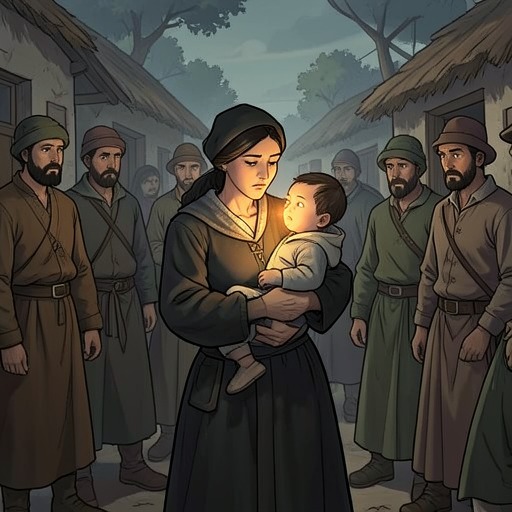
When Mariatta seeks the priesthood to baptize her son, Wirokannas arrives with holy water. His first response is refusal: he will not baptize a child he suspects may be a wizard or the son of witchcraft. He does not treat the rite as automatic. Before granting it, he asks that the child’s worthiness be established, making judgment a condition of blessing.
Wirokannas therefore acts both as a gatekeeper and as the person responsible for carrying out the ritual. The same cup of holy water that signals the possibility of welcome also stands behind his power to withhold it. His refusal is not the episode’s last word, however. Rather than decide the matter alone, he calls Wainamoinen, the ancient wisdom-singer, and directs the question toward an older authority. The child’s acceptance is thus staged as a judgment, not simply as a ceremony performed at Mariatta’s request.
The scene places several kinds of authority alongside one another without reducing them to a single source. Mariatta brings her child for baptism; Wirokannas has the water and initially controls access to the rite; Wainamoinen is summoned to assess the child. Wirokannas’s role changes as the encounter proceeds: he begins by withholding religious recognition, but ends by giving a blessing and acknowledging the child’s claim to succession.
Recognition and Heirship
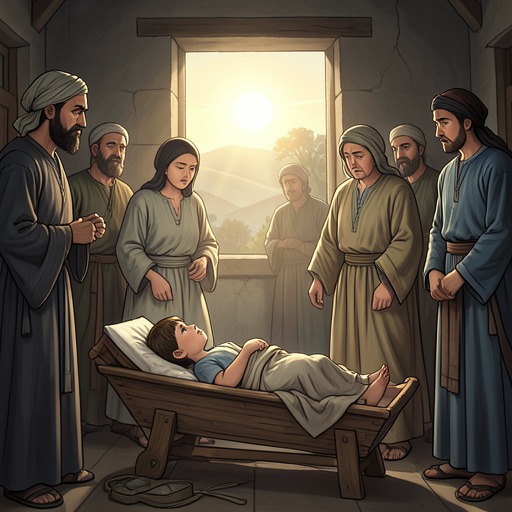
After the judgment, Wirokannas touches the child with holy water, gives him his blessing, and grants him the rights of royal heirship. The touch makes the decision concrete: the earlier suspicion gives way to ritual acceptance. The grant is more than permission for the child to live. Wirokannas declares him free to grow into a hero and a mighty ruler, connecting the infant’s future with public authority.
This ending sharply reverses the terms of Wirokannas’s initial refusal. At first, the possibility of witchcraft makes baptism dangerous in his eyes; by the close, he does not merely baptize the child but authorizes a future for him. The account does not say that Wirokannas’s own rule passes to the infant, or specify how the child will exercise royal power. What it establishes is recognition: the child is granted the status and freedom associated with an heir, rather than being left under the suspicion that first obstructed the rite.
Narrative Role
Wirokannas is important because he gives the episode’s decision institutional and ritual force. Wainamoinen is summoned to judge, but Wirokannas performs the final acts of blessing and investiture. His part is brief, yet it supplies a decisive change in the child’s standing: a birth first approached with suspicion ends in sanctioned heirship.
The episode also turns on the contrast between judgment and welcome. Wirokannas does not ignore the fear that the child may be associated with witchcraft; he makes that fear the reason to demand an assessment. Once the assessment has occurred, however, his response is not continued exclusion. Holy water, blessing, and royal rights replace refusal. The character’s significance lies in that reversal, and in the way his authority makes the child’s acceptance visible and consequential.