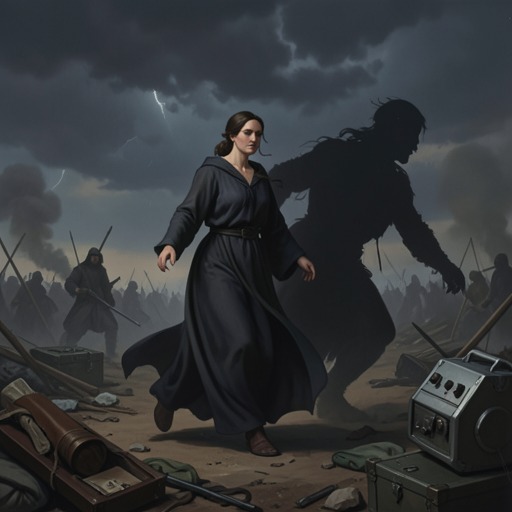
Nasshut
KalevalaNasshut is a blind and crippled shepherd of Pohyola, also identified with the flocks of Sariola. Though the poem repeatedly describes him as wretched and poor, it gives him a consequential role: beside the death-land river, he sends a serpent from the stream, and Lemminkainen later names him when recounting the encounter to his mother.
Identity and Setting
The poem presents Nasshut as a shepherd of Pohyola and its flocks, placing him at the boundary of the death-land. He stands beside its river, near the cataract, sacred stream, and whirlpool. The surrounding description gives him a bow, a quiver, and a single arrow, details that frame him as armed even as the narrative emphasizes his blindness and lameness.
His introduction belongs to the episode designated Rune XIII, “Lemminikainen's Second Wooing.” The setting is more than a place of passage: Nasshut acts from the death-stream itself, so the danger he unleashes is bound to the threatening landscape around him.
Action and Consequences
Nasshut sends a serpent from the death-stream, its speed compared to an arrow loosed from a crossbow. The action is brief but direct: he is not merely a witness beside the river but the one who launches the creature. The passage links his attack to the peril surrounding Lemminkainen's journey through this death-haunted setting.
When speaking to his mother, Lemminkainen identifies the attacker as Nasshut, describing him as the decrepit shepherd of Sariola and again stressing that he is blind, lame, poor, and wretched. This later naming connects the river encounter to a specific person and confirms Nasshut's place in Lemminkainen's account of what happened.
Characterization and Narrative Role
Nasshut's characterization rests on a stark contrast: the poem dwells on his physical impairments and poverty, yet assigns him an effective act of violence. His blindness and lameness do not prevent him from sending the serpent; the bow and single arrow in the surrounding description further associate him with the means of attack, though the serpent itself is his decisive weapon.
The narrative gives little account of his life beyond shepherding, his condition, and this encounter. Within those limits, he functions as an armed and dangerous figure at the death-land river, whose brief intervention helps turn the landscape's latent menace into an immediate threat for Lemminkainen.