Untamo
KalevalaUntamo occupies two related but distinct places in the Kalevala: he is identified in the mythological survey as the god of dreams and personification of indolence, and he appears in the Kullervo narrative as Kalervo’s brother and the head of a community destroyed by Kullervo. The contrast gives the name a double force. In one register it marks a divine association with inactivity; in the other, it belongs to a human history set in motion by settlement, grievance, and violence.
Identity and Mythological Characterization
In the account of Finnish deities, Untamo is the god of dreams and is consistently characterized as the personification of indolence. The description is compact: unlike a character who develops through a sequence of decisions, this Untamo is presented as an embodiment of a condition. Dreams and inactivity are joined under his name, placing him among the deities associated with human existence rather than with wisdom, law, or justice.
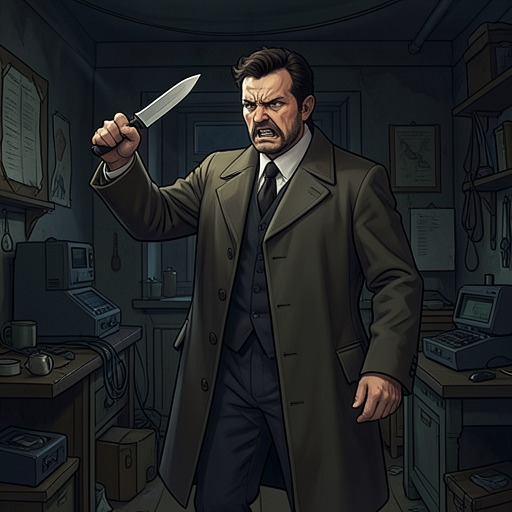
This mythological designation should be distinguished from Untamo’s role in the Kullervo episodes. The narrative identifies the latter through family ties, place, and deeds: he is associated with Pohyola, sets fish-nets in Kalervo’s waters, threatens his brother’s people, and later holds power over Kullervo’s fate. The name’s mythological association with indolence does not itself explain those actions. Instead, the two portrayals set a personified quality beside an active, consequential antagonist.
Settlement and Family Conflict
The account of the brothers gives each a different direction of travel and a different home. Kalervo journeys to Karyala, where he flourishes under that name; his brother hides in Pohyola and becomes known as Untamoinen. The naming passage thus ties identity to separation and settlement: the brothers are introduced through where they go and the names by which they are known. Untamoinen is an alias of Untamo, not a separate character.
The first specific action associated with Untamo is setting fish-nets in the waters of Kalervo. Kullervo sees those nets, placing him in the narrative at the point where Untamo’s activity enters Kalervo’s territory. The episode establishes proximity between the households, but the surviving details here do not specify the catch or make the nets the cause of the later threat. That distinction matters: the account records a concrete crossing of boundaries before it records an explicit threat, without spelling out every link between them.
A sharper conflict follows when Kullervo’s dog tears Untamo’s sheep apart. Untamo responds by threatening to annihilate the people of his brother, Kalervo. The immediate injury is to his flock, but the threatened retaliation falls not on the dog alone, nor only on the person responsible: it is directed against the whole community. The passage makes that escalation the defining act in the brothers’ feud, turning a loss of livestock into a threat of collective destruction.
Untamo’s Power over Kullervo
Later, Untamo considers what to do with Kullervo, whose work brings ruin to whatever task he touches. He announces an intention to carry the youth to Ehstland and sell him in Karyala to the blacksmith Ilmarinen. This episode presents Untamo not merely as a brother in a feud but as someone able to dispose of Kullervo through forced transfer and sale. Kullervo’s destructive reputation is given as the circumstance behind the proposed transaction; the passage does not present the plan as an act of reconciliation or care.
The intended sale also redirects the story beyond Untamo’s own household. Ilmarinen is the named destination of Kullervo’s transfer, while Karyala is the place in which the sale is proposed. Untamo’s decision therefore becomes a hinge in Kullervo’s trajectory: after being held under Untamo’s authority, the youth is marked for another form of subjection. The evidence establishes the plan and its intended destination, rather than supplying further detail about the transaction itself.
Defeat and Narrative Significance
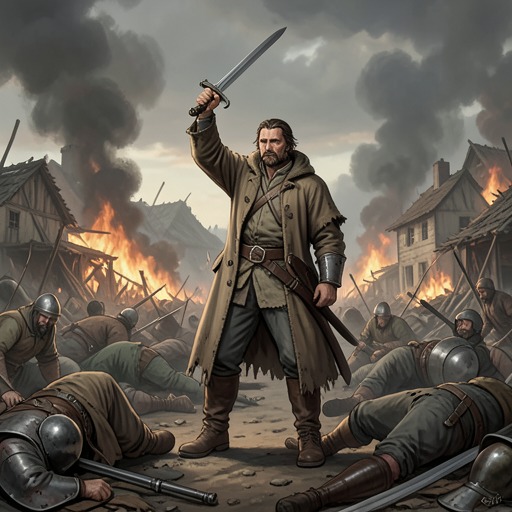
Untamo’s community ultimately suffers the kind of destruction he had threatened against Kalervo’s people. Equipped with a blade of magic powers, Kullervo slays the people of Untamo and burns their villages to ashes. The account names the people and villages as the objects of his attack; it does not state that Untamo personally dies. His ending in the supplied narrative is therefore best described through the destruction of his power and community, not through an unrecorded individual fate.
The reversal binds the feud’s beginning to its consequence. Untamo answers damage to his sheep with a threat against his brother’s people; later, Kullervo turns violence back upon Untamo’s people and their homes. Yet the reversal does not restore the earlier household or settle the conflict through agreement. It culminates instead in killing and burning, extending the cycle of harm. Across both portrayals, Untamo’s significance lies in the contrast between a brief divine label and an expansive human consequence: the god of dreams is defined by indolence, while the narrative figure named Untamo helps set in motion a chain of coercion and revenge.