Kyllikki
KalevalaKyllikki is the fair and winsome maiden of Sahri, remembered both for her independence from suitors and for the oath she makes with Lemminkainen. Her story turns on a sharp contrast: she first appears as someone who has favored neither gods nor heroes, yet marriage places her within a binding compact; when she goes to a village dance in her husband’s absence, that private promise becomes the hinge of a larger separation.
Identity and Background
Kyllikki is introduced as a maiden living in Sahri, the fairest flower of that place and lovely as a summer flower. The description places her among the young women who attend dances, but distinguishes her from the company: she has harbored neither love nor wooers and has favored neither gods nor heroes. The song presents her as admired, but not already attached to a suitor or defined by one.
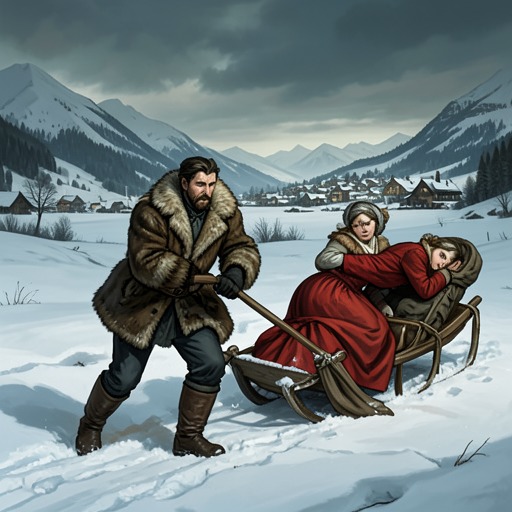
That independence matters in the account of her marriage. Lemminkainen abducts and marries her, so the relationship begins not as the fulfillment of a courtship she has chosen, but through an act of force. Yet the narrative does not leave Kyllikki without a voice. In the scenes that follow, she speaks directly to her husband and participates in making the rule that will govern their conduct.
Marriage and the Mutual Oath
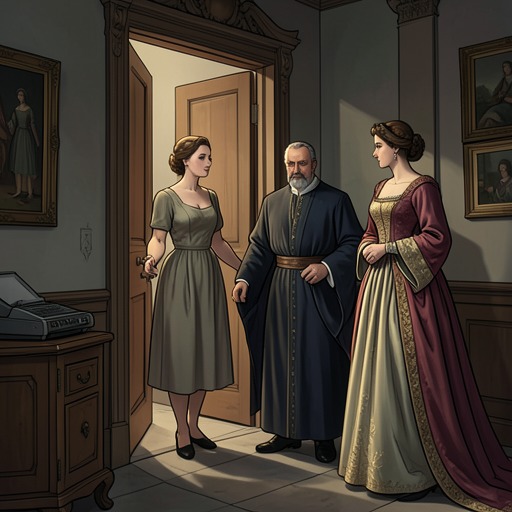
Kyllikki addresses Lemminkainen anxiously, as a sighing maiden, and the surrounding exchange carries the language of weapons and martial courage. The compact they reach is reciprocal: Kyllikki promises to stay away from village dances, while Lemminkainen is also bound by a promise. Their vows are registered in heaven and sworn before Ukko, giving a private agreement the gravity of a publicly witnessed obligation.
The oath joins two forms of conduct that the poem repeatedly places in tension: Kyllikki’s participation in village social life and Lemminkainen’s movement toward martial exploits. The dance is not simply a setting for amusement; it is the activity she agrees to forgo as part of the marriage bargain. The solemn invocation of Ukko, meanwhile, makes the promise more than a passing reassurance between spouses. It becomes a standard against which both the marriage and the events that follow can be measured.
The Broken Vow
The narrative names the next episode Kyllikki’s broken vow. On an evening when Lemminkainen is not at home, as night descends, she goes to the village dance of the merry maidens. The scene makes the breach concrete: the promise is tested not in an abstract dispute but at the moment when Kyllikki returns to the social world she had agreed to avoid, while her husband is away.
Her action reverses the arrangement of the oath. Kyllikki had been set apart from dances in the name of married obligation; now she joins the village gathering again. The poem marks the act as a breach, but its circumstances also make visible the cost of the compact: the activity she relinquished remains part of her life beyond the marriage. The account does not supply a long explanation of her decision, and it does not need to invent one. The contrast between her earlier freedom from attachment, the solemn promise, and her return to the dance carries the conflict.
Consequences and Narrative Significance
The broken vow is a turning point in the marriage and in Lemminkainen’s story. The episode is linked to his departure for Northland, so the breach does not remain a domestic matter; it helps set the hero’s next movement in motion. Kyllikki’s choice thus has consequences beyond the dance itself, even as the surviving account gives little space to her after this rupture.
Her role is defined by the difference between being desired and being able to direct her own life. She is first presented as the admired maiden who has accepted no suitors, then as a wife acquired through abduction, and finally as a participant in a solemn agreement whose rule she breaks. These stages do not resolve neatly into either submission or freedom. The oath gives her an explicit place in the marriage’s terms, while its breach shows that the terms cannot erase her connection to the dances she once attended. In this compact arc, Kyllikki is not merely the cause of a hero’s expedition: she is the figure through whom the poem makes marital obligation, personal conduct, and separation converge.