Gode
PossessionGode is a trusted healer and storyteller in the Breton household where Christabel LaMotte takes refuge. She moves between practical care and the telling of local tales: she knows how to treat ordinary ailments and assist at childbirth, while her spoken stories describe crossings between the living world and the world beyond. Sabine de Kercoz regards her as a dependable source of knowledge, but also discovers that Gode’s way of telling cannot be reproduced on the page without losing something essential.
Household Presence and Practical Knowledge
Gode lives and works within the household of Sabine’s father, Raoul de Kercoz, where her experience is treated as part of what everyone learns. The house itself holds several generations of domestic history: its old Breton box-bed, with stairs and a ventilated door, is described as a shelter against wolves and other animals. Gode helps prepare the household for the arrival of Sabine’s English cousin by beating out the old bed hangings; the work leaves her seriously unwell, and the ruined fabric has to be replaced with serviceable red linen obtained in Quimperlé. These practical details locate her knowledge in the daily work of the household rather than in an abstract office or title.
Sabine calls Gode a witch, but the label accompanies confidence in her skill rather than fear of it. Gode can treat warts, colic, coughs, women’s ailments and accidental poisoning; she can also set a limb, deliver a child, prepare a corpse and resuscitate someone who has drowned. Sabine says she would trust her life to Gode, while adding that, so far as she knows, Gode is scrupulous and clever—or lucky—and does not kill what she cures. The joking exchange preserves a real distinction: Gode’s authority rests on practical experience, even as her remedies and reputation sit beside the household’s more mysterious beliefs.
Care for Christabel LaMotte
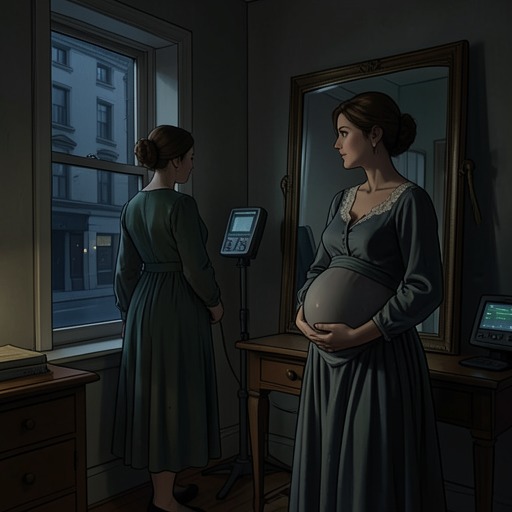
When LaMotte is living at the house, Gode offers her herb stew and other remedies. LaMotte declines the stew, and treats the potions she does accept as something taken indulgently to please Gode. Gode nevertheless reads the situation through experience with other women: she has seen some refuse to acknowledge their condition yet give birth without difficulty, and others suffer from resisting it. She believes she will recognize the signs when LaMotte’s time comes and be able to calm and assist her then. Sabine trusts Gode’s understanding of bodily and instinctive needs, though she remains unsure whether it can reach LaMotte, whose silence and self-command make her unusually difficult to read.
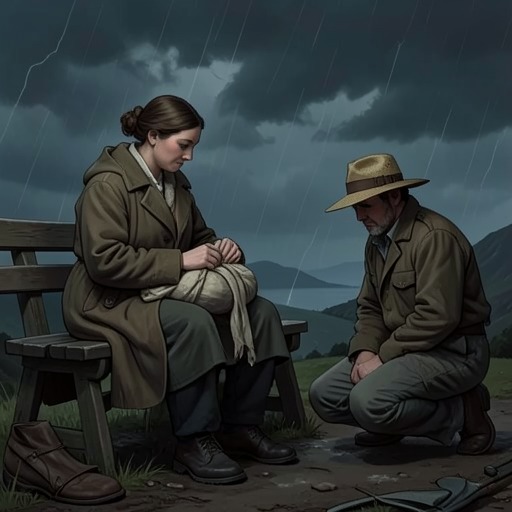
That practical judgement becomes urgent when LaMotte disappears near the end of her pregnancy. After two days of uncertainty, Gode tells Raoul that the horse and trap should be taken out: the young woman is not back, and her time is near. The family searches the roads and surrounding places, fearing that LaMotte may be in distress. Gode’s recognition of the danger turns vague alarm into action, even though the search does not locate her. LaMotte later returns, frail and changed, but Gode’s role in the crisis is established by her clear assessment of what the household must prepare for.
Storytelling and the Limits of Writing
Gode also serves as a storyteller during the Breton season when, as Sabine records, the boundary between this world and the other may be crossed. At Toussaint she joins the household’s telling of stories about traffic between the living and the dead. Her tales belong to a communal practice, shaped by the time of year, the listeners, and the act of performance; they are not simply information delivered for the written record.
Sabine sees the difference most clearly when she tries to write down Gode’s stories. Raoul has attempted to record Gode’s words verbatim, preserving the rhythms of her speech and adding or removing nothing, yet even a faithful transcription seems to lose the life of the telling. Sabine reaches a similar impasse in her journal: the effort to record accurately interferes with her listening, and she stops trying to reproduce Gode’s tale as if the written version could stand in for the event. This reflection shapes the journal itself. Sabine turns instead to writing what she saw and thought, recognizing that writing can transform an experience even when it cannot preserve the storyteller’s living voice.
Performance and Narrative Significance
Gode’s storytelling is presented through the household gathered around the fire. She raises her hands, throws back her head, or shakes her shawl, while her gestures and the moving shadows take part in the performance. Sabine compares the way Gode coordinates these elements to the work of an orchestra leader, an art form she has never heard but can only imagine. Gode’s stories therefore reach their listeners through voice, movement, audience, and setting together; their effect cannot be reduced to a written plot.
One of the tales Gode begins concerns a young sailor, poor and considered rash, whose bright eyes and dancing attract the village girls. Its opening establishes the narrative voice’s appetite for contrast between social standing and desire, and for the play of looking and being looked at. Sabine’s own attempted retelling elsewhere in her journal makes her conscious of the difference between Gode’s performance and a literary imitation: written prettiness or portentousness can alter the character of a tale even when its events remain recognizable.
Gode’s two forms of authority meet in LaMotte’s crisis. She attends to the body when the household cannot make LaMotte speak openly, and she supplies stories for which ordinary explanatory language is not enough. Yet Sabine does not turn Gode into an infallible oracle: she trusts her skill while questioning whether her knowledge can reach LaMotte’s particular silence. That tension gives Gode’s presence its significance. She embodies a local, experiential knowledge that proves useful in action, while her oral art exposes what is lost when inherited stories are treated as text alone.