Lord Ash
PossessionLord Ash is the ailing head of the Ash family whose position matters chiefly through the decisions others seek to make in his name. As Randolph Henry Ash’s heir, he stands at the center of disputes over the family’s manuscripts and the grave goods buried with the poet. His limited, indirect presence makes his authority consequential but difficult to interpret: the evidence records what he has refused and what others say he would or should want, not a direct account of his own motives.
Identity and Family Position
Lord Ash is the aristocratic heir whom Hildebrand Ash is expected to succeed. Beatrice Nest explains that Hildebrand will inherit when Lord Ash dies and reports that Lord Ash is unwell and no longer answers letters. The succession makes Hildebrand more than a distant relative in the struggle over Randolph Henry Ash’s remains: he is the prospective bearer of the family’s authority, although the account does not establish that Lord Ash has personally transferred any particular right to him.
The Buried Box and Cropper’s Campaign
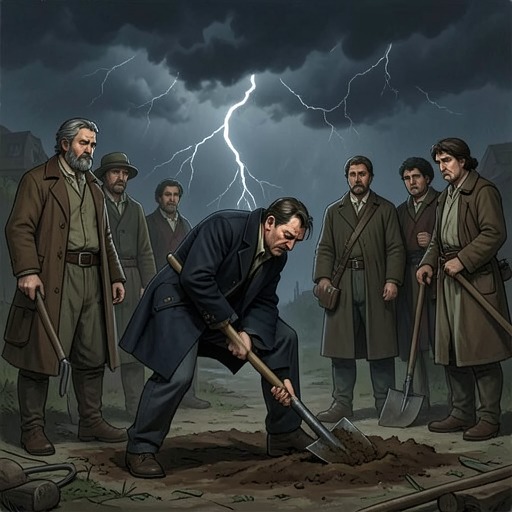
For years, Mortimer Cropper has argued that the box buried with Randolph Henry Ash should be dug up. Lord Ash would not countenance the plan, and Cropper could not obtain the required Faculty from the Bishop to disturb the interment. His refusal therefore acts as a practical barrier to Cropper’s pursuit, even as the story leaves Lord Ash’s reasons unstated.
Cropper later invokes a supposed moral right belonging to Hildebrand, as well as his own claim based on years of devotion to Randolph Henry Ash. Beatrice recalls hearing Cropper suggest taking the box first and devising a plausible explanation afterward. The proposal exposes the gulf between his professed scholarly service and the means he is willing to use; Lord Ash’s earlier resistance, by contrast, is reported as a refusal rather than a rationale.
Papers, Inheritance, and Unsettled Authority
The dispute over the grave box belongs to a wider conflict over the Ash–LaMotte papers. In discussing the correspondence, Euan MacIntyre distinguishes ownership of physical letters from copyright in their contents: the recipient owns the material letters, while copyright remains with the sender. He also says that Lord Ash may wish to claim both letters and copyright through Hildebrand, apparently at Cropper’s urging. This is presented as an inference from Beatrice’s report, not a known declaration by Lord Ash.
That uncertainty matters because the documents have several competing histories of custody and bequest. Christabel LaMotte’s witnessed will leaves her manuscripts and copyrights to Maia Thomasine Bailey; Maud Bailey’s family has deposited the surviving LaMotte manuscripts with the Women’s Resource Centre at Lincoln. MacIntyre argues that Maud can establish title to the returned letters, while the copyright in Randolph Henry Ash’s letters belongs to his heirs. Lord Ash’s position thus forms one side of a complicated legal and familial claim, rather than a simple answer to who owns the correspondence.
Narrative Significance
Lord Ash is characterized through absence, succession, and reported resistance. He is not shown directing the archival struggle; instead, Beatrice’s account and MacIntyre’s legal discussion reveal how others invoke his illness, presumed wishes, and family status. That distance prevents the claim that he would have approved Cropper’s scheme from becoming settled fact.
His earlier refusal to permit the grave’s disturbance also sharpens the novel’s conflict between a family’s control of private remains and a scholar’s desire to recover evidence. When the box is eventually opened, it contains a hair bracelet, plaited hair, a bundle of letters, and a sealed letter addressed to Randolph Henry Ash. The discovery makes the consequences of the dispute tangible, while leaving Lord Ash’s own view of the contents and their eventual disclosure unknown.