Chinese People's Volunteers enter the Korean War
TrumanThe Chinese People's Volunteers enter the Korean War transformed a campaign that had appeared close to victory into a crisis over whether the conflict would expand into a wider war. In November 1950, Chinese forces were identified as fighting United Nations troops in North Korea; their counteroffensive then forced Harry S. Truman’s administration to weigh military pressure against the danger of escalation.
Recognition and Rising Concern
At midday on November 1, two weeks after the Wake Island conference, Truman returned to Blair House after receiving a report from the new head of the CIA, General Walter Bedell Smith. The report said it had been clearly established that Chinese Communist soldiers were among the forces opposing United Nations troops in North Korea, with their numbers estimated as high as 15,000 to 20,000. The warning reached Truman on a day already marked by anxiety about the war, but the scale and implications of Chinese involvement remained uncertain.
By late November, Chinese troops in the war were an established fact, although estimates still differed. MacArthur put their numbers at 30,000 and tended to discount their importance. In Washington, concern was increasing. MacArthur sought authorization to bomb the Korean ends of bridges across the Yalu River to impede the movement of Chinese forces. Truman approved those strikes but explicitly warned against enlarging the war and prohibited air attacks north of the river, on Chinese territory. The boundary was a deliberate limit: the administration would respond to the intervention without authorizing attacks inside China.
The Counteroffensive
The danger grew as MacArthur advanced north. He divided his forces, sending the U.S. Tenth Corps up the eastern side of the peninsula and the Eighth Army up the western side. The Joint Chiefs of Staff questioned this risky arrangement, but MacArthur insisted that a decisive offensive could quickly end the war. The earlier success at Inchon had strengthened his confidence, and no one—including Truman—stopped him from proceeding.
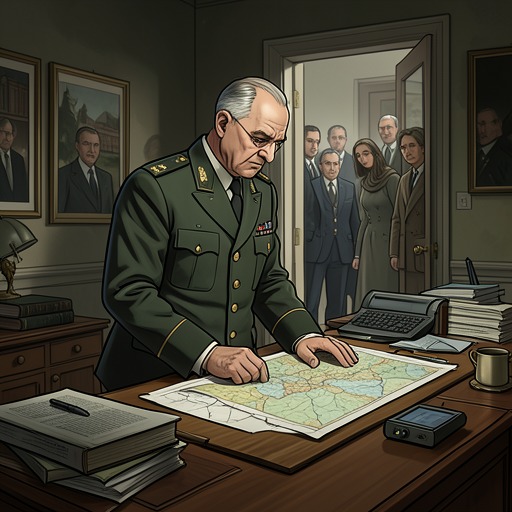
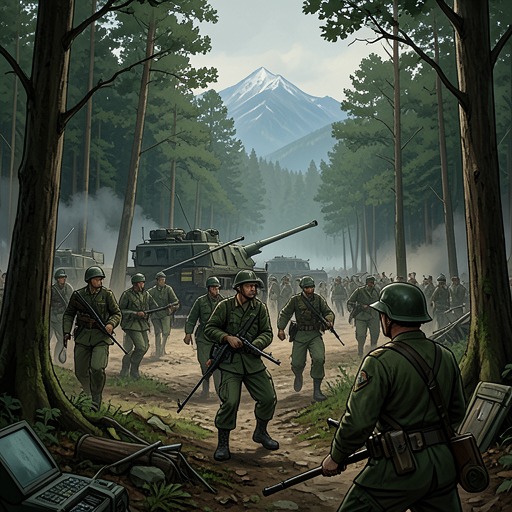
The offensive began on Friday, November 24, the day after Thanksgiving. Four days later, at 6:15 in the morning, General Bradley telephoned Truman at Blair House with a grave message from MacArthur. At the White House, Truman told his staff that the Chinese had launched a furious counterattack with a force of 260,000 and that MacArthur’s army was going over to the defensive. The news abruptly reversed the optimism that had followed Inchon and the Wake Island meeting. Truman’s decision to cross the 38th parallel, like the earlier decision to risk the Inchon operation, now carried consequences for which he would be answerable.
The shock was evident in the room, but Truman recovered his composure and told his staff that they had to meet the crisis and do their jobs. MacArthur described the situation as an entirely new war and said his command faced conditions beyond its control and strength. In subsequent messages, he pressed for major reinforcements, including Chinese Nationalist troops from Formosa, and called for a naval blockade of China and bombing of the Chinese mainland. He argued that the administration had to let him broaden the conflict or risk disaster.
Limiting the War
At three o’clock on November 28, Truman chaired a crucial meeting of the National Security Council in the Cabinet Room. The decision made there was not to let the crisis in Korea flare into a world war. The intervention had produced a military emergency, but the administration would not accept MacArthur’s proposed expansion of the conflict as its necessary answer.
This choice gave the episode its larger significance. Chinese intervention ended the expectation of a quick victory and placed the administration under intense pressure to respond. Truman’s approval of limited action at the Yalu, paired with his prohibition on attacks in Chinese territory, marked an effort to oppose the intervention while preserving a boundary against a much wider war. The November 28 decision thus became a defining test of presidential responsibility: the consequences of the offensive had changed, but the administration still had to decide how far the war would be allowed to spread.