Cass Chaplin
BlondeCass Chaplin is the estranged son of Charlie Chaplin and Norma Jeane Baker’s first great love. Beautiful, cultured, and artistically gifted, he draws her into a relationship marked by tenderness and distance, then into a complicated triangle with Eddy G. His inability to imagine a shared home stands against Norma Jeane’s longing for marriage and motherhood; after his death, a small cloth tiger becomes the surviving token of a bond she had never fully put away.
Identity and Background
Norma Jeane Baker first sees Cass beside Otto öse after stepping out from behind a Chinese screen. He is a young man with thick black hair and dark, almond-shaped eyes, shorter than Otto but lean and powerfully built. His shy smile arrests her: to her, he is the most beautiful young man she has ever seen outside a movie screen. The moment makes him seem at once like a screen image and a possible escape from the painful attachment she has formed with Otto. Norma Jeane imagines that Cass might love her in a way Otto neither wants nor knows how to manage.
Cass carries a famous surname as a burden rather than an inheritance. He tells Norma Jeane that being Charlie Chaplin’s son is treated as a blessing by people who do not understand what it means to live with the name. In his account, his father was cruel and selfish, disliked children, and cared more for strangers’ admiration than for a family’s love. Cass says that, for more than a year after his birth, Charlie Chaplin prevented his teenage wife from naming him, out of a superstitious fear of sharing his own name. He also recounts that his parents divorced after two years of marriage and that his father rejected and disinherited him. The celebrated public image of the beloved Vagabond therefore contrasts sharply with the father Cass remembers at home.
Cass is the more educated of the pair with Eddy G. His mother sent him to a Jesuit boarding school, where he studied theology, Latin, and Greek. He left before graduating; the account leaves open whether he quit, was expelled, or suffered one of his breakdowns. Norma Jeane, already deeply in love, studies the few possessions he carries from place to place without letting him know. Among them she finds a large, worn diary filled with musical compositions, poems, lifelike drawings of faces and figures, and erotic studies of male and female bodies. The diary suggests an inward, disciplined artistic life that sits uneasily beside his unsettled circumstances.
Love, Distance, and the Gemini Bond
Norma Jeane’s attachment to Cass is intense, but intimacy does not settle into a shared domestic life. Days, weeks, and then months pass without the couple living together. Cass finds the idea of sharing an apartment claustrophobic: the ordinary signs of a joint life—clothes in one wardrobe, belongings in the bathroom and drawers, a history accumulated together—make him feel physically unable to breathe. The narrative distinguishes this reaction from a simple imitation of his father’s cruelty; to Norma Jeane, Cass’s distress seems genuine when they are together. She wants him to understand that she does not mean to suffocate him, even as his withdrawal leaves her reaching toward a closeness he cannot sustain.
Her need for his company does not bring relief from insomnia. Alone in her tiny Salvation Army bed, she cannot sleep; neither can she sleep when Cass is beside her, in that bed or any other. His presence is desired but does not quiet her fear or uncertainty. Against the surrounding men, whom she experiences as powerful and threatening, Norma Jeane has only Angela—her work and her acting—to oppose them. The relationship thus joins romantic hope to the precariousness of her working life, rather than offering a secure refuge from it.
Cass’s bond with Eddy G is central to his life and to Norma Jeane’s place within it. She discovers Cass in bed with another man, both young bodies partly covered by a slipping sheet. Cass rises, greets her affectionately, and introduces Eddy as another of his twins. The playful language of twinning gives their closeness a name, but the scene also confronts Norma Jeane with a relationship whose terms she has not understood. At another Hollywood gathering, while she is humiliated and distressed, Cass and Eddy approach her together, take her hands, and urge her to leave someone who does not love her. Their repeated version of the evening is that they entered the reception for her alone. In her imagination, the two elegant, rejected sons of famous fathers appear like princes coming to rescue a forsaken child; that rescue fantasy is inseparable from her feeling that the men who desire her also use and discard her.
The three-person bond is not a simple arrangement of shared affection. Norma Jeane loves Cass and wants to marry him, while Eddy’s urgency can become physically forceful. In one encounter, Eddy throws her onto a hard wooden floor and has sex with her immediately. She feels shame, indignation, and regret because it is Cass she loves and wants as her husband and the father of her child. Cass and Eddy’s intense partnership draws her close, but it does not protect her from being hurt within that closeness.
Cass also gives the relationship a mythic language. He recounts the story of Castor and Pollux: when Castor is killed, Pollux begs Zeus to take his own life instead, and the brothers are allowed to live only by alternating between heaven and the underworld. They can never meet in the same realm at the same time. The story resonates with Cass’s own idea of himself and Eddy as twins, turning separation into a condition of their bond. It offers no easy promise of permanence; even its version of reunion requires the brothers to take turns in life and death.
Pregnancy, Hope, and Loss
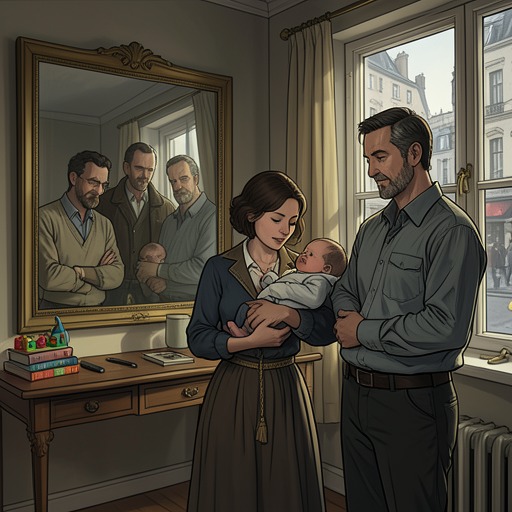
Norma Jeane’s desire to become a mother is one of her most tender and persistent hopes. Cass and Eddy know how deeply she wants a child, and the narrative links that longing to her belief that motherhood might make her normal, despite the abandonment and instability she associates with her own mother. The imagined child therefore means more than a future family: it carries Norma Jeane’s hope of belonging to an ordinary life.
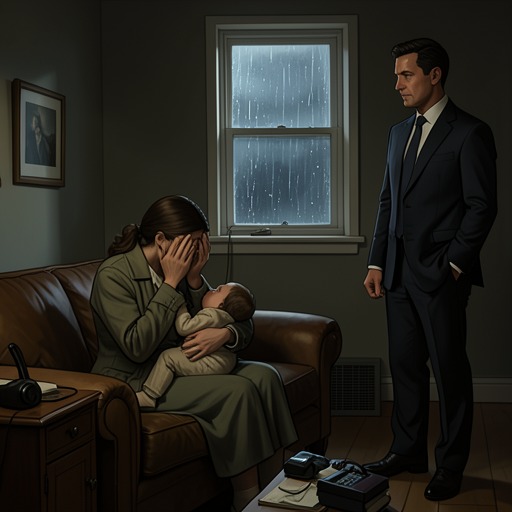
When Norma Jeane becomes pregnant, all three are dazed by the prospect of the birth and keep the news secret until she decides to reveal it. Cass insists on the difference between an imagined screen story and lived experience: this is real life, not cinema. Eddy has joined Alcoholics Anonymous, and Cass is considering doing the same, though the question of giving up drugs remains unresolved. Their plans and uncertainty sit beside a shared, almost disbelieving excitement about the coming child. The pregnancy briefly gives their unstable relationship a common future.
At Lakewood, Norma Jeane spends the day with Gladys, who is fragile, uncertain in her movements, and perhaps uncertain who her daughter is. Norma Jeane thinks about how to tell her the news and cares for her almost as if she were the mother. The possible announcement brings the pregnancy into contact with the painful history it was meant to redeem: Norma Jeane is preparing to become a mother while tending to a mother who may not recognize her.
The pregnancy does not become the secure family life Norma Jeane imagines. Later, she remembers the lost child as Baby and wonders what might have happened if she had remained with Cass and Eddy and had their child. She cannot clearly remember why Baby died or why Marilyn Monroe had to kill the child, a gap that binds grief to the divided identities through which she recalls her past. She remains privately certain that Cass was the father, though the relationship’s circumstances do not resolve the question for her.
Death and the Surviving Token
Much later, Norma Jeane learns that Cass is in a Los Angeles rehabilitation center. She spends an hour in panic, unsure whether to call or ask after him, then decides not to become involved. She also wonders whether he and Eddy G are still as close. Seeing a photograph of Cass in Tatler shocks her: the once extraordinarily beautiful young man has aged, with dark bags under his eyes and lines beside his mouth. His beauty, once the first force of attraction, has visibly deteriorated.
The news of Cass’s death reaches Norma Jeane through Eddy G. Cass had been drinking, mainly vodka, and had eaten something like chow mein before losing consciousness. He began to vomit but was too weak to turn onto his side; alone, he choked. Eddy says he found him around midday when he went to visit. The account of the death is starkly bodily, with none of the alternation between life and death in Cass’s myth of the twins: he dies alone, and Eddy is the one who discovers him.
Cass has left something for Norma Jeane: the little cloth tiger. Its return gives material form to a past that has otherwise survived in fragmentary recollection, painful questions, and the private conviction that Cass fathered Baby. The accompanying message addresses her as MM for life and signs off as her grieving father. That last gesture fuses the roles that had marked his story with her: lover, imagined father of her child, and son wounded by a famous father. Cass cannot restore their lost future, but the tiger and the message make his attachment endure beyond his death.
Narrative Role
Cass’s character is shaped by contrasts between image and difficulty. He first appears to Norma Jeane as a young man more beautiful than anyone she has seen offscreen, yet his appearance cannot secure a stable partnership. He is educated and creative, but moves between borrowed places and remains unable to contemplate domestic life without physical distress. The son of a man revered by strangers, he describes a private history of rejection; the beautiful young lover later reappears in a photograph marked by age and decline.
His story also complicates Norma Jeane’s hope that being desired can become a form of safety. Cass and Eddy come to her as rescuers, and she imagines them as princes who can free her from abandonment. Yet the triangle brings confusion, unequal desire, and hurt as well as affection. Cass’s myth of the twins offers a pattern for love interrupted by separation, while his final gift makes the past tangible without undoing its losses. In Norma Jeane’s recollection, he remains both the beautiful young man she loved and a life that could not be made into the ordinary family she wanted.